How To Use A Massage Gun On Calves: Safe, Effective Guide
Use a massage gun on calves with low pressure, slow movement, and short passes over the muscle, not the bone or Achilles tendon.
Learning how to use a massage gun on calves can help you warm up, ease normal post-workout tightness, and improve short-term movement. The key is using the right attachment, speed, pressure, and timing while knowing when calf pain needs medical care instead of massage.
What a Massage Gun Does for Your Calves
A massage gun is a handheld percussive therapy device. It uses quick pulses to move against soft tissue. On the calves, this action may increase local blood flow, reduce the feeling of tightness, and improve your range of motion for a short time.
Research on percussive therapy suggests possible short-term gains in flexibility and movement. It may also reduce feelings of muscle soreness after exercise. However, it is not a cure for a strain, tear, blood clot, or chronic leg problem.
Think of the device as a tool for comfort, not a power drill for your muscles. More force does not mean better results. Gentle, steady passes are usually safer and more useful than pressing hard in one painful spot.
When to Use a Massage Gun on Calves
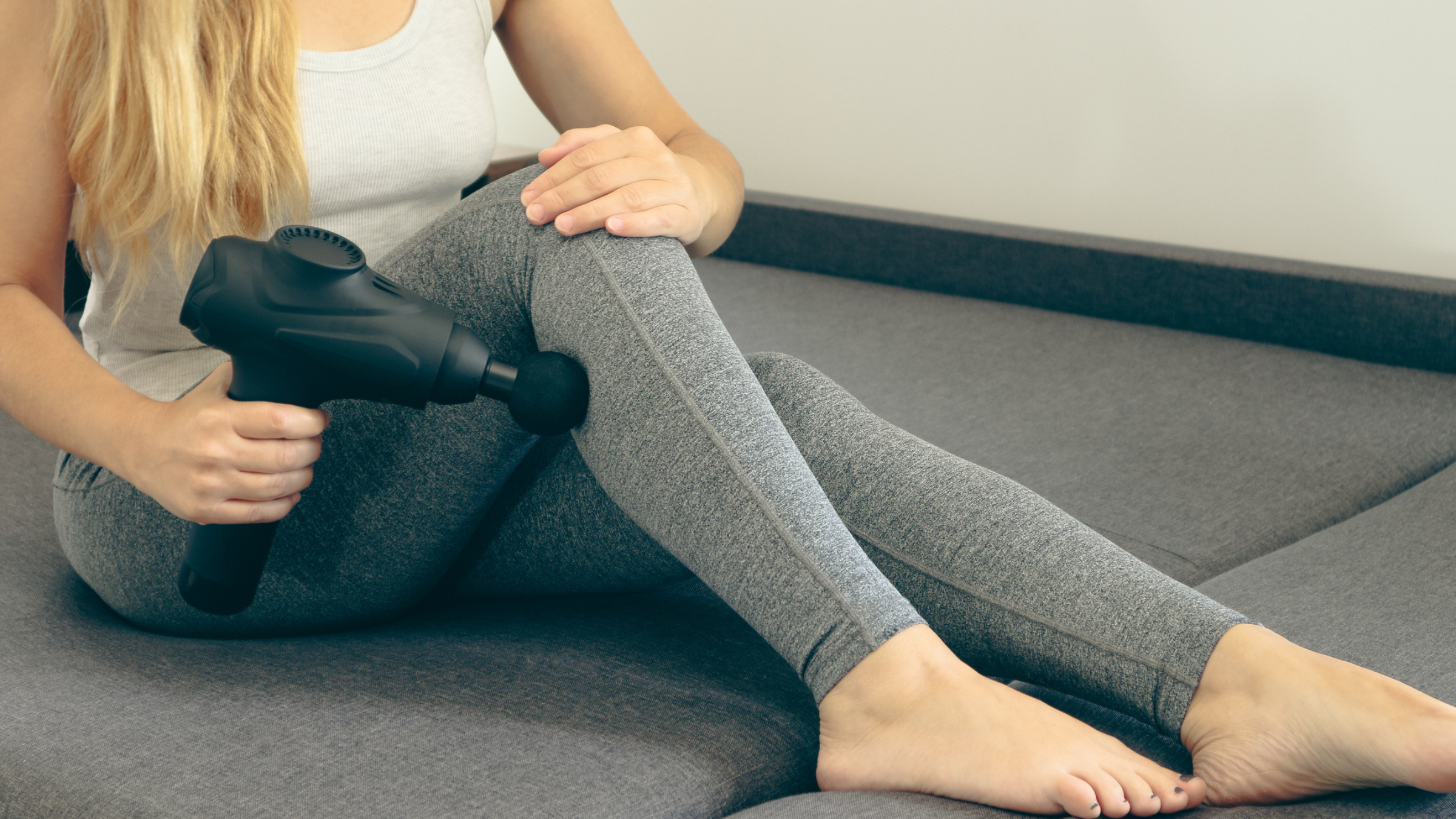
Timing matters when learning how to use a massage gun on calves. You can use it before exercise, after training, or on a rest day for mild muscle tension.
Before a workout
Use the massage gun for a brief warm-up. It may help your ankles and calves feel more mobile without tiring the muscle.
Try:
• 15 to 20 seconds on the upper calf
• 15 to 20 seconds on the middle calf
• 15 to 20 seconds on the lower calf
Keep the speed low or moderate. Follow the massage with active movements such as ankle circles, calf raises, and a brisk walk.
After a workout
After exercise, a massage gun may help your calves feel less stiff. Wait until your breathing and heart rate begin to settle, then use light pressure.
Spend about 30 to 60 seconds on each calf. Do not chase pain or try to “break up” deep knots with heavy pressure.
On a rest day
A short session can feel soothing after long periods of sitting, standing, or walking. Keep the session gentle and stop if the area becomes sore, numb, swollen, or unusually warm.

How to Use a Massage Gun on Calves: Step-by-Step
Follow these steps for a safe and simple calf massage gun routine.
1. Check your calves first
Look and feel for warning signs before turning on the device. Do not massage a calf that is swollen, red, hot, bruised, numb, or sharply painful.
Normal exercise tightness often affects both legs in a similar way. A sudden problem in one calf deserves more caution, especially if it comes with swelling or warmth.
2. Choose the right attachment
A soft round attachment works well for most people. It spreads the pressure across the muscle and feels less intense than a pointed head.
A flat attachment may also work for broad muscle areas. Avoid using a narrow or pointed attachment on a tender calf unless a qualified professional has shown you how to use it.
3. Start with the lowest speed
Place the massage gun against the calf before turning it on, or start it at a low speed. This helps prevent a sudden jolt.
Hold the device with a relaxed grip. Let the attachment glide over the muscle instead of pushing it deep into the tissue.
4. Position your leg comfortably
Sit with your foot relaxed and your calf supported. You can also lie down with a pillow under your ankle.
A relaxed calf is easier to massage. If you point your toes hard or tense your leg, the device may feel much more intense.
5. Move over the larger calf muscle
The main calf muscles are the gastrocnemius and soleus. Move the massage gun slowly from the lower part of the muscle toward the upper part.
Use broad passes for 15 to 30 seconds. Then move to another area. Avoid staying in one spot for more than a few seconds.
6. Adjust pressure by comfort
The sensation should feel like firm vibration, not sharp pain. A mild tender feeling can occur, but you should never brace, hold your breath, or tense your whole leg.
Use less pressure over sore areas. If the pain increases during the session or lasts longer afterward, stop using the device.
7. Finish with gentle movement
After learning how to use a massage gun on calves, finish with easy movement. Try ankle pumps, slow calf raises, or a short walk.
This helps you check how the calf feels while moving. Massage should support normal movement, not replace a proper warm-up or rehabilitation plan.
The Best Calf Massage Gun Technique
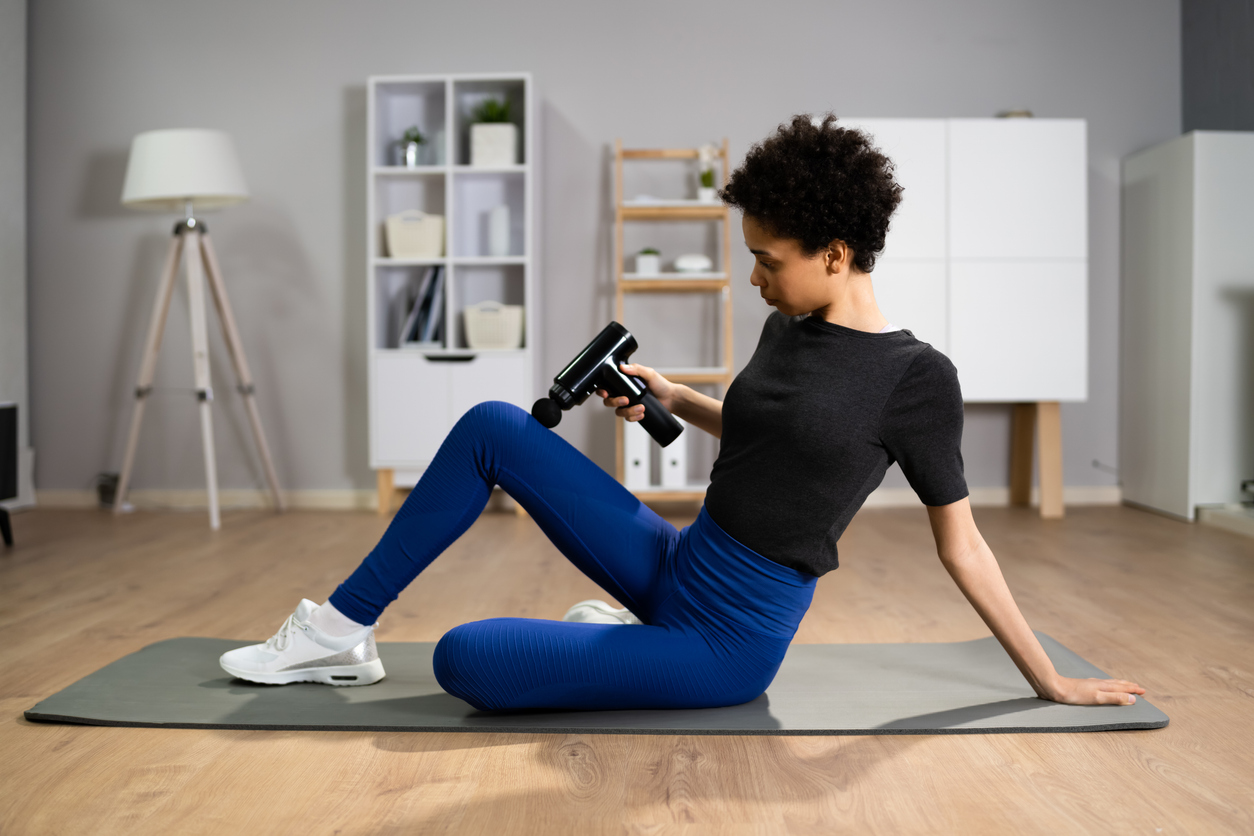
The best technique is slow, light, and controlled. Start on the least tender part of the calf, then work toward areas that feel tighter.
Use this simple pattern:
-
Glide over the entire calf for 20 seconds.
-
Focus on the inner calf for 15 to 20 seconds.
-
Focus on the outer calf for 15 to 20 seconds.
-
Repeat on the other leg.
-
Follow with gentle ankle movement.
Keep the massage gun moving. Staying in one place can irritate the tissue and leave you more sore later.
A useful rule is the “conversation test.” You should be able to talk normally while using the device. If you need to grit your teeth, the speed or pressure is too high.

Where to Use a Massage Gun on the Calf
Use the massage gun on the soft, fleshy parts of the calf. These areas include the center and sides of the gastrocnemius and soleus muscles.
Do not use it directly on:
• The shin bone
• The kneecap or knee joint
• The Achilles tendon
• The back of the knee
• Open wounds or irritated skin
• Large visible veins
• Areas with swelling or bruising
The Achilles tendon connects the calf muscles to the heel. It is dense tissue and should not receive aggressive percussion. If your Achilles feels painful or stiff, seek advice from a health professional instead of trying to force the area to relax.

How Long Should You Use a Massage Gun on Calves?
Most people need only two to five minutes for both calves. A beginner can start with 30 to 60 seconds per leg and assess the response.
Use these general limits:
• Warm-up: 30 to 60 seconds per calf
• Post-workout recovery: 1 to 2 minutes per calf
• Mild daily tightness: 1 to 2 minutes per calf
Longer sessions are not always better. Too much percussion may cause tenderness, skin irritation, or temporary muscle discomfort.
If your calves feel worse several hours later, shorten the next session or skip the device. Recovery should leave you feeling comfortable, not beaten up.

How Much Pressure and Speed Should You Use?
Start with low speed and light pressure. Gradually increase the speed only if the massage feels comfortable and your muscles remain relaxed.
A useful pressure guide looks like this:
• Light pressure: Best for warm-ups and sensitive muscles
• Moderate pressure: Useful for normal post-workout tightness
• Heavy pressure: Usually unnecessary and more likely to irritate sore tissue
Do not press the device into the calf to make it “work harder.” The motor already supplies the force. Your hand should guide the tool, not push it deep.
Many people make the mistake of using a high setting because it feels powerful. In practice, that often creates more soreness without adding a clear benefit.

Benefits and Limits of Calf Massage Gun Use
Using a massage gun may offer several short-term benefits when applied correctly.
Potential benefits include:
• A temporary increase in ankle and calf movement
• Less feeling of muscle tightness
• A soothing sensation after exercise
• Improved awareness of tense areas
• A convenient alternative to manual self-massage
The evidence has limits. Percussion may help how you feel and move in the short term, but it does not repair a torn muscle or fix the cause of repeated calf pain.
It also does not remove lactic acid in a special way. Your body clears exercise byproducts through normal circulation and metabolism. A massage gun may make recovery feel easier, but it is not a shortcut around sleep, food, hydration, and sensible training.

Common Mistakes to Avoid
Knowing what not to do is an important part of how to use a massage gun on calves.
Using it on an injury
A massage gun can worsen a fresh strain, bruise, or tear. Avoid percussion during the early stage of a painful injury unless a medical professional recommends it.
Pressing on the Achilles tendon
The Achilles tendon is not the same as the calf muscle. Direct pressure may irritate it, especially if you already have tendon pain.
Staying on one spot
Holding the device over one tender point for a long time can increase soreness. Keep it moving at a slow pace.
Using it before checking for swelling
One swollen calf can signal a serious condition. Massage is not appropriate until a clinician has assessed the cause.
Ignoring sharp pain
Sharp, burning, electric, or radiating pain is a warning. Stop at once rather than trying to push through it.
Treating the device as a replacement for care
A massage gun may support comfort, but it cannot diagnose or treat a medical problem. Persistent symptoms need a proper evaluation.

Safety Precautions and When to Avoid a Massage Gun
Do not use a massage gun on your calves if you have unexplained swelling, redness, heat, severe pain, or sudden tenderness. These signs can occur with conditions that require prompt medical attention.
Seek urgent medical care if calf symptoms occur with shortness of breath, chest pain, faintness, or coughing blood. A blood clot in a deep vein can be dangerous, and massage may dislodge it.
Ask a health professional before using a massage gun if you:
• Take blood-thinning medicine
• Have a bleeding or clotting disorder
• Have advanced diabetes or reduced sensation
• Have varicose veins with pain or skin changes
• Recently had surgery
• Are pregnant and have new leg symptoms
• Have a diagnosed muscle, tendon, nerve, or circulation problem
These precautions may seem strict, but they are simple ways to avoid turning a useful recovery tool into a risk.
A Simple Five-Minute Calf Routine
This routine shows how to use a massage gun on calves without overdoing it.
Minute 1: Light warm-up
Use a soft round attachment at low speed. Glide over the full length of one calf for 30 seconds, then switch sides.
Minutes 2 and 3: Main muscle work
Spend 30 seconds on the upper calf and 30 seconds on the middle calf on each leg. Keep the device moving.
Minute 4: Gentle focus
Return to any mildly tight area. Use light pressure for no more than 15 to 20 seconds per spot.
Minute 5: Movement check
Turn off the device. Perform ankle circles, ankle pumps, and a few slow calf raises.
This routine is enough for most casual users. Athletes with a specific rehabilitation plan should follow the instructions of their physical therapist or sports medicine professional.
Massage Gun Versus Stretching and Foam Rolling
A massage gun is one option, not the only option. Stretching, walking, strength work, and foam rolling can also help with calf comfort and movement.
Dynamic movement is often useful before exercise. Static stretching may fit better after training or during a separate mobility session. Foam rolling uses broader, slower pressure and may feel easier to control for some people.
You do not need to use every method at once. Try one approach, notice how your calves respond, and keep the method that helps without causing extra soreness.
For repeated calf tightness, look at the bigger picture. Footwear, training load, ankle mobility, running form, recovery, and calf strength may all play a role.
How to Use a Massage Gun on Calves for Runners
Runners often notice tight calves after hills, speed work, or sudden increases in distance. A massage gun can be used briefly before a run or during recovery, but it should not hide pain that changes your stride.
Before running, use low-speed passes for less than one minute per calf. Then walk, perform ankle movements, and complete a gradual running warm-up.
After running, wait until your body cools down. Use light pressure for one to two minutes per side, then drink fluids, eat a balanced meal, and allow enough time for sleep.
If calf pain returns during several runs, reduce training stress and seek an assessment. Repeated pain is a message, not a knot that must be attacked.
How to Use a Massage Gun on Calves for Muscle Soreness
Delayed-onset muscle soreness often appears 12 to 48 hours after unfamiliar or intense exercise. It may cause general tenderness, stiffness, and reduced comfort during movement.
For normal soreness, use the lowest comfortable setting. Keep the massage short and stop if the area becomes more tender during the session.
Light movement may help as much as the device. Try walking, easy cycling, ankle pumps, and gentle calf raises. Do not use percussion to force a sore muscle into a hard workout.
Severe swelling, major weakness, dark urine, or pain that feels far beyond normal soreness needs medical attention. Those symptoms are not typical signs of simple post-workout discomfort.
How to Use a Massage Gun on Calves Safely: Expert Tips
Physical therapists commonly emphasize gradual loading, symptom monitoring, and correct tissue selection. Those ideas also apply to percussive therapy.
Keep these tips in mind:
• Start on the lowest setting every time.
• Use a soft attachment on large muscle areas.
• Work around, not directly on, painful spots.
• Keep each area brief.
• Relax your foot and ankle.
• Compare both legs without assuming they should feel identical.
• Stop if you notice numbness, tingling, sharp pain, or worsening symptoms.
One practical lesson is to judge the result later, not only during the massage. If you feel good right away but become more painful that evening, the session was too intense.
Frequently Asked Questions About How to Use a Massage Gun on Calves
Can I use a massage gun on tight calves?
Yes, you can use a massage gun on mildly tight calves if there is no swelling, bruising, sharp pain, or recent injury. Use a low setting, light pressure, and slow movement for one to two minutes per leg.
How long should I use a massage gun on each calf?
Start with 30 to 60 seconds per calf. You may increase the time to one or two minutes if your muscles respond well, but longer sessions do not guarantee better results.
Can I use a massage gun on my Achilles tendon?
Avoid using a massage gun directly on the Achilles tendon. Work gently on the nearby calf muscles instead, and seek professional advice if the tendon is painful.
Should I use a massage gun before or after running?
You can use it briefly before running to support mobility or after running to ease normal tightness. Always combine it with a gradual warm-up and stop if pain affects your stride.
Can a massage gun help a calf strain?
A massage gun does not heal a calf strain and may worsen a fresh injury. Rest from painful activity and ask a qualified health professional when and how to begin treatment.
Can I use a massage gun if one calf is swollen?
No. Avoid massage on an unexplained swollen calf, especially if it is warm, red, tender, or painful. Contact a medical professional promptly because swelling can have serious causes.
What attachment is best for calf muscles?
A soft round attachment is a good starting choice for most calf muscles. It spreads the pressure and is usually more comfortable than a narrow attachment.
Conclusion
Using a massage gun on calves is simple when you keep the pressure light, the device moving, and the session short. Work only on the soft muscle, avoid the Achilles tendon and bones, and never massage unexplained swelling or sharp pain.
Start with 30 to 60 seconds per calf at a low speed. Check how your legs feel later, then adjust your routine based on comfort and recovery. Use the massage gun as one part of a healthy plan that also includes movement, strength, sleep, and proper medical care when needed.
Try the gentle routine today, and share your experience or questions in the comments.