How To Use A Massage Gun On Shoulders: Safe Tips
Use a massage gun on your shoulders with light pressure, slow passes, and careful attention to pain or numbness.
Shoulder tension often builds from desk work, driving, workouts, stress, or poor sleep. Learning how to use a massage gun on shoulders can help relax tight muscles and improve how your upper body feels. This guide explains safe areas, the best technique, timing, pressure, mistakes to avoid, and when to seek medical care.

What a Massage Gun Does for Shoulder Tension
A massage gun is a handheld percussion device. It uses rapid, small pulses to press into soft tissue. This action may increase local blood flow, reduce the feeling of muscle tightness, and make movement feel easier for a short time.
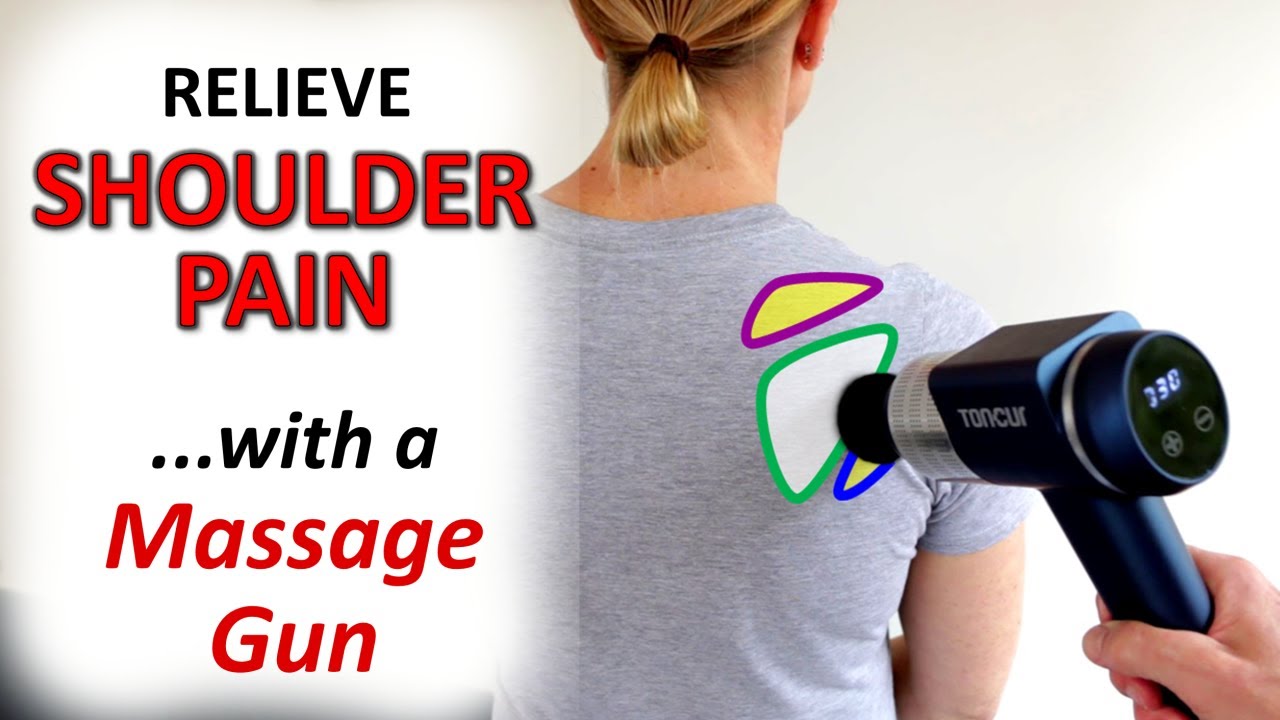
The main shoulder muscles include the upper trapezius, rear deltoid, infraspinatus, and parts of the muscles around the shoulder blade. These areas can feel sore after lifting, long hours at a computer, or carrying a heavy bag.
A massage gun does not “break up” scar tissue or cure an injury. It may offer short-term comfort, but it does not replace physical therapy, strength training, good posture, or medical care.
When learning how to use a massage gun on shoulders, think of it as a tool for gentle muscle care. It should feel soothing, not harsh.

Benefits of Using a Massage Gun on Shoulders
A massage gun may offer several useful benefits when used correctly. Research on percussive therapy suggests that it can improve short-term range of motion without greatly reducing muscle strength. It may also reduce the feeling of soreness after physical activity.
Possible benefits include:
• Less feeling of tightness in the upper trapezius
• Easier neck and shoulder movement
• Temporary relief after exercise
• A short-term increase in local circulation
• Better awareness of tense muscles
• A simple way to prepare for stretching or mobility work
The effects vary from person to person. A massage gun may help a desk worker with tight upper traps, yet feel less useful for someone with nerve pain or a rotator cuff injury.
In my experience using massage tools, the best results come from short sessions. Many people press too hard because they expect more force to create more relief. In practice, gentle work often feels better and leaves less soreness later.

Where to Use a Massage Gun on Your Shoulders
Knowing the right muscles is a key part of how to use a massage gun on shoulders. Focus on broad, fleshy areas rather than bones, joints, or the front of the neck.
Upper trapezius
The upper trapezius runs from the base of your neck to the top of your shoulder. It often feels like a thick, tight band.
Use the massage gun on the middle of this muscle. Stay several inches away from the spine and the side of the neck.
Rear deltoid
The rear deltoid sits on the back of your shoulder. It may become tight after pulling exercises, swimming, tennis, or long periods of rounded posture.
Move the device over the rounded muscle at the back of the shoulder. Use a low or medium speed.
Muscles near the shoulder blade
The muscles around the shoulder blade may feel tense after desk work or upper-body exercise. You can work the upper and outer parts of this region if you can reach them safely.
Ask someone to guide the device if you cannot see the area. Avoid pressing directly over the shoulder blade.
Chest and front shoulder muscles
Tight chest muscles can affect shoulder movement. You may use a massage gun on the upper chest and front shoulder only with great care.
Use the lowest setting and light pressure. Avoid the breastbone, collarbone, armpit, and any area with swelling or unusual pain.
Areas to Avoid
Some parts of the shoulder and upper body are not safe targets for direct percussion. A massage gun should never be used like a power tool on every sore spot.
Avoid these areas:
• The front and side of the neck
• The spine and the bones of the shoulder blade
• The collarbone
• The armpit
• The throat
• The head and face
• Open wounds, rashes, bruises, or swollen skin
• Areas with numbness or reduced sensation
The neck contains important blood vessels, nerves, and delicate structures. Even if a device feels comfortable there, direct pressure can carry unnecessary risk.
One mistake I often see is treating the painful joint instead of the nearby muscle. A sore shoulder joint is not the same as a tight shoulder muscle. If the pain feels deep, sharp, unstable, or linked to weakness, skip the massage gun and get an evaluation.
How to Use a Massage Gun on Shoulders Step by Step
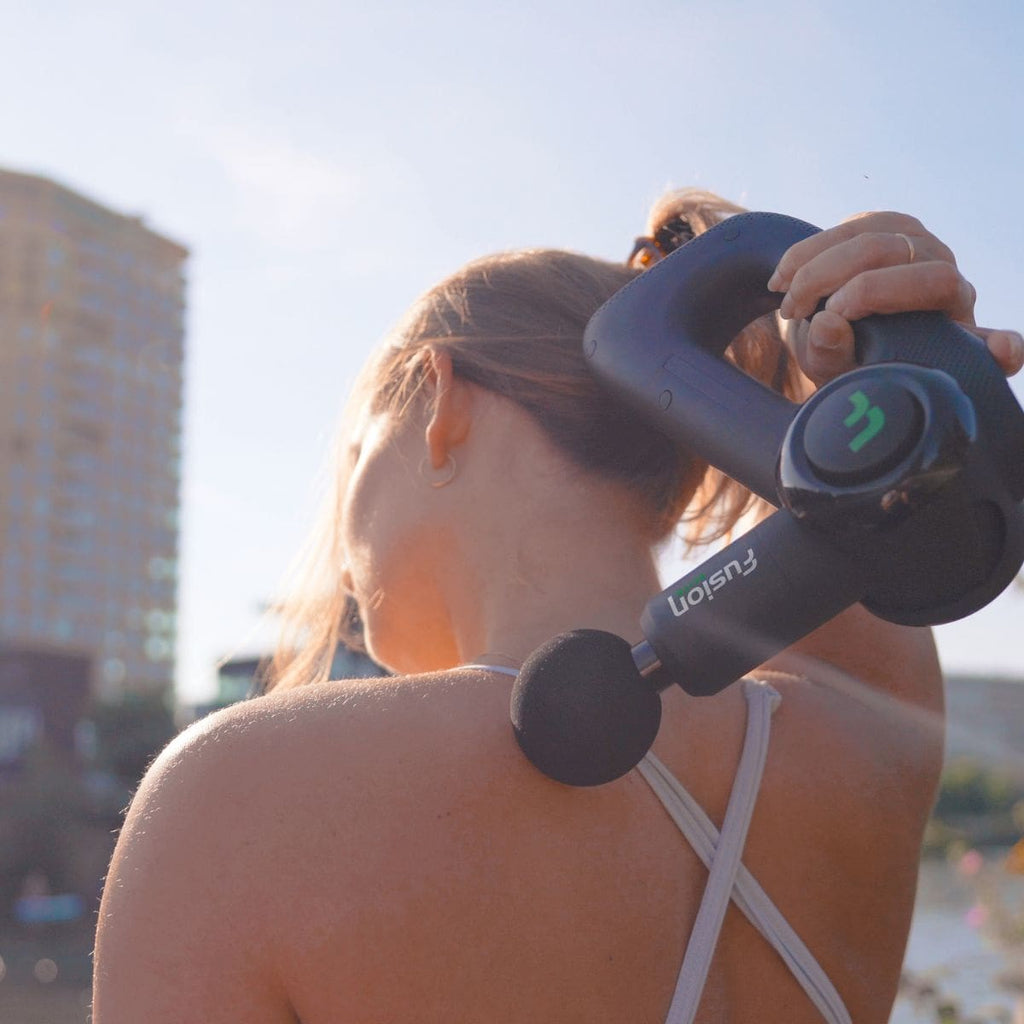
The safest method is slow, light, and controlled. Follow these steps when learning how to use a massage gun on shoulders.
1. Check your body first
Notice what type of discomfort you have. Mild muscle tightness is different from sharp pain, tingling, burning, swelling, or sudden weakness.
Do not use the device on a new injury until a qualified health professional advises you.
2. Choose the right attachment
A standard round foam head works well for large shoulder muscles. It spreads pressure across the tissue and feels comfortable for most people.
A soft air-cushion head may suit sensitive muscles. Avoid using a pointed attachment on the shoulders unless a trained professional has shown you how to use it.
3. Start at the lowest speed
Turn the massage gun on its lowest setting before it touches your skin. Let your body adjust to the sensation.
You can increase the speed slightly if the pressure feels comfortable. More speed is not always better.
4. Warm up the area
Glide the massage gun over the upper trapezius for about 15 to 20 seconds. Keep the device moving at all times.
Do not hold it in one spot during the warm-up. Use a pressure level that feels like a firm massage, not a deep jab.
5. Work across the muscle
Move slowly from the middle of the shoulder toward the outer shoulder. Then return in the opposite direction.
Spend about 30 to 60 seconds on each major muscle. Keep the total time for one shoulder near two minutes at first.
6. Pause on tight spots with care
If you find a tight band, slow down around it. You may pause for five to ten seconds, but do not force the device into the spot.
Stop if the area becomes sharp, hot, numb, or more painful. A tender muscle can need less pressure, not more.
7. Finish with gentle movement
After using the massage gun, move your shoulder through a comfortable range. Try slow shoulder rolls or an easy arm lift.
Do not force a stretch. The goal is to help the shoulder move freely, not to test its limits.

How Long and How Often Should You Use It?
For most healthy adults, a short session is enough. Start with one to two minutes per shoulder. You can use the massage gun once a day when the area feels tight.
After exercise, use it for 30 to 60 seconds on each muscle. On rest days, a longer session of up to five minutes per shoulder may be comfortable if you use low pressure.
A simple schedule looks like this:
• Beginner use: 30 seconds per muscle
• Regular use: One to two minutes per shoulder
• Post-workout use: 30 to 60 seconds per trained muscle
• Weekly frequency: Two to five sessions, based on comfort
Avoid repeated sessions on a painful area throughout the day. Temporary relief can make it easy to overlook an injury.

The Best Massage Gun Settings for Shoulders
The best setting depends on your comfort, muscle size, and reason for use. There is no single speed that works for everyone.
Use these general guidelines:
• Low speed: Best for beginners, sensitive muscles, warm-ups, and relaxation
• Medium speed: Useful for general muscle tension after activity
• High speed: Usually unnecessary for shoulder work and more likely to cause soreness
A round attachment and low-to-medium speed are a good starting point. Keep the device flat against the muscle instead of angling it sharply into the tissue.
Pressure should be light enough that you can relax your shoulder. If you find yourself holding your breath or tightening your jaw, reduce the pressure.

How to Use a Massage Gun on Shoulders Without Causing Pain
Pain is not a sign that the device is working better. A useful session should feel steady and tolerable.
Use this comfort scale:
• Zero to two out of ten: Very mild pressure
• Three to four out of ten: Firm but comfortable
• Five or more out of ten: Usually too intense
Muscle tenderness may occur later if you use too much force. Drink water as usual, rest the area, and avoid another intense session until it feels normal.
A common error is moving the gun too slowly over one small spot. This can irritate the tissue. Keep the tool moving and use smooth passes, like brushing dust from a table.
Common Mistakes to Avoid
Learning how to use a massage gun on shoulders also means learning what not to do. These mistakes can reduce comfort and may increase the chance of irritation.
• Pressing directly on bones
• Using the device on the neck
• Staying on one point for several minutes
• Choosing the highest speed right away
• Treating sharp pain as normal soreness
• Using a massage gun over bruises or swelling
• Ignoring numbness, tingling, or weakness
• Using it immediately after a serious injury
• Replacing medical care with self-massage
• Repeating treatment because the first session gave only brief relief
I once underestimated how quickly a shoulder can become tender after repeated percussion. The lesson was simple: short sessions and low pressure work better than trying to “dig out” tension.
When You Should Not Use a Massage Gun
A massage gun may not be suitable for everyone. Talk with a health professional before using one if you have a medical condition that affects bleeding, sensation, nerves, muscles, or bones.
Avoid using a massage gun directly over:
• A recent strain, sprain, or tear
• A dislocated shoulder
• A fracture
• Severe inflammation
• Varicose veins
• An active skin infection
• A surgical site
• Areas with a known blood clot
People who take blood-thinning medicine should ask their clinician before using percussive tools. The same applies to people with reduced sensation, advanced osteoporosis, or a history of nerve problems.
Seek prompt medical care for chest pain, trouble breathing, sudden arm weakness, severe swelling, or pain that spreads into the jaw or left arm. Shoulder pain can sometimes come from a problem outside the shoulder muscles.
Massage Gun Versus Other Shoulder Relief Methods
A massage gun is only one option. It may work best when combined with simple habits that address the cause of tightness.
Gentle stretching
Slow neck and shoulder movements may help restore comfort. Avoid bouncing or forcing a painful range.
Strength training
Weak upper-back and shoulder muscles can contribute to poor movement. A physical therapist can suggest safe exercises for your needs.
Heat
A warm shower or heating pad may help relax tense muscles. Use a comfortable temperature and avoid sleeping on a heating pad.
Posture breaks
Stand up every 30 to 60 minutes during desk work. Move your arms, reset your sitting position, and let your shoulders drop.
Professional care
A physical therapist, physician, or licensed massage therapist can assess the cause of ongoing pain. This matters when symptoms last more than a few weeks or limit normal activity.
The massage gun may reduce symptoms for a while, but lasting improvement often requires better movement, strength, sleep, and workload management.
A Simple Five-Minute Shoulder Routine
This routine offers a practical way to use a massage gun on shoulders without overdoing it.
-
Use the lowest speed on the upper trapezius for 30 seconds.
-
Move across the outer shoulder for 30 seconds.
-
Treat the rear deltoid for 30 seconds.
-
Repeat the first three steps on the other shoulder.
-
Perform five slow shoulder rolls in each direction.
-
Lift each arm only as high as feels comfortable.
Stop the routine if pain becomes sharp or spreads. The shoulder should feel the same or better after the session, not worse.
Frequently Asked Questions About How to Use a Massage Gun on Shoulders
Can I use a massage gun directly on my shoulder joint?
No. Keep the device on the soft muscle around the joint, not on the joint, collarbone, or other bones. Deep or sharp joint pain should be assessed by a health professional.
Is it safe to use a massage gun on the upper trapezius?
It is usually safe for healthy adults when used on the fleshy part of the upper trapezius. Use low pressure, avoid the neck, and keep the device moving.
How long should I use a massage gun on each shoulder?
Start with 30 seconds per muscle and about one to two minutes per shoulder. Longer sessions do not always provide better results and may cause soreness.
Can a massage gun help a frozen shoulder?
It may provide temporary comfort in nearby muscles, but it cannot treat the cause of frozen shoulder. See a clinician or physical therapist for a proper treatment plan.
Should I use a massage gun before or after a workout?
You can use it briefly before exercise to help muscles feel ready, or after exercise to reduce the feeling of tightness. Keep the pressure light and do not use it to push through an injury.
Can I use a massage gun on my shoulder every day?
Many healthy adults can use a low setting daily for a short period. Stop or reduce use if the area becomes more tender, bruised, numb, or painful.
Why does my shoulder hurt more after using a massage gun?
You may have used too much pressure, stayed in one place too long, or treated an injury rather than a tight muscle. Rest the area and seek medical advice if the pain continues or worsens.
Conclusion
Learning how to use a massage gun on shoulders is mostly about choosing the right muscle, using low pressure, and keeping each session short. Work on soft tissue around the shoulder, avoid the neck and bones, and stop when you feel sharp pain, numbness, or unusual symptoms.
Try the five-minute routine with the lowest setting, then notice how your shoulder feels later that day. If pain continues, limits movement, or comes with weakness or swelling, choose professional care instead. Share your experience, explore more mobility guides, or speak with a qualified clinician for personalized advice.