How To Use Theragun Mini: Easy Massage Guide
Use the Theragun Mini on relaxed muscles, start at low speed, and glide slowly without pressing hard.
Learning how to use Theragun Mini can make recovery feel simple, whether you sit at a desk, train at the gym, or deal with daily muscle tightness. The key is not force. It is gentle, steady contact on soft tissue, with careful attention to pain, body position, and safety. This guide explains the controls, best techniques, helpful attachments, common mistakes, and times when you should avoid percussion therapy.

What Is the Theragun Mini?
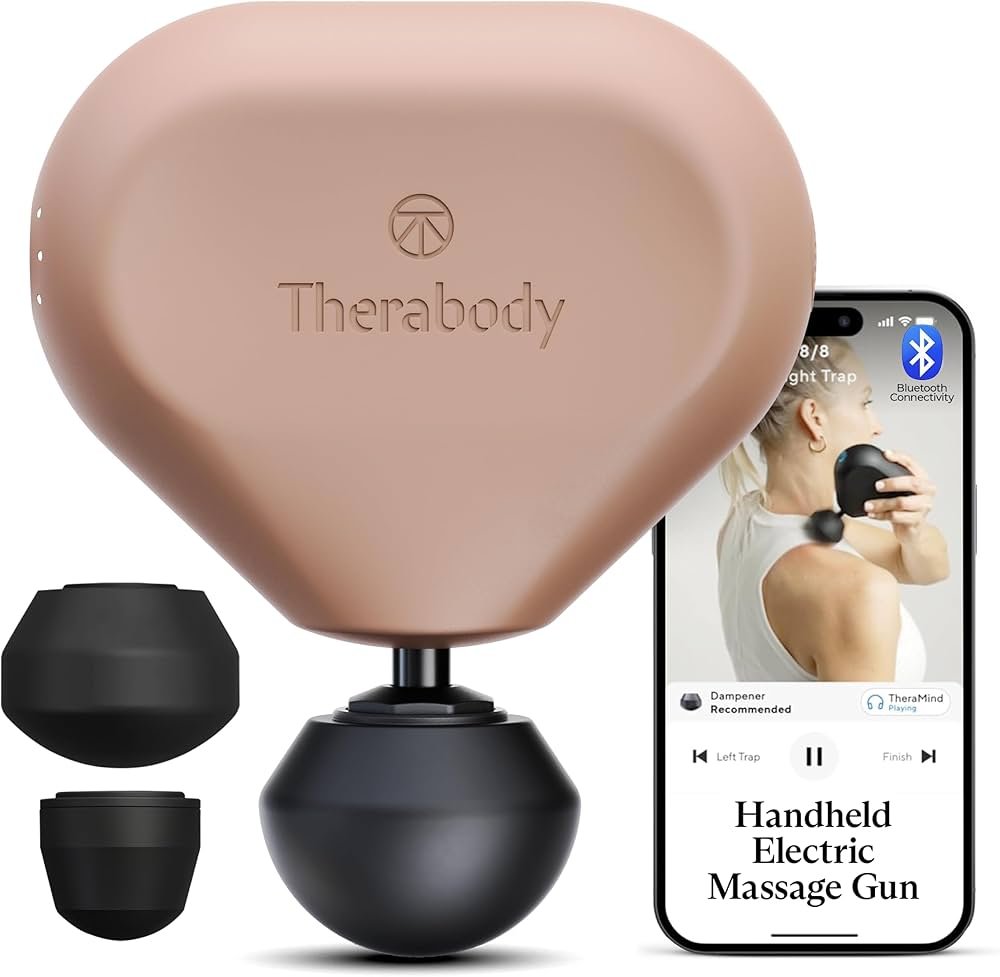
The Theragun Mini is a small handheld percussion massager made for travel, home use, and quick muscle care. It uses rapid pulses to move into soft tissue and may help you feel less tight before or after activity.
Unlike a full-size massage gun, the Mini is lighter and easier to hold with one hand. Its small body also makes it useful for reaching areas such as the calves, thighs, glutes, shoulders, and upper back.
The device does not “break up” muscle knots in a literal sense. Instead, the vibration may increase local blood flow, reduce the feeling of stiffness, and change how your nervous system senses discomfort for a short time.
Research on percussion therapy is promising but still developing. It may support short-term flexibility and comfort, but it should not replace medical care, physical therapy, sleep, hydration, or a sound training plan.
What comes in the box?
The exact contents can differ by model and region. Most Theragun Mini packages include:
• The Theragun Mini device
• One or more massage attachments
• A charging cable or charging accessory
• A soft travel pouch on some versions
Check your model’s manual before charging or using it. Therabody has released more than one Mini generation, so button layout, charging ports, battery life, and included attachments may vary.

How to Use Theragun Mini Step by Step
The best way to use Theragun Mini is to begin slowly and treat it like a gentle massage tool, not a power drill. You should feel pressure and movement, but never sharp pain, numbness, or burning.
1. Charge the device
Charge the Theragun Mini before your first session. Use the supplied charging equipment and place the device on a stable surface while it charges.
Avoid using a damaged cable, wet device, or cracked battery area. If the Mini becomes unusually hot, smells strange, or shows signs of damage, stop using it and contact the manufacturer.
2. Choose the right attachment
Attach the head while the device is turned off. Press it onto the shaft until it feels secure.
A standard soft or general-purpose attachment is usually best for most people. If your model includes different heads, use the softer option for sensitive areas and a firmer option for large muscle groups.
Do not use any attachment directly on bones, joints, the spine, or the front of your neck.
3. Turn on the Mini
Press and hold the center button until the device starts. Use the plus and minus buttons to select the speed.
Start at the lowest setting. A low speed gives you time to learn how the tool feels and helps prevent you from pressing too hard.
4. Place the device on the muscle
Set the attachment gently against the muscle before moving it. Do not switch the device on while it is floating in the air and then push it forcefully into your body.
Keep the device moving at a slow pace. Imagine brushing a paint roller across the muscle rather than drilling into one sore point.
5. Move across the area
Glide over the muscle for about 15 to 30 seconds at first. If the area feels comfortable, you can continue for up to about two minutes.
Use broad strokes over the muscle. Do not stay on one spot for a long time. More time and more pressure do not always create better results.
6. Increase the speed only if needed
You may increase the speed for large, dense muscles such as the quadriceps or glutes. Keep the pressure light enough that the device does not stall or cause pain.
For a first session, one low-speed pass is enough. You can learn how your body reacts before adding more time.

Where to Use Theragun Mini
Knowing where to use Theragun Mini is just as important as knowing how to hold it. Focus on large areas of soft muscle and avoid sensitive structures.
Calves
Sit with your leg supported. Glide from the lower calf toward the upper calf, but avoid the back of the knee and the Achilles tendon.
Use light pressure if your calves are sore after running. A calf can feel tender from normal exercise, but strong pain, swelling, warmth, or one-sided redness may signal a problem that needs medical attention.
Quadriceps
The front of the thigh is one of the easiest places to use a Mini. Relax your leg and move the device up and down the muscle.
Spend more time on the broad center of the thigh. Avoid pressing directly on the kneecap or the sharp edge of the hip.
Hamstrings
Support the leg and keep the hamstring relaxed. Move along the back of the thigh without pressing into the knee joint.
The hamstrings can be sensitive after sprinting or lifting. Start with low speed and short passes.
Glutes
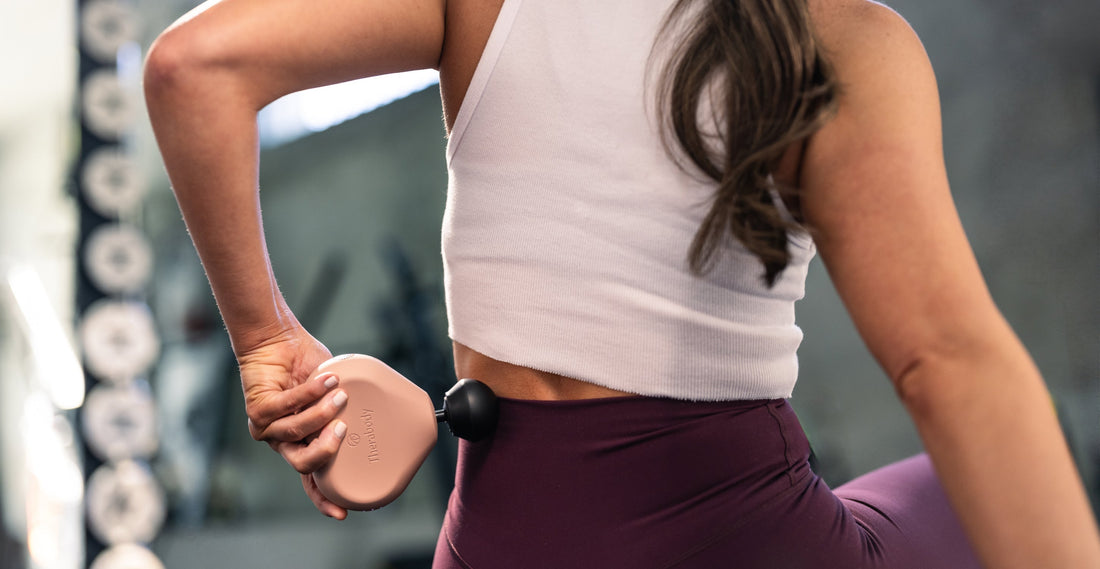
The glutes are large muscles and often respond well to gentle percussion. Stand, sit, or lie on your side in a position that lets the muscle relax.
Move over the fleshy part of the buttock. Avoid the tailbone and do not press deeply into the area near the sciatic nerve if it causes tingling or shooting pain.
Upper back and shoulders
Use the Mini on the upper trapezius muscles, which run between the neck and shoulders. Keep the device on the muscle and away from the spine.
It can be hard to reach your mid-back safely by yourself. Ask a trusted person for help or use a smaller range of motion rather than twisting your shoulder to reach.
Arms
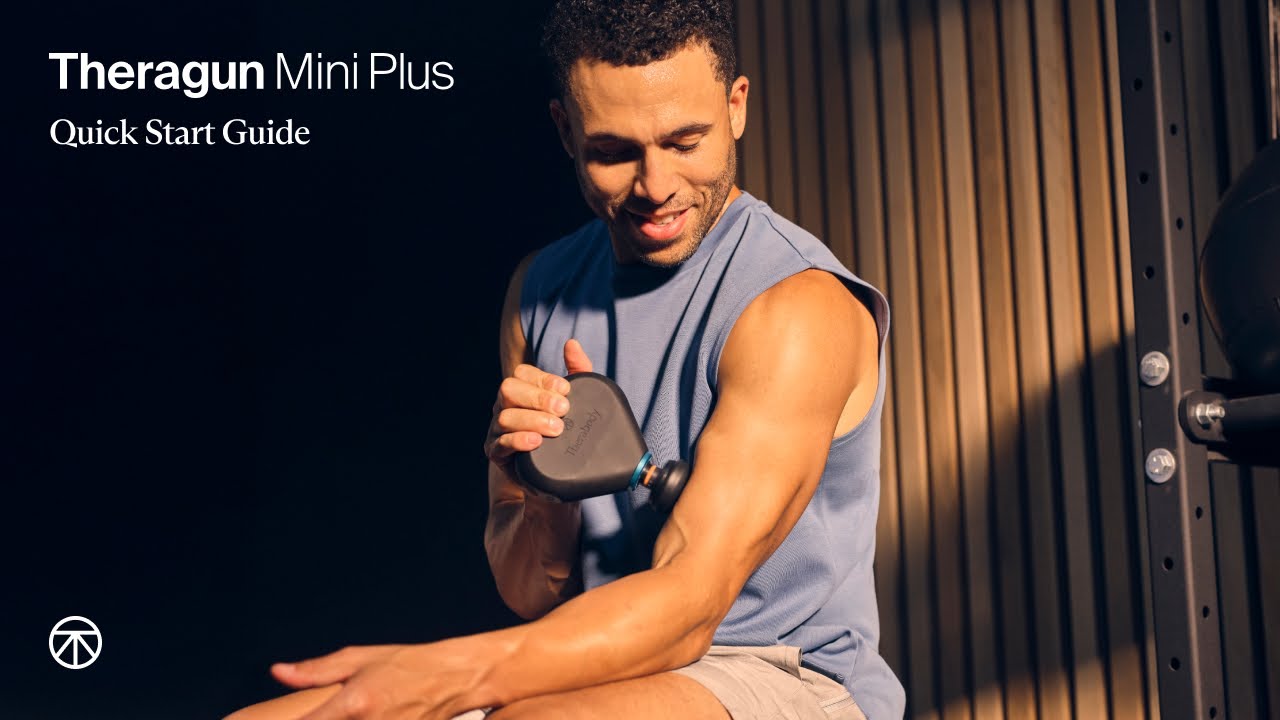
You can use the Mini on the biceps, triceps, and forearms. Use lower pressure on the forearms because they contain smaller muscles and many sensitive structures.
Avoid the elbow joint, wrist bones, and the front or side of the neck.

How to Use Theragun Mini Before Exercise
Before a workout, use the Mini as a brief warm-up tool. It may help you feel more mobile, but it does not replace active movement.
Spend about 15 to 30 seconds on each target muscle. Use a low or moderate speed and keep the device moving.
A simple pre-workout routine may include:
-
Use the Mini on the calves for 20 seconds per side.
-
Glide over the quadriceps for 20 seconds per side.
-
Treat the glutes for 20 seconds per side.
-
Follow with walking, bodyweight squats, arm circles, or other dynamic movements.
Do not use the Theragun Mini to mask serious pain before exercise. If a muscle feels strained, unstable, or sharply painful, rest and seek appropriate advice instead.
How to Use Theragun Mini After Exercise
After training, the Mini may help reduce the feeling of tightness and support a comfortable cool-down. Use slow passes on the muscles you worked.
A useful post-workout routine might look like this:
• Quadriceps: 30 to 60 seconds per side
• Hamstrings: 30 to 60 seconds per side
• Calves: 30 to 60 seconds per side
• Glutes: 30 to 60 seconds per side
Keep the pressure moderate. Your muscles may already be tired, so aggressive treatment can leave the area more tender.
Drink water, walk for a few minutes, and use gentle stretching if it feels good. The Mini is one part of recovery, not the whole recovery plan.

How Long Should You Use the Theragun Mini?
For most users, a short session is enough. Aim for about 30 seconds to two minutes per muscle group.
You do not need to treat every muscle in your body. Select the areas that feel tight or that worked hard during training.
A practical total session may take five to ten minutes. Stop sooner if the muscle feels relaxed or if the sensation becomes unpleasant.
Using the Theragun Mini for a long time on one spot can cause skin irritation, bruising, increased soreness, or temporary numbness. Follow the time limits in your model’s manual if they differ from these general guidelines.

How Much Pressure Should You Use?
Use only enough pressure to keep the attachment in contact with the muscle. The device should do most of the work.
A good pressure guide is:
• Low pressure: Best for warm-ups, sensitive muscles, and first-time use
• Moderate pressure: Useful for large muscle groups after activity
• Heavy pressure: Usually unnecessary and more likely to cause irritation
If the motor slows sharply, you are probably pressing too hard. If the skin becomes very red, painful, numb, or bruised, stop the session.
One lesson many new users learn is that a higher setting does not mean a better massage. Comfort and control matter more than intensity.
Common Mistakes to Avoid
Learning how to use Theragun Mini also means learning what not to do. These mistakes are common because the device feels powerful and easy to operate.
• Pressing hard on a sore spot: Deep pressure can increase irritation instead of easing it.
• Staying in one place: Keep the device moving over the muscle.
• Treating bones or joints: Percussion is designed for soft tissue, not the knee, ankle, spine, or elbow.
• Using it on an injury: Avoid percussion over a fresh strain, sprain, tear, open wound, or swollen area.
• Ignoring nerve symptoms: Stop if you feel pins and needles, electric pain, burning, or unusual weakness.
• Skipping the warm-up: Start at a low speed so your body can adjust.
• Using it when bruised: Massage can worsen bruising and may delay healing.
• Sharing the device without cleaning it: Wipe the attachment according to the manufacturer’s care instructions.
• Treating pain instead of the cause: Temporary relief does not explain why pain started.
In my experience reviewing recovery routines, the most useful sessions are often the least dramatic. Gentle, regular use tends to be easier to control than one intense session after a painful workout.
Safety Precautions and Who Should Avoid It
The Theragun Mini is not appropriate for every person or every body area. Ask a health professional before using it if you have a medical condition, take blood-thinning medicine, or are unsure whether percussion is safe for you.
Avoid using the device over:
• The front or side of the neck
• The head and face
• The spine and other bony areas
• Open cuts, rashes, burns, or infected skin
• Varicose veins
• Recent fractures or surgical sites
• Areas with severe swelling or unexplained pain
People with bleeding disorders, reduced sensation, neuropathy, osteoporosis, deep vein thrombosis, cancer, pregnancy-related concerns, or recent surgery should get personalized medical advice first.
Seek urgent care for sudden chest pain, severe shortness of breath, major swelling, a cold or pale limb, or sudden weakness. A massage gun is not a treatment for these symptoms.
How to Clean and Maintain the Theragun Mini
Turn off the device before cleaning it. Remove the attachment and wipe it with a soft, slightly damp cloth unless your manual gives different instructions.
Keep liquid away from the motor and charging port. Do not submerge the device or use harsh chemicals that could damage the surface.
Store the Mini in a cool, dry place. Avoid leaving it in a hot car, near water, or in direct sunlight for long periods.
Check the attachment before each use. Replace it if it is cracked, loose, or damaged. Proper care helps the device stay comfortable and safe to use.
A Simple Five-Minute Theragun Mini Routine
This routine works well after a walk, light workout, or long day at a desk.
-
Turn on the device at its lowest speed.
-
Treat the right calf for 30 seconds.
-
Treat the left calf for 30 seconds.
-
Treat each quadriceps for 30 seconds.
-
Treat each glute for 30 seconds.
-
Treat each upper shoulder muscle for 20 seconds.
-
Turn off the device and take a short walk or perform gentle mobility movements.
Adjust the routine to your needs. If you spent the day sitting, your upper back and hips may deserve attention. If you ran, your calves and thighs may feel better with a short, gentle session.
Does the Theragun Mini Help With Muscle Knots?
It may reduce the feeling of tightness, but it does not permanently remove every muscle knot. A knot can involve muscle tension, fatigue, stress, posture, or an underlying injury.
Use gentle pressure and stop if the pain feels sharp or spreads. If the same knot keeps returning, look at sleep, training load, desk posture, footwear, and movement habits.
Can I use the Theragun Mini every day?
Many people can use it daily for short sessions on healthy muscles. Keep the pressure light, avoid damaged tissue, and stop if you develop bruising or increased pain.
Should I use the Theragun Mini before or after stretching?
You can use it before light dynamic movement or after exercise as part of a cool-down. Avoid forcing a deep stretch on a painful muscle just because it feels temporarily numb.
Can I use the Theragun Mini on my lower back?
Use caution and stay on the soft muscles beside the spine, not on the spine itself. Do not use it for unexplained back pain, numbness, weakness, or pain that travels down the leg without professional guidance.
Frequently Asked Questions About How to Use Theragun Mini
How do you turn on a Theragun Mini?
Press and hold the center button until the device starts. Use the plus and minus buttons to change speed, and press or hold the center button again according to your model’s controls to turn it off.
How long should you use a Theragun Mini on one muscle?
Start with 15 to 30 seconds and stop around two minutes for one muscle group. Longer sessions are not automatically better and may cause soreness or skin irritation.
Can you use a Theragun Mini directly on a sore muscle?
You can use light pressure on normal post-workout soreness if the skin is healthy and the pain is mild. Do not use it on a fresh injury, swelling, bruising, sharp pain, or an area that feels numb.
Where should you not use a Theragun Mini?
Avoid the spine, joints, bones, head, front of the neck, open wounds, varicose veins, and areas with swelling or reduced sensation. Keep the device on relaxed, fleshy muscle.
Is it safe to use a Theragun Mini every day?
Short daily sessions are generally tolerated by many healthy adults when used gently. People with medical conditions, recent surgery, circulation problems, nerve problems, or blood-clot risks should ask a clinician first.
What speed should beginners use on a Theragun Mini?
Beginners should start at the lowest speed and increase it only if the sensation remains comfortable. Use more speed for large muscles only when low speed does not provide enough movement.
Can the Theragun Mini replace a massage therapist or physical therapist?
No. It may provide short-term comfort and support a personal recovery routine, but it cannot assess an injury or create a treatment plan. Persistent or worsening pain needs evaluation from a qualified health professional.
Conclusion
Using the Theragun Mini well comes down to a few simple habits: choose a soft muscle, start at low speed, use light pressure, keep the device moving, and limit each area to a short session. Avoid bones, joints, the spine, the neck, fresh injuries, and any area with unusual symptoms.
The best way to use Theragun Mini is as one small part of a healthy routine that also includes movement, rest, hydration, and proper medical care when needed. Try the five-minute routine today, pay attention to how your body responds, and share your experience or questions in the comments.