How To Clean A Massage Gun: Easy Care Guide
Clean a massage gun by unplugging it, wiping the body, washing safe attachments, and drying every part fully.
A massage gun touches your skin, sweat, oils, and sometimes dirty gym bags. Learning how to clean a massage gun the right way helps control germs, prevent odors, protect the motor, and extend the life of the device. This guide explains safe cleaning steps, products to avoid, cleaning schedules, and simple lessons learned from regular home and gym use.

Why You Should Clean a Massage Gun
A massage gun can collect sweat, skin oil, lotion, dust, and bacteria after each use. The attachment head may press against many parts of your body, so it can become dirty faster than the main device.
A clean massage gun also feels better to use. Dirt can make the handle sticky, while old sweat may create an unpleasant smell. Regular care keeps the surface smooth and helps the device look new.
Cleaning may also protect the moving parts. Dust and moisture can enter small gaps around the attachment shaft, buttons, charging port, or vents. These areas need care because water damage may void your warranty.
The main benefits of cleaning a massage gun include:
• Better hygiene between uses
• Less odor and surface buildup
• Lower risk of spreading germs
• Safer use on clean skin
• Longer life for the attachments and device
• Easier inspection for cracks or damage
A massage gun is not a medical device that becomes sterile through normal home cleaning. Still, careful cleaning can greatly reduce surface dirt and common germs.

What You Need Before Cleaning
Gather your supplies before you begin. The best tools are simple and gentle.
• A clean, soft microfiber cloth
• Mild dish soap
• Warm water
• A small bowl
• Cotton swabs
• A soft, dry towel
• A 70% isopropyl alcohol wipe, if the user manual allows it
• A clean, dry space for air-drying
Do not use rough sponges, steel wool, bleach, strong solvents, or abrasive cleaners. These products may scratch the plastic, damage the finish, or weaken soft foam.
Always check the user manual first. Brands use different plastics, rubber, silicone, and foam materials. One attachment may tolerate soap and water, while another may need only a damp cloth.
If you lost the manual, look for cleaning instructions on the manufacturer’s support page. The manual is the best guide for water resistance, removable parts, and approved cleaning products.
How to Clean a Massage Gun Step by Step
The safest method is slow and simple. Do not rush the process, especially around the charging port and moving shaft.
1. Turn off and unplug the device
Switch off the massage gun before cleaning it. Disconnect the charger and remove the battery if the design allows it.
Never clean a powered or charging device with a wet cloth. This can create an electrical risk and may damage the internal circuit.
2. Remove the massage heads
Take off each removable attachment. Cleaning the heads separately lets you reach dirt around the connection point.
Place the heads on a clean towel. Keep track of small parts, such as storage rings or protective caps.
3. Wipe the main body
Dampen a microfiber cloth with a small amount of water. Wring it well so it feels damp, not wet.
Wipe the handle, control buttons, display, and outer shell. For sticky areas, add one drop of mild soap to the cloth. Do not pour soap directly onto the device.
Use a dry part of the cloth to remove moisture. Pay close attention to seams, buttons, vents, and the area around the attachment shaft.
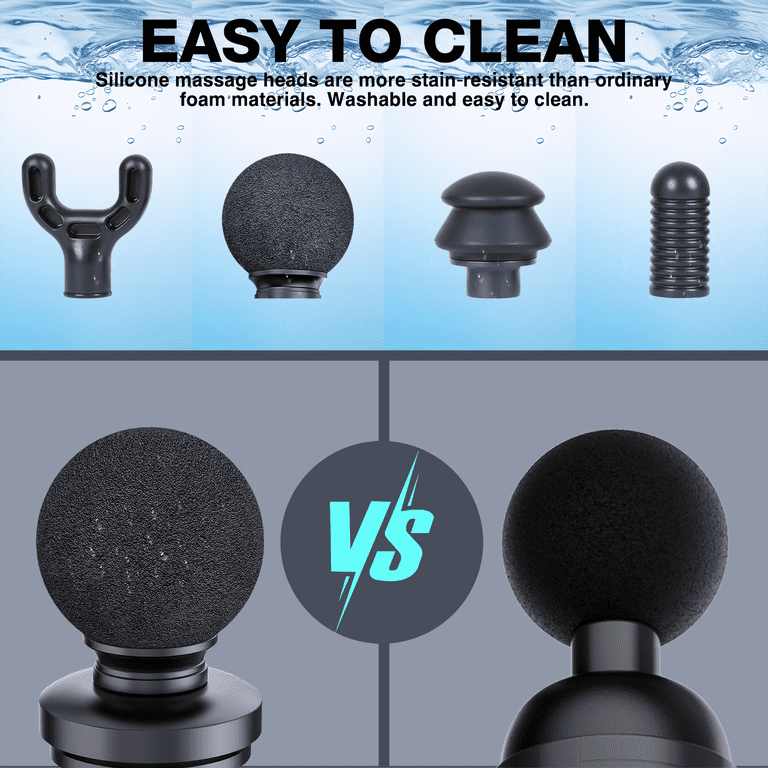
4. Clean nonporous attachments
Many plastic, silicone, and rubber heads can be wiped with a damp cloth and mild soap. If the manual permits washing, rinse the attachment under warm water.
Avoid hot water. High heat may soften, warp, or weaken some materials.
For added surface cleaning, use a 70% isopropyl alcohol wipe only when the manufacturer says it is safe. Alcohol can damage certain rubber surfaces, coatings, and soft plastics.
5. Clean foam attachments with care
Foam heads need special attention. Foam can absorb moisture and may take a long time to dry.
Do not soak a foam attachment unless the manufacturer clearly says it is washable. Instead, wipe it with a lightly damp cloth and mild soap. Press it gently with a dry towel to remove extra moisture.
If the foam has deep cracks, a strong odor, mold-like spots, or damage, replace it. A worn foam head is hard to clean well and may irritate your skin.
6. Clean the attachment shaft
Use a dry cotton swab around the metal or plastic shaft. Remove lint, skin flakes, and dust from the small gap.
If needed, use a barely damp swab, then dry the area at once. Never push liquid into the shaft opening.
7. Let every part dry
Place the massage heads on a clean towel in a dry, well-ventilated room. Allow them to air-dry completely before putting them back on the device.
Do not use a hair dryer, heater, or direct high heat. Heat may damage foam, glue, batteries, or plastic parts.
8. Reassemble and store it safely
Once all parts are dry, attach the heads again or place them in a clean storage case. Store the massage gun away from bathroom steam, direct sunlight, pets, and damp gym clothes.
This step matters more than many people think. A clean device stored in a wet gym bag can become dirty again within hours.

How to Disinfect a Massage Gun Safely
Cleaning and disinfecting are not the same. Cleaning removes dirt and oils. Disinfecting uses a product designed to reduce germs on a surface.
Start with cleaning. Disinfectant works poorly when sweat, lotion, and dirt cover the surface.
For the main body, use a manufacturer-approved disinfecting wipe. The wipe should be damp, not dripping. Keep liquid away from ports, vents, buttons, and seams.
For removable nonporous heads, follow the product manual. Some heads can be wiped with an alcohol-based product. Others may become cracked or sticky after repeated alcohol use.
Do not use these products unless the manufacturer specifically approves them:
• Bleach
• Hydrogen peroxide mixtures
• Ammonia
• Acetone or nail polish remover
• Strong household degreasers
• Perfumed sprays
• Disinfectant sprays applied directly to the device
Never mix cleaning products. Mixing chemicals can create harmful fumes and may damage the massage gun.
A useful rule is to treat the device like a small electronic tool, not like a kitchen plate. Use the least aggressive method that removes the dirt.

How Often Should You Clean a Massage Gun?
Clean the massage gun after every use if you share it, use it on sweaty skin, or apply lotion before treatment. A quick wipe takes less than a minute.
For personal use, wipe the body and attachment after each session. Give the removable heads a more careful wash once or twice each week, depending on use.
Use this simple schedule:
• After every use: Wipe the body and massage head.
• Once a week: Wash approved nonporous heads and inspect the shaft.
• After illness: Clean and disinfect safe surfaces before the next use.
• After outdoor or gym use: Clean away dust, sweat, and dirt before storage.
• Every few weeks: Check for cracks, loose parts, odors, and charging damage.
If more than one person uses the massage gun, clean it between users. This is especially important when it touches the feet, neck, or other areas with heavy sweat.

Common Mistakes to Avoid
Small cleaning mistakes can cause bigger problems. Most damage comes from too much water, harsh chemicals, or poor drying.
Spraying cleaner directly on the device
Spray can travel through buttons, vents, and charging ports. Spray the product onto a cloth instead, if the product is approved for the surface.
Soaking every attachment
Not all massage heads are waterproof. Foam, leather-like materials, glued parts, and some rubber compounds can hold water or break down.
Using the massage gun while cleaning
This creates an avoidable safety risk. Always turn it off, unplug it, and keep the charger away from moisture.
Reattaching wet heads
A damp attachment can trap moisture near the shaft. This may lead to odor, residue, or corrosion over time.
Using too much alcohol
Alcohol may clean some hard surfaces, but repeated use can dry or crack soft materials. Check compatibility before using it.
Ignoring the storage case
The case can hold sweat, dust, and bacteria. Wipe the inside with a suitable cloth and let it dry before storing the device.
Cleaning only the attachment
The handle also collects skin oils and sweat. Wipe the controls, grip, and lower body during every basic cleaning.
In my experience, the most common mistake is putting the massage gun back in its case while the head still feels damp. It seems harmless, but closed storage traps moisture like a lid over a wet towel.

How to Clean Different Massage Gun Materials
Different materials need different care. The safest cleaning method depends on the attachment, not just the brand.
Silicone and hard plastic
These materials are often easy to wipe. Use warm water, mild soap, and a soft cloth when the manual allows washing.
Dry them fully before use. Look for small splits around narrow edges, since damaged silicone can hold residue.
Rubber
Rubber may react badly to alcohol, oils, and strong cleaners. Use a damp cloth with mild soap unless the manufacturer provides different instructions.
Avoid leaving rubber heads in direct sunlight. Heat and sunlight may cause fading or cracking.
Open-cell foam
Open-cell foam absorbs water and body oils. Clean it gently and allow a long drying time.
Replace foam heads that smell bad even after cleaning. Odor that returns quickly may mean the inside remains damp or contaminated.
Closed-cell foam
Closed-cell foam usually absorbs less water than open-cell foam. Even so, do not assume it is fully waterproof.
Wipe it gently and follow the exact care instructions supplied with the massage gun.
Metal parts
Wipe metal shafts with a dry or slightly damp cloth. Dry them at once to reduce the chance of rust or corrosion.
Do not pour cleaner into the moving connection area. A cotton swab can remove dust from the edges.
Cleaning a Massage Gun After Illness or Shared Use
If someone has been sick, clean the massage gun before another person uses it. Focus on the handle, buttons, attachment shaft, and every head that touched the skin.
First remove visible dirt with soap and water where safe. Then use a compatible disinfecting wipe on hard, nonporous surfaces. Follow the product label for the required wet contact time.
The surface must stay visibly wet for that time to work. Do not use the device until the disinfectant residue has dried or been removed as directed.
Do not share a massage gun over broken skin, open wounds, active rashes, or areas with a suspected skin infection. Cleaning reduces surface germs, but it does not make the device safe for every skin condition.
If an attachment touches blood, throw it away if it cannot be fully cleaned and disinfected according to the manufacturer’s instructions. When in doubt, replacing a low-cost head is safer than taking a risk.
When to Replace a Massage Gun Attachment
Cleaning cannot fix every problem. Replace an attachment when it has damage that may affect hygiene or safe use.
Look for these warning signs:
• Deep cracks or splits
• Peeling foam
• Sticky or melted areas
• Mold-like spots
• A strong odor that returns after cleaning
• Loose pieces
• Rough edges that may scratch skin
• A shape that has changed
Also replace an attachment if it causes pain or skin irritation. Stop using it until you identify the cause.
The main device may need professional service if it makes a new grinding sound, becomes unusually hot, loses power, or shows signs of liquid entry. Do not open the housing unless the manufacturer authorizes it. Opening the device can create a shock risk and may cancel the warranty.
Safe Massage Gun Care Tips
Cleaning is only one part of good care. A few daily habits can keep the device cleaner for longer.
• Use the massage gun on clean, dry skin when possible.
• Avoid applying thick oils or lotions before treatment.
• Keep the device away from sweat-soaked clothing.
• Do not leave it in a hot car.
• Charge it on a dry, stable surface.
• Keep the attachment shaft free from dust.
• Store heads separately if they remain damp after use.
• Read the care instructions before using a new cleaner.
• Check the battery and charger for damage.
Lotions may feel good on the skin, but they can leave a greasy film on the attachment and handle. If you use lotion, wipe the massage gun soon after the session.
A clean towel under the device during use can also help. It creates a simple barrier between the massage gun and a dusty floor, bench, or gym bag.
Frequently Asked Questions About How to Clean a Massage Gun
Can I wash massage gun heads with soap and water?
You can wash many hard plastic or silicone heads with mild soap and warm water, but check the manual first. Do not soak foam heads or any attachment that contains glued or electronic parts.
Can I use rubbing alcohol to clean a massage gun?
Rubbing alcohol may be safe for some hard, nonporous surfaces, but it can damage rubber, foam, or soft plastic. Use it only when the manufacturer approves it, and never spray it directly into the device.
Can I rinse the main massage gun under water?
No, unless the manufacturer clearly states that the entire device is waterproof. Most massage guns contain electronic parts, so wipe the body with a damp cloth instead of rinsing it.
How often should I clean my massage gun?
Wipe the massage gun after every use, especially when it touches sweaty skin or is shared. Wash approved attachments about once a week and clean them after illness or heavy gym use.
How do I clean a foam massage gun head?
Wipe the foam head with a lightly damp cloth and mild soap if the care instructions allow it. Press it with a dry towel and let it air-dry fully; replace it if odor, mold-like spots, or deep cracks remain.
What should I do if my massage gun gets wet?
Turn it off, unplug it, and remove the attachment right away. Do not charge or use it until it is fully dry, and contact the manufacturer if water entered the vents, buttons, or charging port.
Can I use disinfectant wipes on a massage gun?
You may use a compatible disinfectant wipe on approved hard surfaces. Avoid excess liquid and follow the product’s contact-time instructions, while keeping the wipe away from ports and openings.
Conclusion
Learning how to clean a massage gun is easy when you use a gentle, consistent routine. Turn the device off, remove the heads, wipe the body, clean safe attachments, avoid harsh products, and let every part dry completely.
Pay special attention to foam, charging ports, seams, and storage cases. Replace damaged heads instead of trying to rescue material that stays cracked, sticky, or smelly.
Make cleaning your massage gun part of every recovery session. A one-minute wipe can support better hygiene, protect your equipment, and keep your massage routine ready for the next use. Share this guide with a training partner or save it for your next post-workout cleanup.