How To Use A Massage Gun After Workout: Expert Tips
Use a massage gun after a workout to relax tired muscles, improve movement, and ease short-term soreness.
Learning how to use a massage gun after workout can make recovery feel easier, but the tool works best with good timing, light pressure, and steady movement. After testing massage guns during strength sessions, runs, and long workdays, I have found that simple technique matters more than using the highest speed. This guide explains the safest method, the real benefits, common mistakes, and when to skip percussive therapy.
What Is a Massage Gun?
A massage gun is a handheld device that uses rapid pulses to press into soft tissue. This action is called percussive therapy. It may help you relax tight muscles and move more freely after exercise.
The device does not “break up” muscle knots or remove lactic acid. Those are common claims, but they oversimplify how muscles recover. Instead, a massage gun may change how you feel pain, increase local blood flow for a short time, and reduce the feeling of stiffness.
Research on vibration and percussive therapy shows possible short-term gains in flexibility and range of motion. However, evidence for faster muscle recovery is still limited. A massage gun should support good sleep, food, water, and gradual training. It should not replace them.

Benefits of Using a Massage Gun After a Workout
Using a massage gun after workout may offer several useful benefits. The results can vary based on your training load, sleep, hydration, and general health.
It may reduce the feeling of soreness
A massage gun may help reduce short-term muscle discomfort after exercise. It does not prevent all delayed-onset muscle soreness, also called DOMS. DOMS often peaks between 24 and 72 hours after a new or hard workout.
Gentle massage may make sore muscles feel less tense. This can help you walk, stretch, or perform daily tasks with more comfort.
It may improve short-term mobility
Percussive therapy can help you move a joint through a larger range for a short period. This may be useful after exercises that leave your hips, calves, shoulders, or upper back feeling tight.
The effect is usually temporary. It is best used with active movement, not as a substitute for mobility training.
It may help you relax
The steady pressure and vibration can feel calming after a demanding workout. Many people use a massage gun as part of a post-workout routine that includes slow breathing and light stretching.
Relaxation may also help you shift from training mode to rest mode. Still, a massage gun is not a treatment for anxiety, chronic pain, or sleep disorders.
It may increase local circulation
Massage and vibration can raise blood flow near the treated area for a short time. This may create a warm, loose feeling in the muscle.
More blood flow does not mean that the tool removes waste products or speeds healing in every case. Be careful with claims that promise instant recovery or major performance gains.
How to Use a Massage Gun After Workout
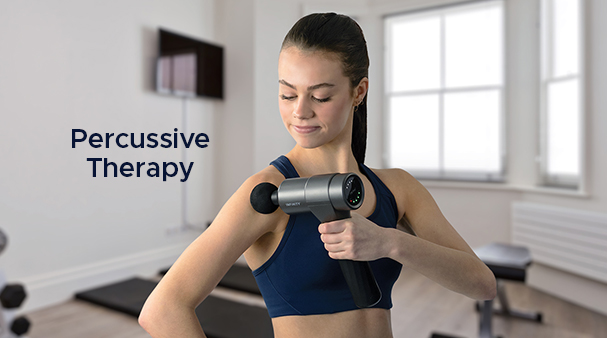
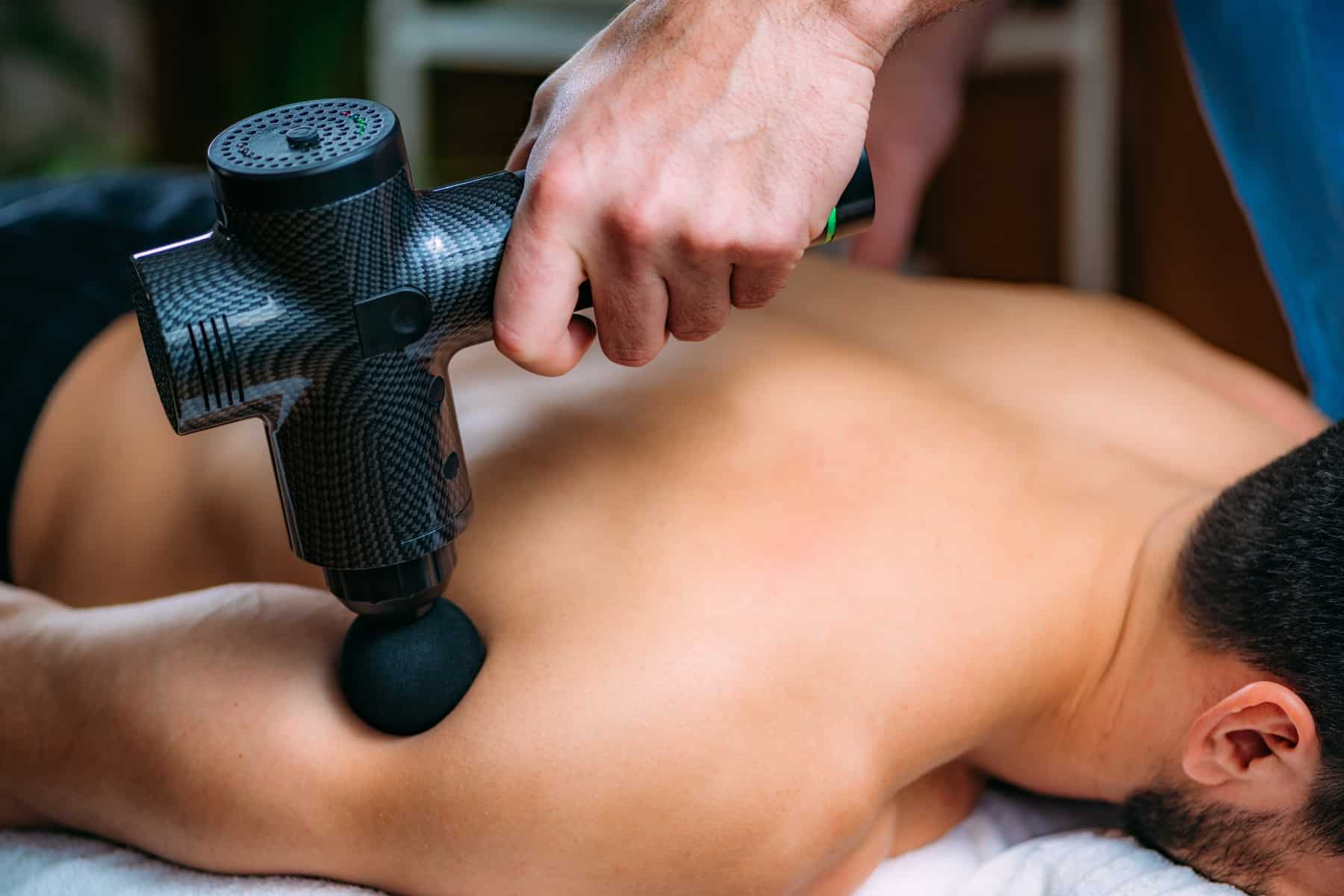
The best way to use a massage gun after workout is to start gently and move slowly over large muscle groups. You should feel mild pressure, not sharp pain.
Follow these steps:
- Let your breathing settle for a few minutes. Drink water and walk slowly before using the device.
- Choose a soft attachment. A large round head works well for most large muscles.
- Start at the lowest speed. Give your body time to adjust.
- Place the massage gun on the muscle before turning it on. This reduces the chance of sudden discomfort.
- Glide over the muscle at a slow pace. Do not hold the device in one spot for too long.
- Spend about 30 seconds on a small area and up to two minutes on a large muscle.
- Use light to moderate pressure. Let the device do most of the work.
- Stop if you feel sharp pain, numbness, tingling, burning, or unusual weakness.
- Finish with easy movement, such as walking or gentle range-of-motion exercises.
A full session often takes five to 10 minutes. You do not need to treat every muscle after every workout. Focus on areas that feel tight or worked hard.
A simple post-workout order
Try this order after a lower-body session:
• Calves: Move from the lower calf toward the upper calf without pressing into the Achilles tendon.
• Quadriceps: Glide along the front of the thigh from above the knee toward the hip.
• Hamstrings: Work through the back of the thigh with low pressure.
• Glutes: Use a slow, comfortable pass over the muscle.
• Hip area: Stay on the outer muscular area and avoid the front of the hip joint.
For an upper-body session, focus on the chest, lats, upper back, rear shoulders, and arms. Avoid the front and sides of the neck.
Where to Use a Massage Gun After Workout
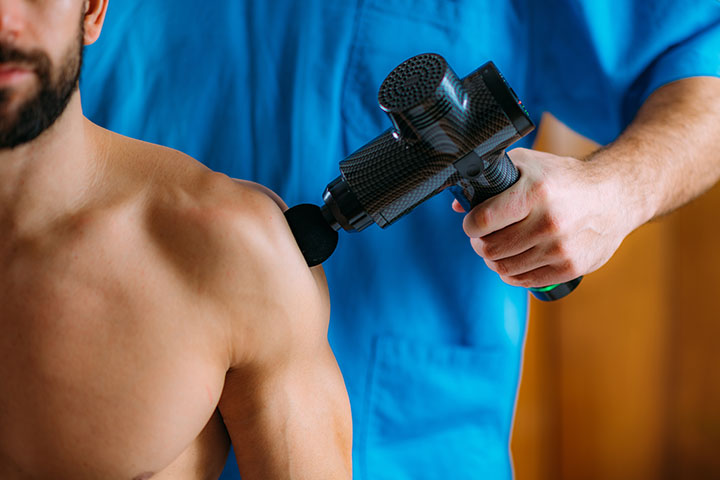
A massage gun is designed for muscle tissue. It is not meant for bones, joints, nerves, or delicate areas.
Safer areas to treat
You can usually use a massage gun on these muscular areas when they are healthy and not injured:
• Quadriceps
• Hamstrings
• Calves
• Glutes
• Hip muscles
• Lats
• Chest muscles
• Upper back muscles
• Biceps and triceps
Use extra care around smaller muscles. Reduce the speed and pressure on the forearms, feet, and shoulders.
Areas to avoid
Do not use a massage gun directly on:
• The spine
• The front or side of the neck
• The head or face
• The throat
• The kidneys
• The front of the hip joint
• The kneecap
• The shin bone
• The ankle bones
• The Achilles tendon
• Open wounds or bruises
• Varicose veins
• Areas with reduced feeling
A useful rule is simple: treat the soft muscle beside a joint, not the joint itself. The massage gun should feel like a rolling pressure tool, not a hammer.

How Long Should You Use a Massage Gun?
Most people need only five to 10 minutes after a workout. Spending more time does not always create better results. Too much pressure can leave the tissue tender and irritated.
Use these general time limits:
• Small muscle area: 15 to 30 seconds
• Medium muscle group: 30 to 60 seconds
• Large muscle group: 60 to 120 seconds
• Full-body session: About 10 minutes
You can use a massage gun after workout right away, once your heart rate begins to settle. Some people prefer to wait 10 to 20 minutes and use it after a shower.
For delayed soreness the next day, use a lower setting and less pressure. The goal is comfort. If the area feels worse later, shorten your next session or skip that muscle.
Choosing the Right Speed and Attachment
Most massage guns have several speeds and heads. More speed is not always better. The correct setting is the one that feels controlled and comfortable.
Speed guide
• Low speed: Best for sore muscles, warm-up, sensitive areas, and first-time use.
• Medium speed: Useful for healthy muscles after normal training.
• High speed: Better for experienced users who tolerate it well. It is not needed for most recovery sessions.
Attachment guide
• Large round head: Good for glutes, thighs, and other large muscles.
• Flat head: Useful for broad muscle areas and moderate pressure.
• Bullet head: Designed for focused pressure, but it can be too intense. Avoid using it on bones, the spine, and the front of the neck.
• Soft air-cushion head: Helpful for sensitive areas and lighter work.
• Fork-shaped head: Some people use it near the spine, but do not place the fork directly on the spine. Stay on the muscle beside it.
One mistake I often see is choosing the hardest head because it feels powerful. That approach can create soreness without improving recovery. Start with the softest option and increase pressure only when your body responds well.

Massage Gun After Workout: Before or After Stretching?
You can use a massage gun before gentle stretching. It may help the muscle feel less tense and make movement easier.
A practical order is:
- Cool down with five minutes of easy walking.
- Use the massage gun on tight muscle groups.
- Perform gentle dynamic or static stretches.
- Drink water and eat a balanced meal.
Avoid forcing a deep stretch after intense percussive therapy. Your range of motion may increase for a short time, but that does not mean the tissue is ready for extreme positions.
For strength training, light massage followed by easy mobility work often feels comfortable. For running, walking, or cycling, focus on the calves, thighs, glutes, and hip muscles.

Common Mistakes to Avoid
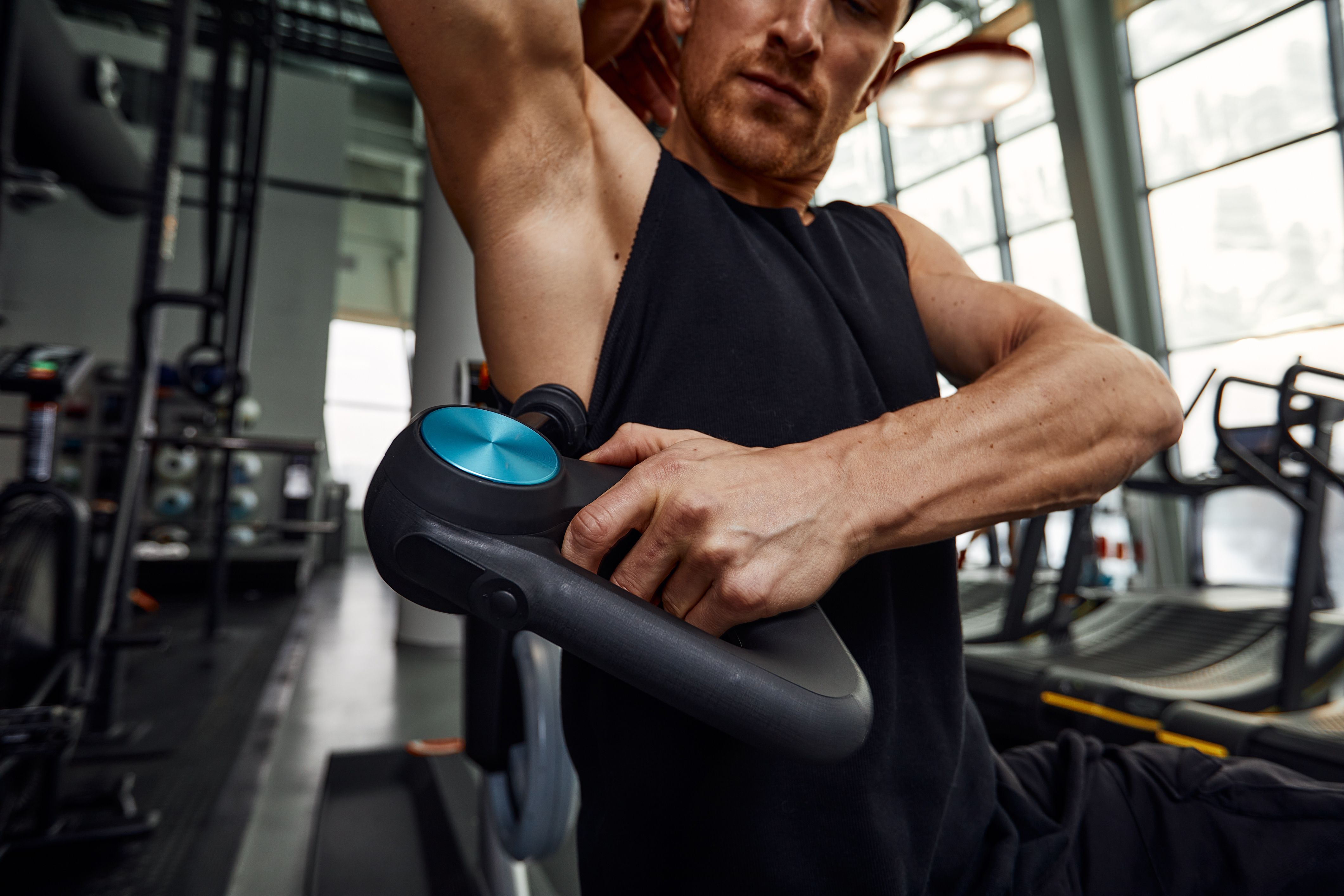
Knowing how to use a massage gun after workout also means knowing what not to do. Most problems come from too much force, too much time, or poor placement.
• Pressing as hard as possible: Heavy pressure can increase tenderness and irritate tissue.
• Staying on one spot: Keep the device moving slowly. Do not hold it over a painful point for several minutes.
• Treating an injury: A massage gun may worsen a fresh strain, tear, sprain, or bruise.
• Using it on joints: Vibration over the kneecap, elbow, ankle, or spine can hurt.
• Chasing pain: A painful sensation is not proof that the tool is working.
• Ignoring numbness: Stop at once if you notice tingling, numbness, or loss of strength.
• Using it before checking the manual: Attachments, speed levels, and safety advice differ between models.
• Expecting instant healing: A massage gun can support comfort, but it cannot repair damaged tissue overnight.
My own early mistake was using a high setting on already sore calves after a long run. The session felt intense, but the muscles were more tender the next morning. Lower speed, shorter passes, and less pressure produced a much better result.
When Should You Avoid a Massage Gun?
A massage gun is not safe for everyone. Speak with a medical professional before using one if you have a health condition or take medicine that affects bleeding or circulation.
Avoid using a massage gun over an area with:
• A suspected fracture
• A fresh muscle strain
• A sprain
• Severe swelling
• A deep bruise
• An open wound
• Skin infection
• Loss of sensation
• Severe or unexplained pain
People with blood clots, bleeding disorders, certain vascular conditions, neuropathy, or cancer should ask a qualified clinician first. Pregnant people should also get personalized medical advice, especially before treating the abdomen, lower back, or pelvic area.
Seek medical care for severe pain, major swelling, unusual warmth, skin color changes, chest pain, shortness of breath, or weakness. A massage gun should never delay an important diagnosis.
Does a Massage Gun Improve Muscle Recovery?
A massage gun may improve how your muscles feel, but its effect on actual recovery is less certain. Small studies suggest that percussive therapy may support short-term flexibility and reduce perceived soreness. Research does not clearly show that it dramatically repairs muscle damage or improves long-term athletic performance.
Muscle recovery depends on several basics:
• Enough sleep
• Adequate protein and total calories
• Regular hydration
• Rest between hard sessions
• A gradual training plan
• Proper treatment for injuries
Think of the massage gun as one tool in a toolbox. It may make the day after training more comfortable, but it cannot replace the tools that build recovery.
A Safe 10-Minute Post-Workout Routine
Use this routine when your body feels generally tired but not injured.
- Walk slowly for three to five minutes.
- Drink water and check how each muscle feels.
- Select a soft or round attachment.
- Use the lowest speed on one large muscle.
- Glide for 30 to 60 seconds.
- Move to the next muscle without pressing harder.
- Spend no more than two minutes on one large area.
- Stop if the sensation becomes sharp, hot, numb, or painful.
- Finish with gentle mobility work.
- Note how you feel later that day and the next morning.
This last step matters. Recovery tools should be judged by your response over time, not by how intense the session feels. If you feel looser and comfortable, the routine may suit you. If you feel bruised or more sore, reduce the dose.
Frequently Asked Questions
How soon can you use a massage gun after a workout?
You can use a massage gun after workout once your heart rate and breathing start to return to normal. A brief cool-down walk first can make the session feel more comfortable.
How often should you use a massage gun after workout?
Many people can use a massage gun after workout once a day on healthy muscles. Use shorter sessions and lower pressure when soreness is strong, and stop if symptoms increase.
Can a massage gun remove lactic acid?
No. A massage gun does not remove lactic acid from muscles. Your body clears lactate naturally, while gentle massage may help you feel less stiff or sore.
Can you use a massage gun on sore muscles?
Yes, but use low speed, light pressure, and short passes on normal post-workout soreness. Do not use it on severe pain, swelling, bruising, or a suspected injury.
Can you use a massage gun every day?
You may use a massage gun every day on different healthy muscle groups if your body responds well. Avoid long, forceful sessions because repeated irritation can cause more tenderness.
Should you use a massage gun before or after a workout?
You can use it before exercise for a short, light pass to help you feel ready to move. After exercise, use it for comfort and relaxation, but do not treat it as a replacement for a warm-up or cool-down.
Can a massage gun help with muscle knots?
It may reduce the feeling of tightness around a tense muscle. However, persistent knots, sharp pain, or limited movement may need assessment from a physical therapist or other qualified clinician.
Conclusion
Learning how to use a massage gun after workout is mostly about control. Use a low setting, choose soft muscle tissue, keep the device moving, and limit each area to a short session. Avoid bones, joints, the spine, fresh injuries, and any area that feels numb or unusually painful.
A massage gun can be a useful recovery aid when paired with sleep, food, hydration, mobility work, and a smart training plan. Start with five gentle minutes after your next workout and track how your body feels. If this guide helped, explore more recovery tips or share your experience in the comments.