Are Massage Guns As Effective As Professional Massage: Yes?
Massage guns can ease muscle soreness, but professional massage offers broader, more personalized benefits.
Are massage guns as effective as professional massage? The honest answer depends on your goal. A massage gun can provide quick, low-cost relief for tight muscles and post-workout soreness. A licensed massage therapist can assess your body, adjust pressure, reach difficult areas, and treat soft tissue with greater precision.
Understanding the difference helps you choose the right tool for the right moment. This guide compares massage guns with professional massage, reviews the evidence, explains safety limits, and shares practical tips for using both methods wisely.
What Is a Massage Gun?
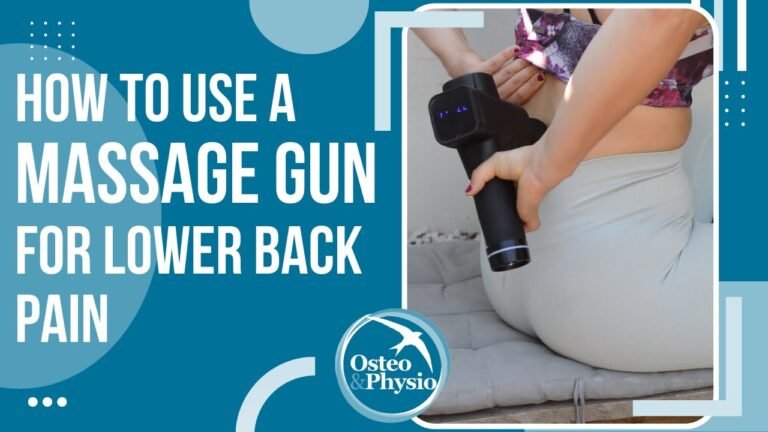
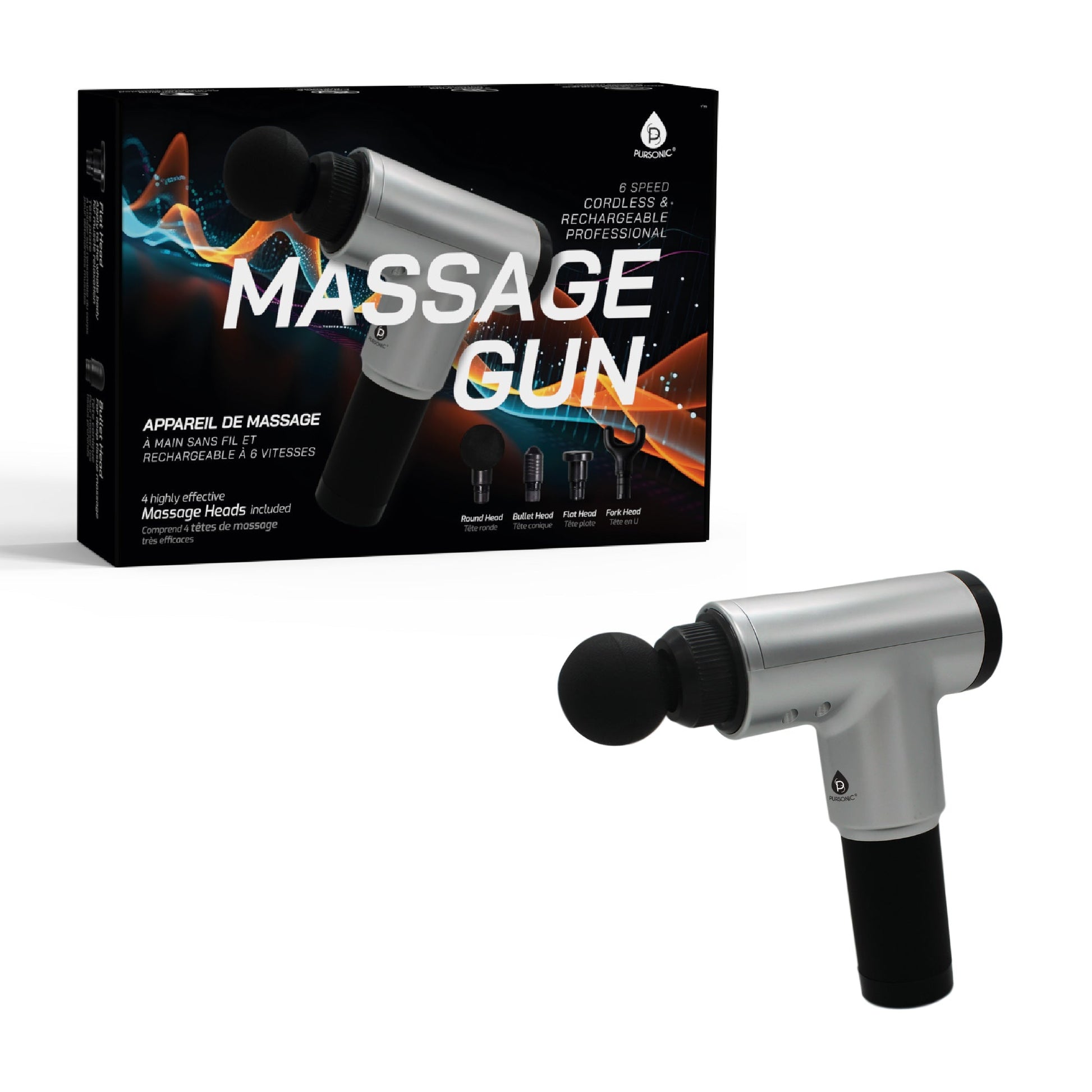
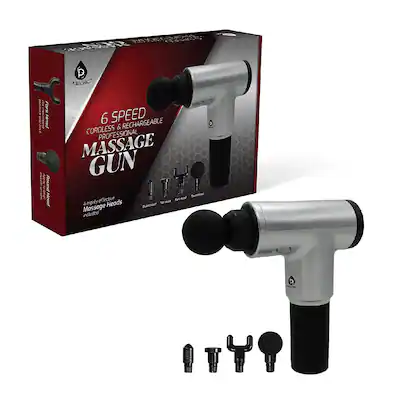
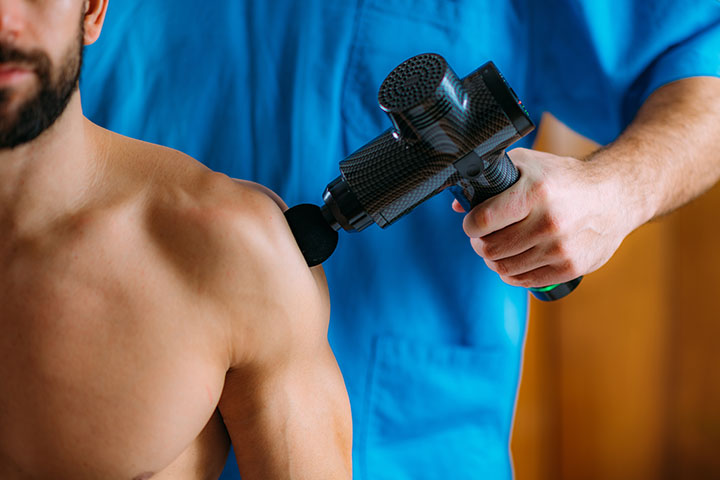
A massage gun is a handheld device that uses rapid pulses to press into muscle tissue. This action is called percussive therapy. Most devices include several speed levels and attachment heads for different body areas.
The goal is not to copy every part of a professional massage. Instead, a massage gun delivers repeated pressure to a small area. This may increase local blood flow, reduce the feeling of muscle tightness, and improve short-term range of motion.
A massage gun may help with:
• Post-workout muscle soreness
• Mild muscle stiffness
• Temporary tension in the calves, thighs, glutes, and shoulders
• A short-term increase in flexibility
• Warm-up before exercise
• Recovery after light or moderate activity
A massage gun does not diagnose injuries. It also cannot feel changes in your tissue, ask about your pain, or change its technique based on your response.

What Happens During Professional Massage?
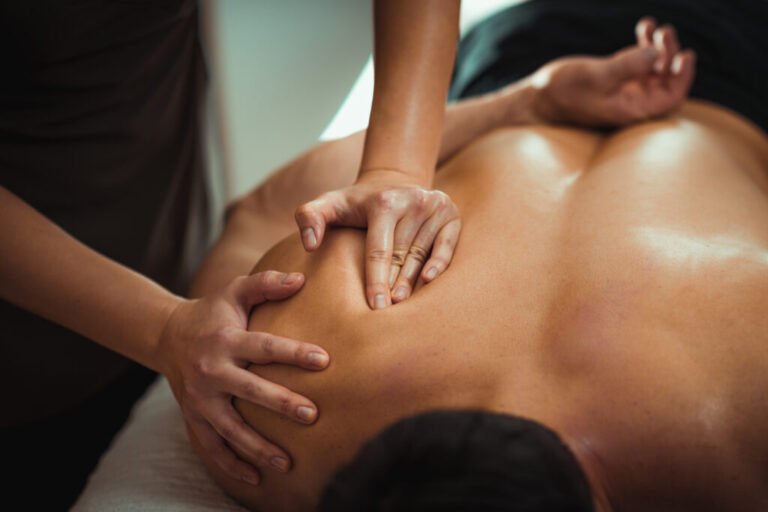
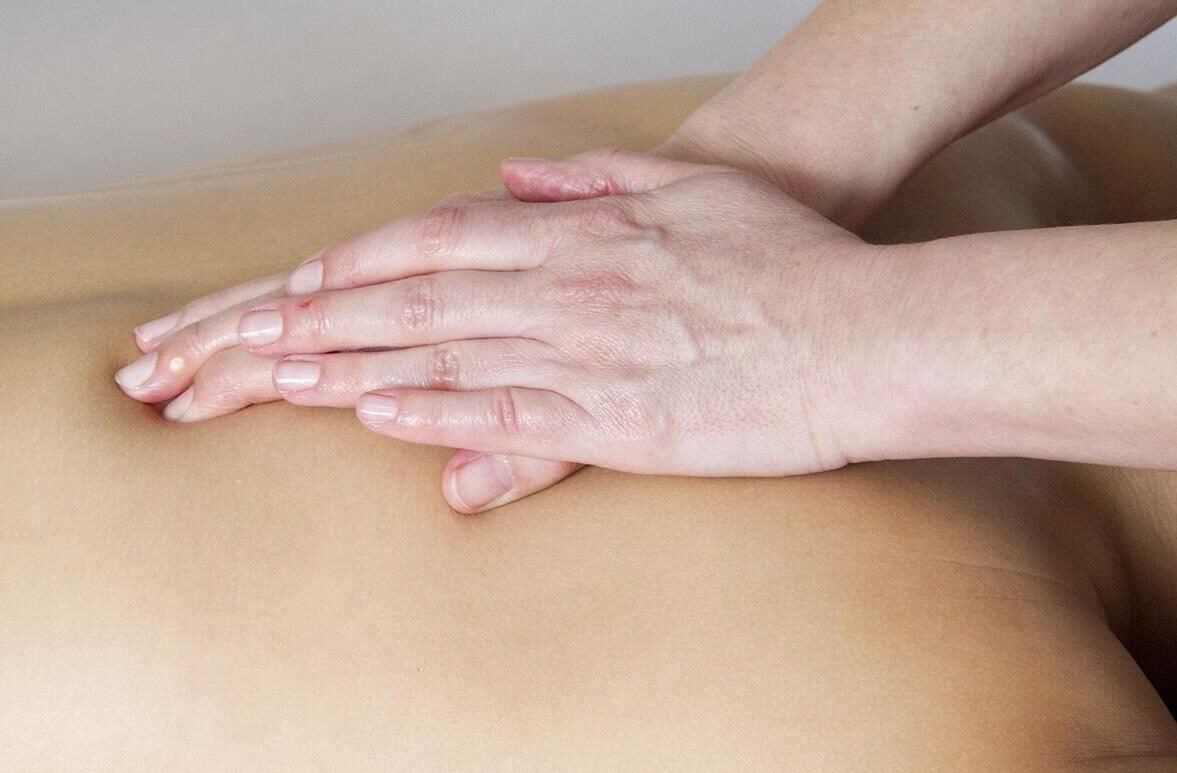
Professional massage uses hands, fingers, forearms, elbows, or tools to work on muscles and other soft tissues. A licensed massage therapist may use several methods, such as Swedish massage, deep tissue massage, sports massage, trigger point work, or myofascial techniques.
Before treatment, a therapist can ask about your pain, activity, medical history, and goals. During the session, the therapist can notice swelling, guarding, unusual heat, or areas that need less pressure.
Professional massage may offer:
• A full-body treatment
• More precise pressure control
• Work around joints and smaller structures
• Attention to posture and movement patterns
• Relaxation and stress relief
• A treatment plan that changes over time
This personal judgment is the main difference. A massage gun applies force in a fairly fixed way. A trained therapist uses touch, sight, questions, and experience to guide the session.

Are Massage Guns as Effective as Professional Massage?
Are massage guns as effective as professional massage? For short-term muscle relief, they can be useful. For a full assessment, targeted treatment, relaxation, and complex pain, professional massage is usually more effective.
Research on percussive therapy suggests that massage guns may improve short-term flexibility and reduce the feeling of muscle soreness. Some studies also show temporary gains in range of motion without a major loss of muscle strength. However, many studies are small, use different devices, or measure results soon after treatment.
Research on massage therapy also shows possible benefits for short-term pain relief, relaxation, and stress reduction. Yet massage is not a cure for every injury, and study results vary by condition, technique, and treatment schedule.
The simplest answer is this:
• A massage gun is often better for speed, cost, and home use.
• Professional massage is often better for detail, judgment, and whole-body care.
• Neither option replaces medical care for serious or ongoing pain.
Think of a massage gun as a power tool. It can do one job quickly. A massage therapist is more like a skilled craftsperson who can inspect the whole structure before choosing the best method.
Massage Gun vs. Professional Massage: Key Differences
Precision and pressure
A therapist can change pressure from gentle to firm within seconds. They can also work around a tender spot instead of pressing directly on it.
A massage gun offers speed settings, but the device does not know what it is touching. You control the pressure by changing the speed, attachment, and position. This makes technique important.
Coverage
A massage gun works best on broad muscle groups. The thighs, calves, glutes, and upper back are common targets. It is less suitable for the front of the neck, spine, joints, bones, and areas with little muscle.
A therapist can treat a broader area, including muscles that are hard to reach alone. They can also work on both sides of the body and compare tension from left to right.
Convenience and cost
A massage gun is available at home and takes only a few minutes to use. It can be helpful after a long shift, a run, or a day at a desk.
Professional massage requires an appointment and costs more per session. Still, one well-planned session may provide insight that a home device cannot offer.
Relaxation
Massage guns can feel soothing for some people. The humming sound and strong tapping may feel less calming for others.
Professional massage usually provides a quieter, more complete relaxation experience. Human touch, breathing, music, warmth, and a calm setting can all support stress relief.
Feedback
A therapist can ask whether the pressure feels right. They can notice when you tense up and change the approach.
With a massage gun, you must judge your own response. Sharp pain, numbness, tingling, bruising, or worsening symptoms are signs to stop.
Benefits of Using a Massage Gun
Are massage guns as effective as professional massage for workout recovery? They may be effective for simple, short-term recovery needs.
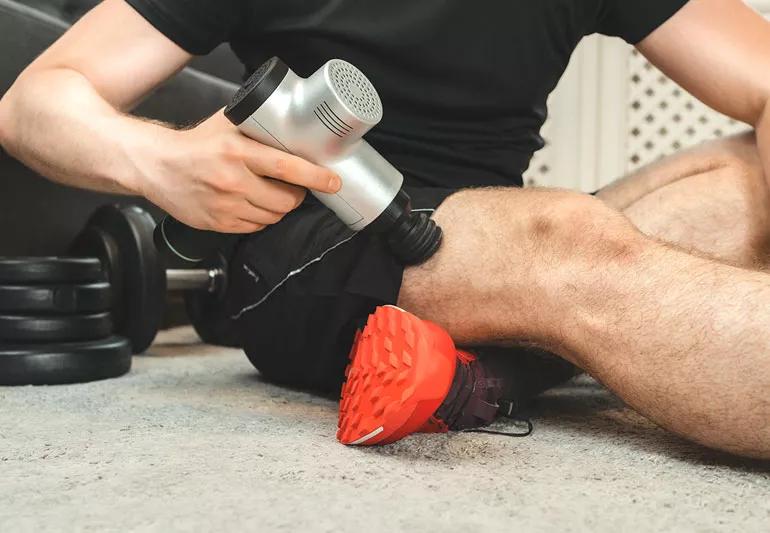
A massage gun may help reduce the feeling of stiffness after exercise. Gentle use can also make a muscle feel more ready to move before a workout. This does not mean the device repairs damaged tissue or prevents all injuries.
Before exercise
Use a low or medium setting for about 15 to 30 seconds on each large muscle group. Move slowly over the muscle rather than holding the device in one spot.
This may help you feel less stiff. It should not replace a warm-up with active movements, such as walking, bodyweight squats, arm circles, or easy practice drills.
After exercise
After training, use light pressure for 30 to 60 seconds on each large muscle group. The goal is comfort, not pain.
A massage gun may make post-workout soreness feel easier to manage. It does not remove the need for sleep, food, water, and a sensible training plan.
During a workday
People who sit for long periods may use a massage gun on the upper back muscles, glutes, or legs. Avoid placing it directly on the spine or neck.
Short sessions may feel better than one long session. A few minutes of movement and stretching can also help reduce desk-related stiffness.
Limitations of Massage Guns
Are massage guns as effective as professional massage when pain has a clear cause? Usually not. A massage gun may mask symptoms without addressing the reason for the pain.
It cannot reliably tell the difference between normal tightness and a more serious problem. Pain may come from a strain, tendon issue, nerve irritation, joint problem, infection, or another medical condition.
A massage gun also has practical limits:
• You cannot easily reach the middle of your back.
• You may use too much pressure without noticing.
• The device may irritate an inflamed area.
• It cannot provide a full health assessment.
• It may encourage repeated treatment of pain that needs evaluation.
• Some models are loud, heavy, or difficult to control.
Do not use a massage gun to “push through” sharp pain. Relief during use does not prove that the underlying issue is safe.

Is Professional Massage Better for Chronic Pain?
Are massage guns as effective as professional massage for chronic pain? They are not a dependable stand-alone treatment for long-term pain.
A therapist may help reduce muscle tension and improve comfort for some people. However, chronic pain often needs a wider plan that may include physical therapy, strength work, sleep changes, stress support, medication, or medical evaluation.
Massage should support a care plan, not replace one. If pain lasts for several weeks, keeps returning, limits normal activity, or causes weakness or numbness, speak with a qualified health professional.
Professional massage may be especially useful when:
• You cannot identify the source of your pain.
• One side of your body feels very different from the other.
• You need help reaching a specific muscle.
• You want a personalized recovery plan.
• You have tried self-care without lasting improvement.
A massage therapist should work within their training and refer you to a medical professional when symptoms fall outside their scope.
Massage Gun Safety: What to Avoid
Are massage guns as effective as professional massage if they are used incorrectly? No. Poor technique can lead to bruising, increased soreness, or irritation.
Use the device only on soft muscle tissue. Keep it moving at a slow pace. Start with the lowest comfortable speed and use less pressure than you think you need.
Avoid using a massage gun directly over:
• Bones and joints
• The spine
• The front and sides of the neck
• The head
• Open wounds or broken skin
• Varicose veins
• Bruises or areas with swelling
• Areas with reduced sensation
• Recent surgical sites
Ask a clinician before using one if you have a blood clotting disorder, take blood thinners, have osteoporosis, are pregnant, have an implanted medical device, or recently had surgery.
Stop immediately if you feel sharp pain, burning, numbness, tingling, dizziness, or unusual weakness. Seek medical advice for severe pain, major swelling, fever, chest pain, or symptoms after a significant injury.

How to Use a Massage Gun Correctly
A safe massage gun routine is simple. You do not need to press hard or spend a long time on one muscle.
- Choose a large muscle group, such as the calf or thigh.
- Start on the lowest speed.
- Keep the device moving over the muscle.
- Use light pressure for 30 to 60 seconds.
- Pause and check how the area feels.
- Stop if symptoms become sharp, hot, numb, or worse.
- Drink water and move gently afterward.
Do not treat one area for 10 or 15 minutes. More pressure is not always better. Muscle tissue is not a knot that must be crushed into submission.
For the upper back, ask another person to help if needed. Never twist into an unsafe position just to reach a muscle. For the hamstrings and calves, sit or stand in a stable position so you do not lose balance.
Choosing Between a Massage Gun and Professional Massage
The best choice depends on your goal, budget, access, and health needs.
Choose a massage gun when:
• You want quick relief at home.
• Your muscles feel mildly tight after exercise.
• You understand safe body areas and pressure.
• You want a tool for regular self-care.
• You cannot book frequent appointments.
Choose professional massage when:
• You want a full-body session.
• You have pain that keeps returning.
• You need help finding the source of muscle tension.
• You cannot reach the painful area safely.
• You want deep relaxation and human feedback.
• You are recovering from an injury and need careful guidance.
Many people can use both. For example, you might see a therapist once a month for assessment and use gentle self-massage between visits. A physical therapist may also teach you exercises that work better than passive treatment alone.
Can You Combine Massage Guns With Professional Massage?
Are massage guns as effective as professional massage when used together? They can complement each other, but one does not replace the other.
A therapist may identify a tight hip muscle and show you where light home treatment is appropriate. You can then use the massage gun for brief sessions between appointments.
Avoid using a massage gun on tissue that feels sore after deep massage. Give your body time to respond. If the therapist worked deeply on a muscle, wait until normal tenderness settles before using added pressure.
A balanced recovery plan may include:
• Professional assessment when needed
• Gentle massage gun use
• Active movement
• Strength training
• Adequate sleep
• Enough food and fluids
• Medical care for warning signs
This approach treats self-care as one part of recovery rather than the whole answer.
Common Mistakes to Avoid
One common mistake is using the highest speed right away. A strong setting may feel impressive, but it can cause soreness and bruising.
Another mistake is treating bones, joints, or the front of the neck. The device belongs on muscle, not on every painful spot.
People also often use a massage gun for too long. Short, gentle sessions are usually enough for basic self-care. If you need repeated treatment every day just to function, the problem deserves a proper assessment.
Other mistakes include:
• Ignoring numbness or tingling
• Using the device on a fresh injury
• Treating swelling without medical advice
• Expecting the device to fix poor training habits
• Replacing sleep and recovery with constant percussion
• Sharing an attachment without cleaning it
Clean the massage head according to the manufacturer’s instructions. Store the device safely and charge it away from moisture.
What Does the Evidence Say?
Are massage guns as effective as professional massage according to research? Current evidence supports short-term benefits, but it does not prove that massage guns match the full effect of hands-on therapy.
Reviews of percussive therapy report possible improvements in flexibility, range of motion, and perceived muscle soreness. Some research also suggests that these devices may help athletes feel ready to move without reducing immediate strength.
Studies of massage therapy show possible short-term benefits for pain, relaxation, and stress. Results are not uniform, and massage effects can depend on the condition, therapist, technique, and number of sessions.
The evidence has limits:
• Devices vary in speed, force, and design.
• Studies often include small groups.
• Long-term results are less clear.
• Many outcomes rely on self-reported soreness.
• Massage research uses many different techniques.
For this reason, it is more accurate to say that massage guns can be effective for selected short-term goals. It is not accurate to call them a complete substitute for professional massage.
Frequently Asked Questions About Are Massage Guns as Effective as Professional Massage?
Are massage guns as effective as professional massage for sore muscles?
A massage gun may reduce the feeling of mild soreness for a short time. Professional massage offers more control and may be better when soreness involves several areas or keeps returning.
Can a massage gun replace a massage therapist?
No. A massage gun cannot assess your body, identify possible problems, or adjust treatment with the judgment of a trained therapist. It is best viewed as a self-care tool.
How long should you use a massage gun?
Use it for about 30 to 60 seconds on one muscle area at a time. Stop sooner if the area becomes painful, numb, bruised, or more irritated.
Is a massage gun good for back pain?
It may help the broad muscles beside the spine, but it should never be used directly on the spine or neck. Ongoing, severe, or unexplained back pain needs assessment by a qualified health professional.
Should you use a massage gun before or after exercise?
You can use gentle pressure before exercise to reduce the feeling of stiffness and after exercise to ease muscle tension. It should support, not replace, an active warm-up and proper recovery.
Can massage guns damage muscles?
Incorrect use may cause bruising, irritation, or increased soreness. Avoid high pressure, long sessions, bones, joints, fresh injuries, and areas with reduced sensation.
Conclusion
Are massage guns as effective as professional massage? They can work well for quick, short-term muscle relief, warm-up support, and convenient home recovery. Professional massage remains the stronger choice for personalized care, complex tension, full-body treatment, and ongoing pain.
Use a massage gun gently on large muscle groups. Avoid bones, joints, the spine, the front of the neck, and injured or swollen areas. If pain persists or comes with numbness, weakness, or major swelling, seek professional advice instead of treating it blindly.
Choose the method that matches your goal, and consider combining safe self-care with expert guidance. Share your experience, explore trusted recovery resources, and make your next massage choice with confidence.