Can Massage Help With Plantar Fasciitis: Does It Work
Yes, massage can ease plantar fasciitis pain by relaxing tight tissues, improving movement, and supporting other treatments.
Plantar fasciitis can make each morning step feel like a sharp reminder of an injury that will not quit. As a practical guide, I’ll explain how massage may help, which techniques are safest, what the research suggests, and when foot pain needs medical care. The key is to use massage as one part of a broader recovery plan, not as a stand-alone cure.
What is plantar fasciitis?
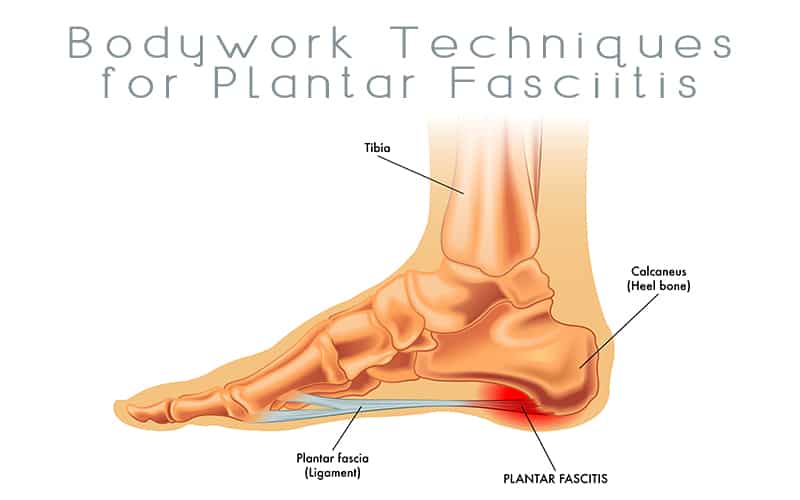
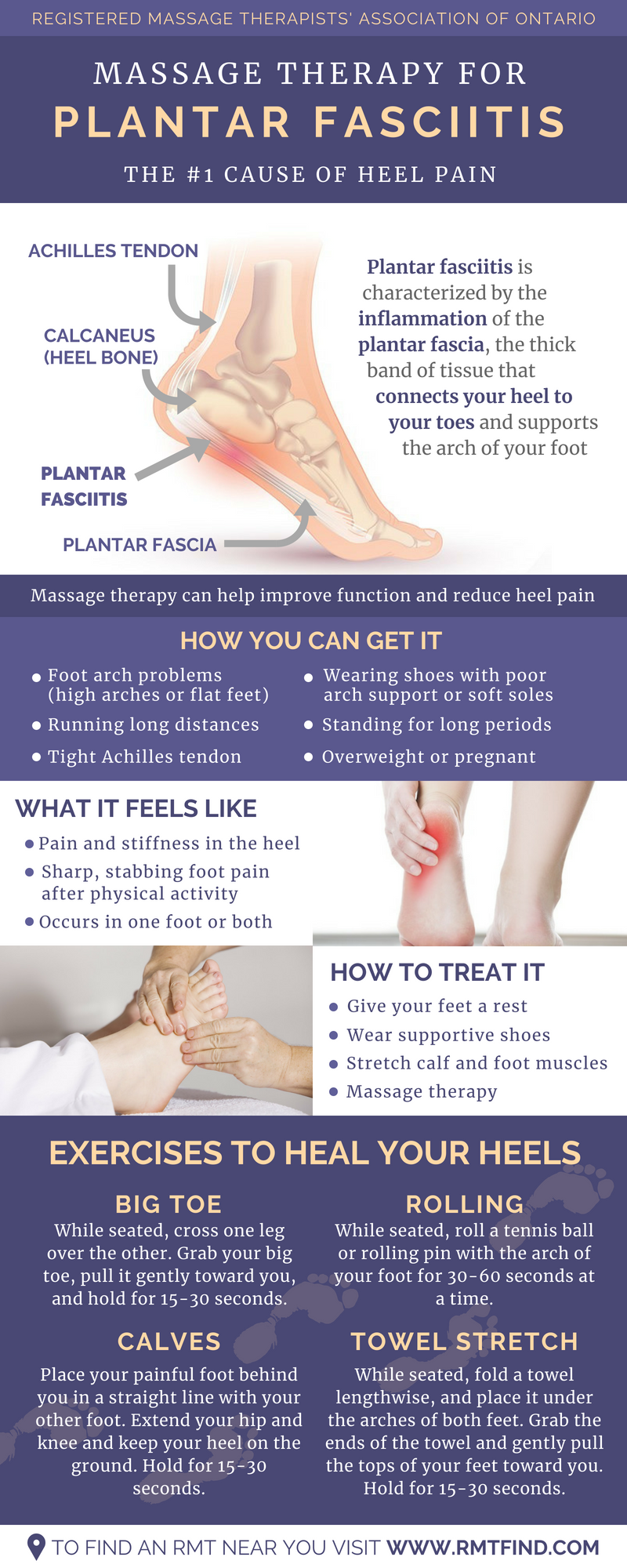
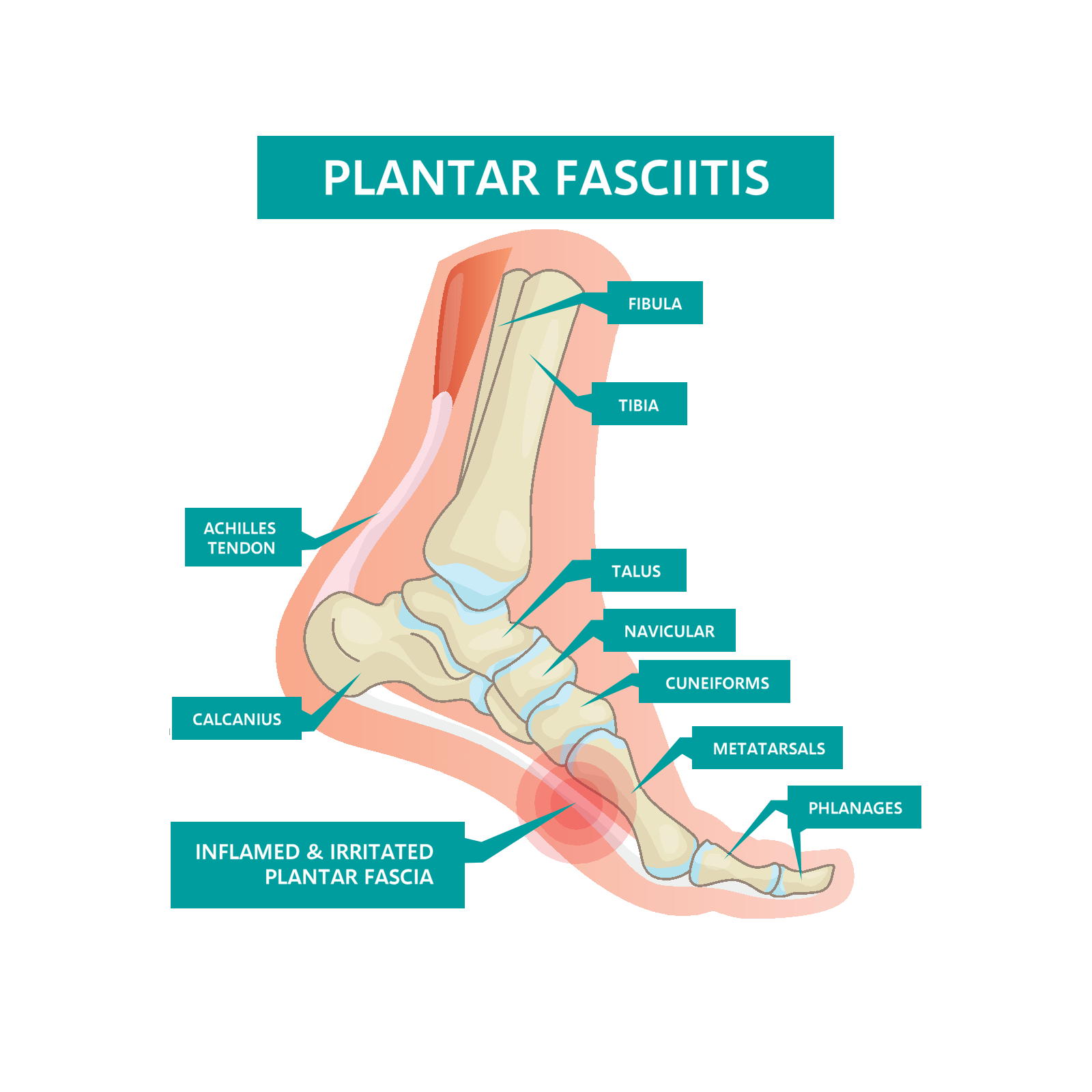
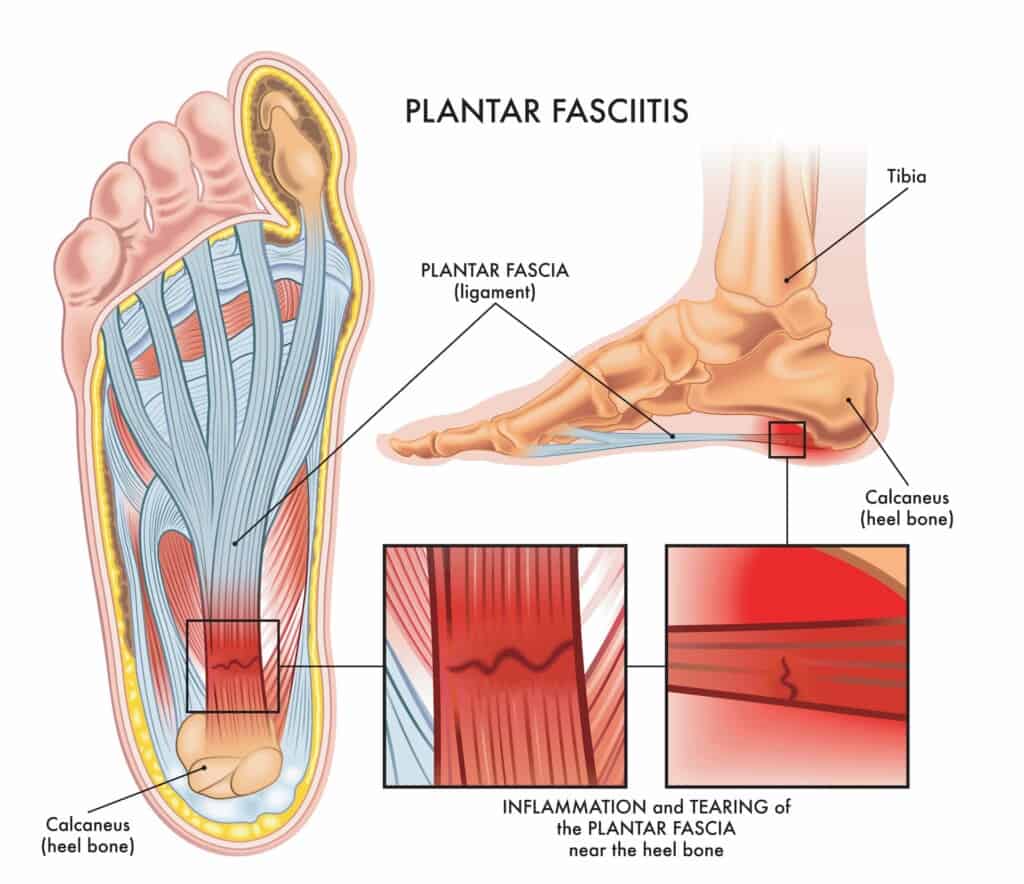
Plantar fasciitis is irritation or degeneration of the plantar fascia. This is a strong band of tissue that runs from your heel bone to the base of your toes. It helps support the arch and absorbs stress when you walk, run, or stand.
The most common symptom is stabbing heel pain. It often feels worse with the first steps after waking up or after sitting for a long time. The pain may ease as you move, then return after long periods of standing or activity.
Despite its name, plantar fasciitis is not always caused by sudden inflammation. Repeated strain can create small tissue changes and reduced tolerance to load. This is why rest alone may not solve the problem.
Common risk factors include:
• A sudden increase in walking, running, or sports
• Tight calf muscles or Achilles tendons
• Weak foot or lower-leg muscles
• Flat feet or very high arches
• Shoes with poor support
• Long hours of standing
• Higher body weight, which increases stress on the feet
• Limited ankle movement
Understanding the cause matters. For example, massage may help a person with tight calves, but it will not correct worn-out shoes or an abrupt training increase by itself.
Can massage help with plantar fasciitis?
Yes, massage may help reduce pain and stiffness linked to plantar fasciitis. It can relax tight calf muscles, improve comfort in the sole of the foot, and make stretching or strengthening exercises easier.
Massage does not directly “heal” the plantar fascia in a few minutes. Instead, it may reduce muscle tension and improve how the foot and ankle handle movement. Think of it as loosening a knotted rope before asking it to carry weight again.
Research on soft-tissue treatment suggests that massage and manual therapy can provide short-term pain relief and improve function. However, studies vary in quality, technique, and treatment length. Massage works best when combined with progressive exercise, suitable footwear, and sensible activity changes.
When people ask, “Can massage help with plantar fasciitis?” the most accurate answer is that it may help symptoms, but it is not a guaranteed cure. Results depend on the cause, severity, duration, and treatment plan.

How massage may ease plantar fasciitis pain
Massage can affect several areas that influence heel pain. These include the plantar fascia, calf muscles, Achilles tendon area, and small muscles within the foot.
It may relax tight calf muscles
Tight calves can limit ankle movement. When your ankle cannot bend well, your foot may compensate by placing extra stress on the plantar fascia.
Working gently on the calf may improve comfort and ankle motion. This can make walking, stretching, and strengthening feel less difficult.
It may reduce foot muscle tension
The muscles under and around the foot help support the arch. When they become tired or tense, the plantar fascia may carry more of the load.
Gentle massage can help you become more aware of sore or tight spots. It may also reduce the feeling of stiffness after rest.
It may improve short-term circulation
Massage increases local blood flow for a short time. This can create warmth and comfort, although better circulation alone does not prove that the plantar fascia has healed.
It may reduce pain sensitivity
Slow, comfortable pressure can influence how the nervous system processes pain. This effect may help you move more normally, which is important because fear of pain can lead to stiff, guarded walking.
Still, pain relief is not the same as tissue recovery. If you return to long runs or prolonged standing too soon, symptoms may return.
The best massage techniques for plantar fasciitis
The safest approach is usually gentle and controlled. You should feel mild pressure, not sharp pain.
Hand massage
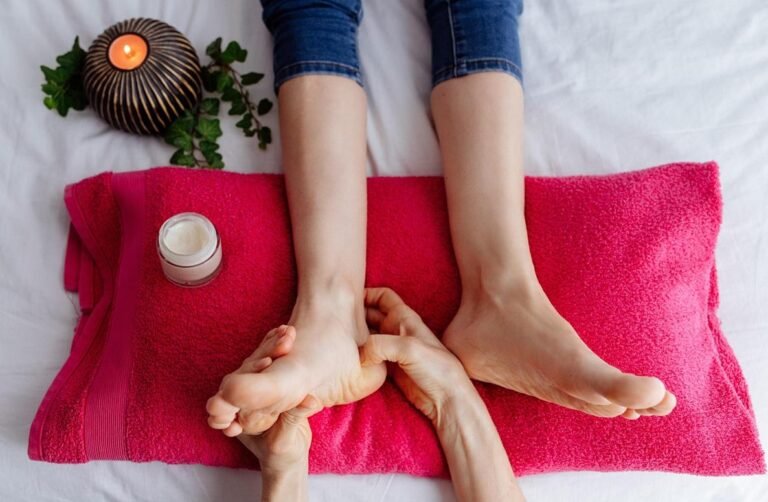
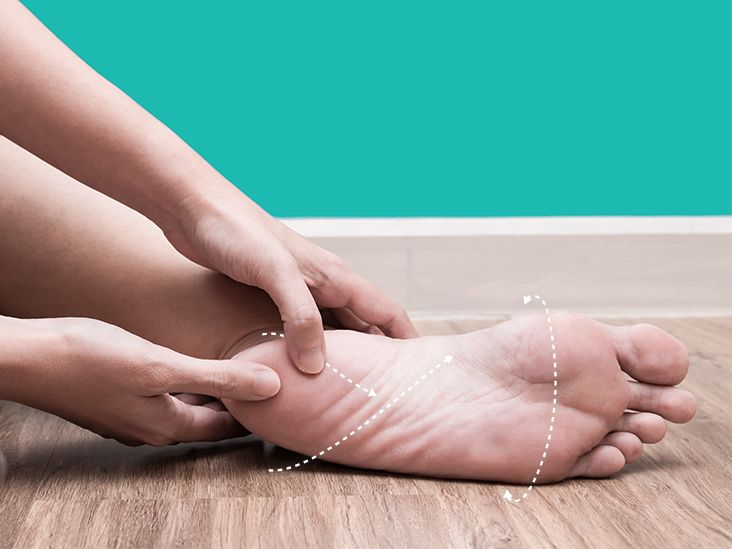
Sit comfortably and support your foot. Use your thumb or fingertips to stroke from the heel toward the toes. Start with light pressure for two to five minutes.
You can then make small circles along the arch. Avoid pressing hard on the most painful part of the heel, especially during an active flare.
Calf massage
Use both hands to gently squeeze and stroke the calf. Move from the ankle toward the knee, then return with lighter pressure.
A massage therapist may use more advanced soft-tissue techniques. If the area feels bruised, numb, or sharply painful, the pressure is too strong.
Massage ball
A soft massage ball can provide steady pressure under the foot. A tennis ball may work for some people, but it can feel too firm during a painful flare.
Roll slowly for one to two minutes. Do not stand on the ball with your full body weight unless a qualified professional has shown you how to do it safely.
Frozen water bottle
Rolling a frozen water bottle under the foot can combine gentle massage with cooling. Use it for about five to ten minutes, with a thin sock or cloth between your skin and the bottle.
Stop if you notice numbness, burning, skin color changes, or increased pain. Cold is not suitable for everyone, especially people with reduced sensation or circulation problems.
Massage gun use
Massage guns can be useful on large calf muscles when used at a low setting. Avoid using one directly on the heel, painful plantar fascia, bones, or the front of the ankle.
Do not use a massage gun if you have a blood clot risk, nerve damage, poor circulation, recent surgery, or another condition that makes deep pressure unsafe. Ask a health professional first if you are unsure.

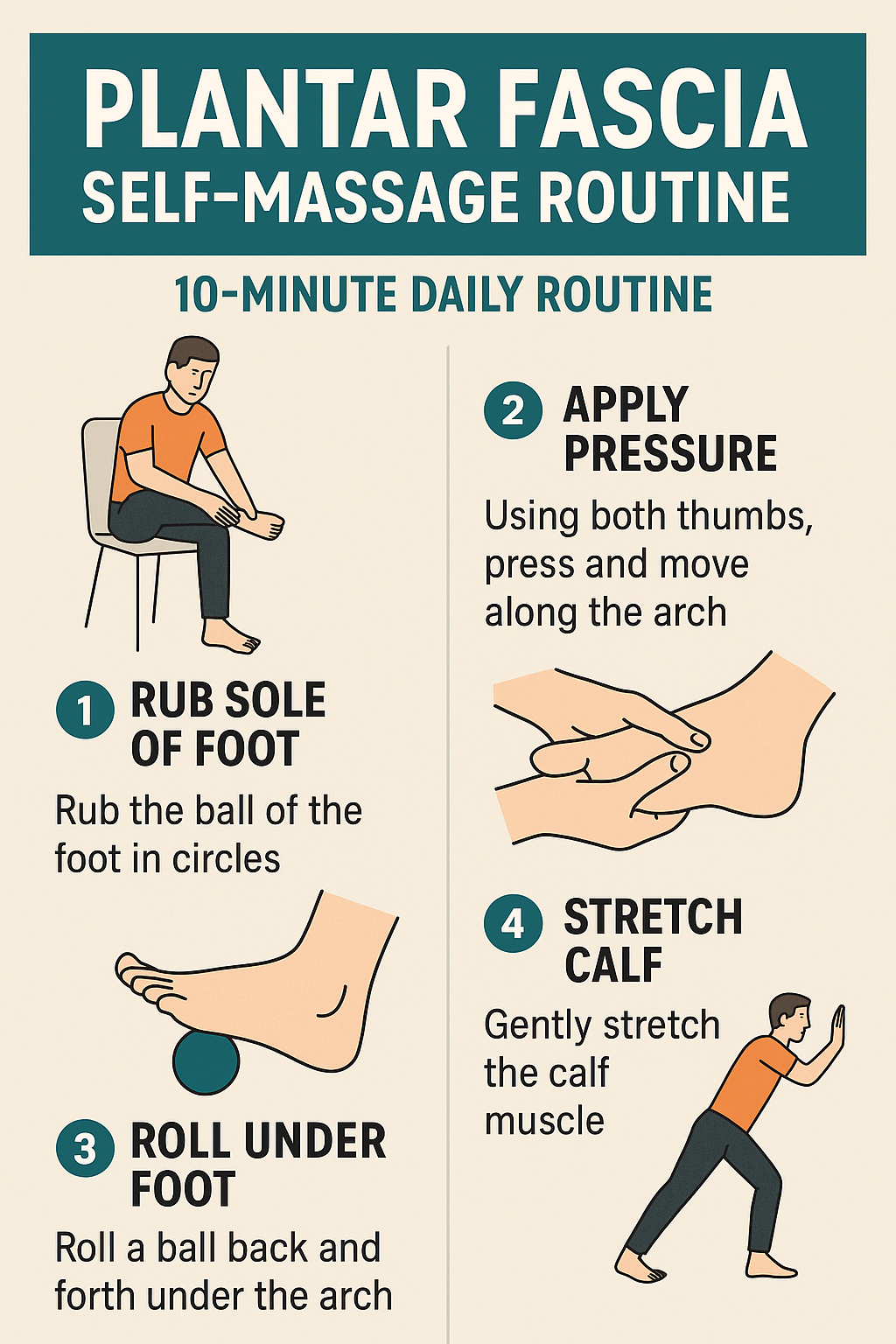
How to massage your foot safely
A simple routine may take less than 10 minutes. It should leave your foot feeling calmer, not more irritated.
-
Sit with your foot supported and relaxed.
-
Warm the foot with light strokes for one minute.
-
Massage the arch with gentle circular movements.
-
Spend extra time on the calf, since calf tension can affect the heel.
-
Stop if you feel sharp, electric, burning, or worsening pain.
-
Follow massage with a gentle calf or plantar fascia stretch.
-
Wear supportive shoes when you stand and walk afterward.
Try massage once or twice per day for several days. Track your pain during the first morning steps, after activity, and the next day. This simple record can show whether the routine is helping or causing a flare.
A useful rule is the next-day test. Mild soreness may be acceptable, but your pain should not be clearly worse the following morning. If it is, reduce the pressure, shorten the session, or stop the technique.
Massage versus other plantar fasciitis treatments
Massage is only one tool. Most people recover better when they combine symptom relief with gradual loading.
Helpful treatments may include:
• Calf stretching and plantar fascia stretching
• Strength exercises for the foot, ankle, and lower leg
• Supportive shoes with adequate cushioning
• Temporary use of arch supports or heel cups
• Reducing high-impact activity during a flare
• Gradually returning to walking, running, or sports
• Physical therapy for persistent or complex symptoms
One common stretch involves placing your hands against a wall, stepping one leg back, and keeping the back heel down. Hold the stretch without bouncing. Your physical therapist can adjust the position if it causes heel pain.
Strength work is also important. Examples include slow heel raises, towel scrunches, and exercises that lift the arch while keeping the toes relaxed. Start with a small amount and increase slowly.
Massage may make these exercises more comfortable. But stretching and strengthening help address the load problem that often keeps plantar fasciitis going.
When massage may not be enough
Massage may provide only temporary relief if the main cause is still present. A person who continues long-distance running in worn shoes may feel better for an hour but remain overloaded each day.
You may need a professional assessment if:
• Pain lasts more than a few weeks despite home care
• Symptoms are getting worse
• You cannot walk normally
• You have swelling, redness, or warmth
• Pain began after a fall or sudden injury
• You feel numbness, tingling, or weakness
• You have diabetes or circulation problems
• Pain occurs at rest or wakes you at night
Heel pain can come from other conditions, including a stress fracture, nerve irritation, Achilles tendon problems, arthritis, or a heel fat-pad injury. A clinician can examine your foot and decide whether imaging or another treatment is needed.
Massage should not replace medical care when symptoms are severe, unusual, or persistent.

Common massage mistakes to avoid
Many people press too hard because they believe pain means the treatment is working. That idea can backfire. The plantar fascia is already sensitive, so aggressive pressure may increase irritation.
Avoid these mistakes:
• Digging hard into the heel
• Rolling on a very firm object for too long
• Using a massage gun directly on painful tissue
• Massaging through sharp or burning pain
• Ignoring worsening symptoms the next morning
• Returning to full activity as soon as pain improves
• Treating the foot while ignoring tight calves or weak muscles
Another mistake is expecting instant results. Massage may help you feel better today, but tissue capacity usually improves over weeks, not minutes. Recovery is more like turning down a dimmer switch than flipping a light switch.

What does the research say?
Clinical research supports manual therapy as a possible short-term treatment for plantar heel pain. Some trials report improvements in pain, ankle motion, and function when massage or soft-tissue techniques are added to exercise.
The evidence is not strong enough to say that one massage method is best for everyone. Studies often use different pressure levels, treatment schedules, and combinations of therapy. This makes direct comparisons difficult.
Current rehabilitation thinking favors an active plan. That usually means education, activity adjustment, stretching when appropriate, strengthening, and gradual return to normal movement. Massage can fit into this plan as a comfort and mobility tool.
A qualified physical therapist, athletic trainer, or licensed massage therapist can help match the technique to your symptoms. They can also check whether your pain is really coming from the plantar fascia.
A practical seven-day massage plan
This plan is a gentle starting point for mild, familiar heel pain. Stop if symptoms become sharp or clearly worse.
Days one and two
Use light hand massage on the sole for two to three minutes. Follow it with gentle calf massage. Wear supportive shoes and reduce activities that sharply increase pain.
Days three and four
If your symptoms are stable, add slow rolling with a soft ball for one to two minutes. Include a gentle calf stretch after massage.
Days five and six
Continue massage if it helps. Add a small number of controlled heel raises, using a wall or chair for balance.
Day seven
Review your symptoms. Ask whether your first morning steps, walking tolerance, and next-day pain have improved. If not, seek advice from a health professional rather than adding more pressure.
This plan is not a substitute for an examination. It is simply a cautious way to test whether gentle massage supports your recovery.
Can massage help with plantar fasciitis? Frequently asked questions
Can massage cure plantar fasciitis?
Massage alone usually cannot cure plantar fasciitis. It may reduce pain and tightness, but lasting improvement often requires exercise, activity changes, and better support for the foot.
How often should I massage plantar fasciitis?
Many people can try gentle massage once or twice daily for five to 10 minutes. Use less pressure if your pain increases during the session or the next morning.
Should I massage the heel directly?
Use caution around the heel because it may be highly sensitive. Focus first on the arch and calf, and avoid hard pressure over the most painful spot.
Is a massage gun safe for plantar fasciitis?
A massage gun may be used gently on the calf, but it should not be used directly on the painful heel or plantar fascia. People with nerve, circulation, clotting, or recent surgery concerns should ask a clinician first.
Can massage help with plantar fasciitis in the morning?
It may reduce stiffness before your first steps. Gentle foot and calf massage, followed by supportive footwear, can be more comfortable than walking barefoot on a hard floor.
Is ice massage better than regular massage?
Ice massage may reduce pain for some people, while regular massage may ease muscle tightness. Neither option is automatically better, and both should be stopped if they cause numbness or increased symptoms.
When should I stop massage?
Stop if you feel sharp pain, burning, tingling, numbness, swelling, bruising, or worsening pain afterward. Seek medical advice if symptoms persist or affect your ability to walk.
Conclusion
So, can massage help with plantar fasciitis? Yes, it can offer short-term relief, reduce tightness, and make movement easier. The best results usually come from gentle massage combined with calf stretching, foot strengthening, supportive shoes, and a gradual return to activity.
Avoid aggressive pressure and do not judge progress by immediate comfort alone. Watch how your foot feels later that day and the next morning. If heel pain continues, worsens, or includes numbness or swelling, consult a qualified health professional.
Start with a gentle five-minute routine today, then pair it with a simple strengthening plan. For more practical foot-care guidance, explore trusted rehabilitation resources or share your experience with a health professional.