Swedish Vs Deep Tissue Massage: Key Differences
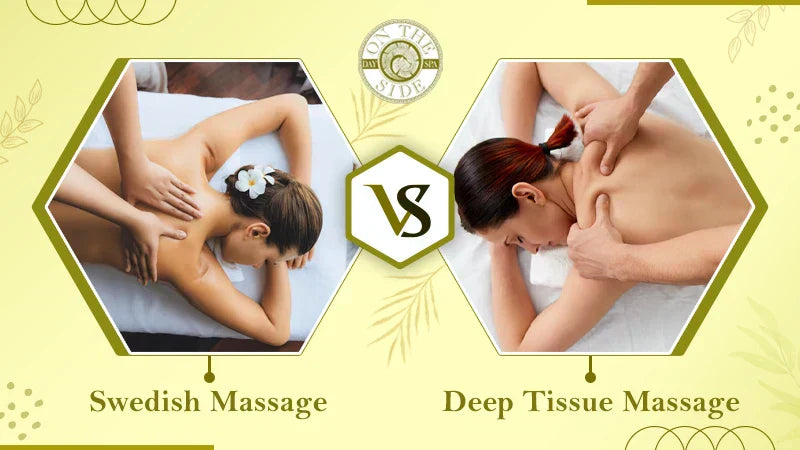
Swedish massage uses lighter, flowing strokes for relaxation, while deep tissue massage uses firmer pressure for tight, painful muscles.
Understanding the difference between Swedish and deep tissue massage can help you choose the right treatment for your body, goals, and comfort level. Both methods use skilled touch, but they differ in pressure, pace, technique, and purpose. This guide explains how each massage works, what research suggests, and how to make a safe choice.
Swedish Massage vs. Deep Tissue Massage at a Glance
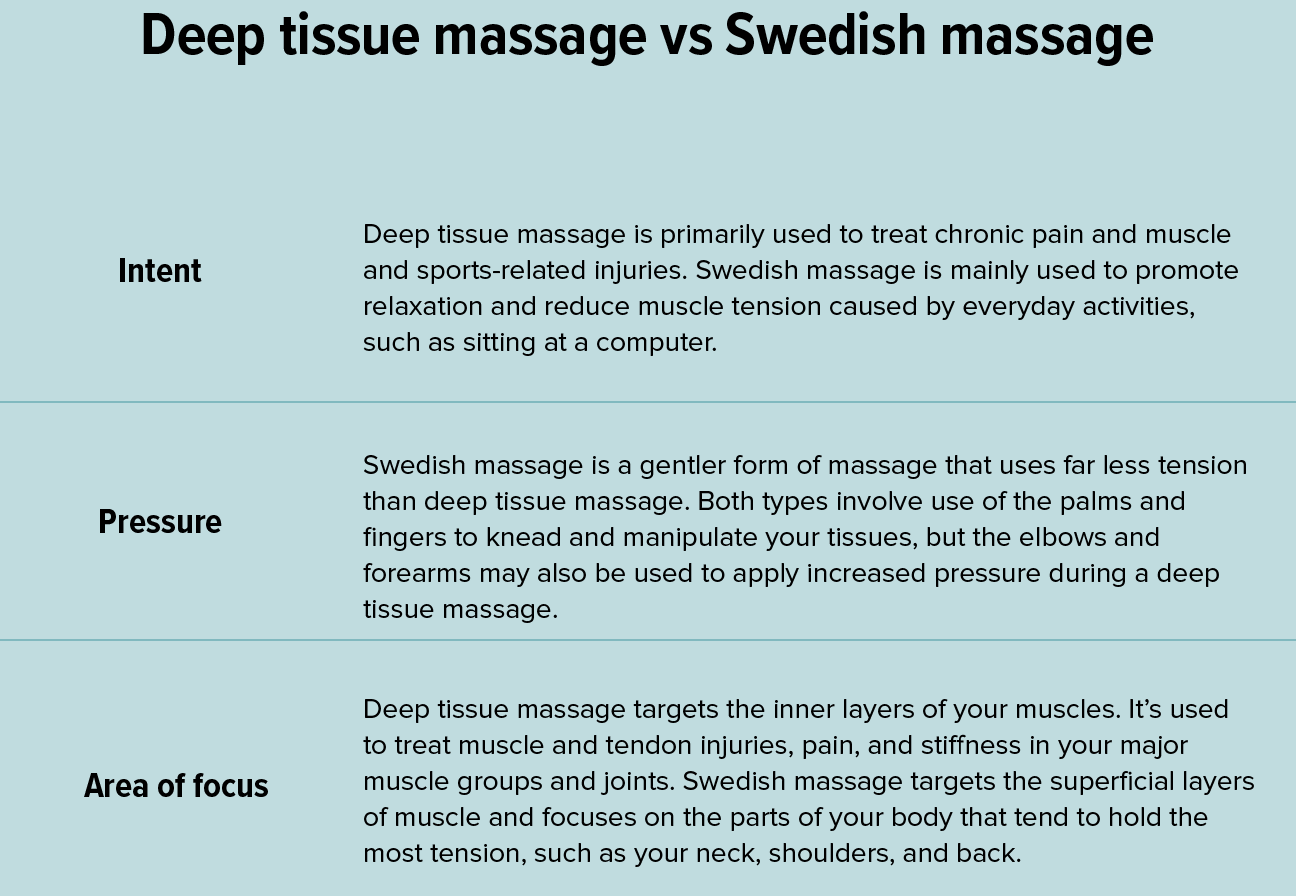
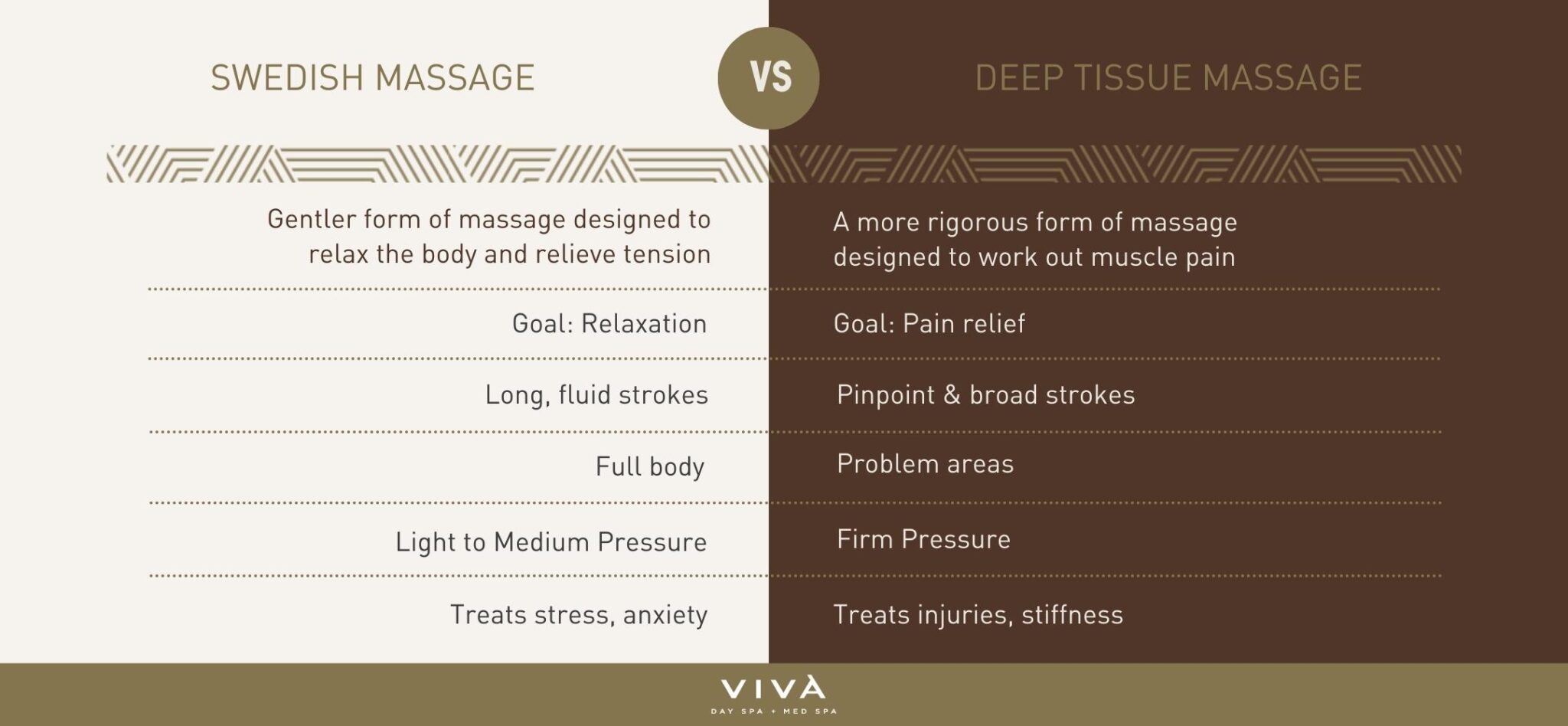
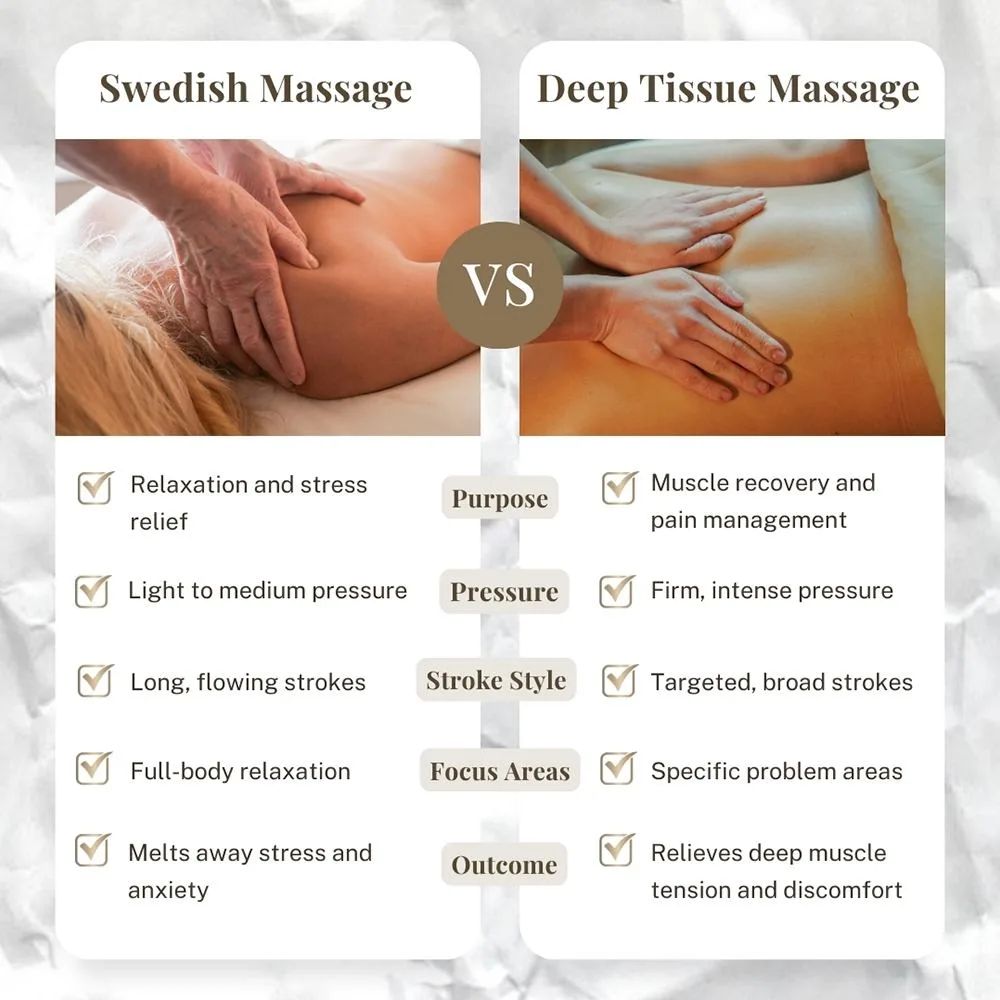
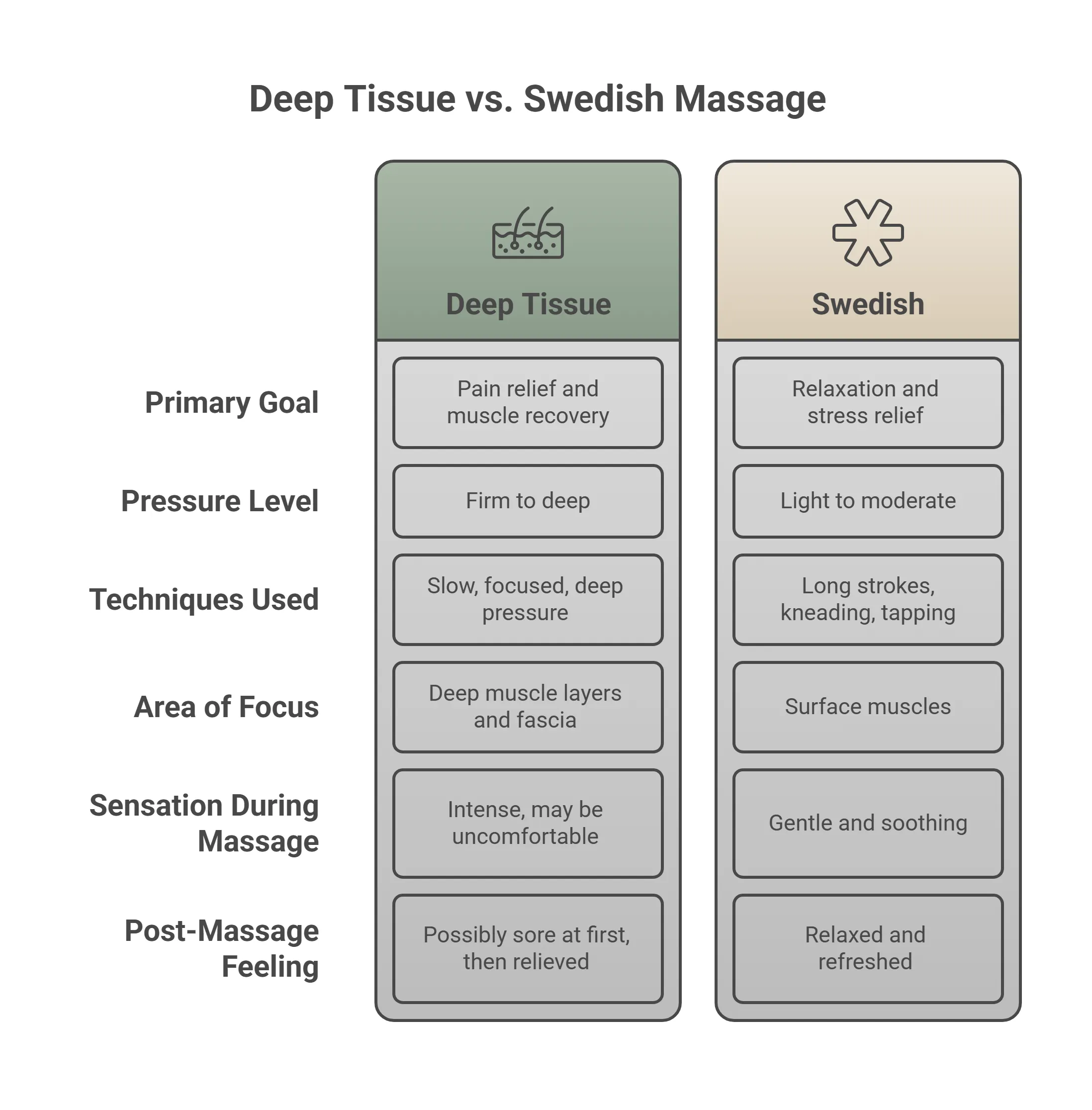
The main difference between Swedish and deep tissue massage is the depth and style of pressure. Swedish massage is gentle to moderate and follows long, smooth strokes. Deep tissue massage uses slower, focused pressure to reach deeper layers of muscle and connective tissue.
Swedish massage often feels calm and soothing. It may be a good choice if you want to relax, reduce daily stress, or enjoy your first massage.
Deep tissue massage can feel more intense. It may suit people with long-term muscle tightness, limited movement, or stubborn knots. However, deeper pressure is not always better. The best massage depends on your needs and health history.
| Feature | Swedish massage | Deep tissue massage |
|---|---|---|
| Main goal | Relaxation and general wellness | Relief from deep muscle tension |
| Pressure | Light to moderate | Moderate to firm |
| Movement | Long, flowing strokes | Slow, focused strokes |
| Common areas | Full body | Specific tight or painful areas |
| Typical feeling | Calm and comfortable | Intense, focused, and sometimes tender |
| Recovery | Usually little or none | Mild soreness may occur |
| Best for | Stress, relaxation, and beginners | Chronic tightness and muscle strain |
The difference between Swedish and deep tissue massage is not simply “light” versus “hard.” It also includes the therapist’s movement, the tissues targeted, and the reason for the session.
What Is Swedish Massage?
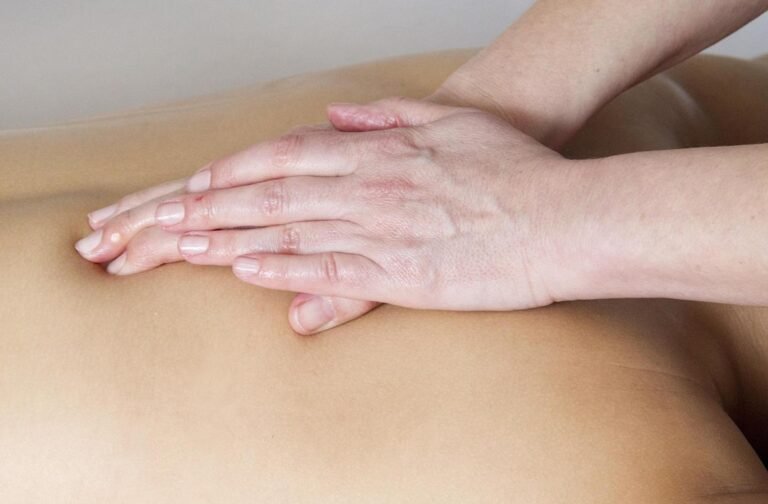
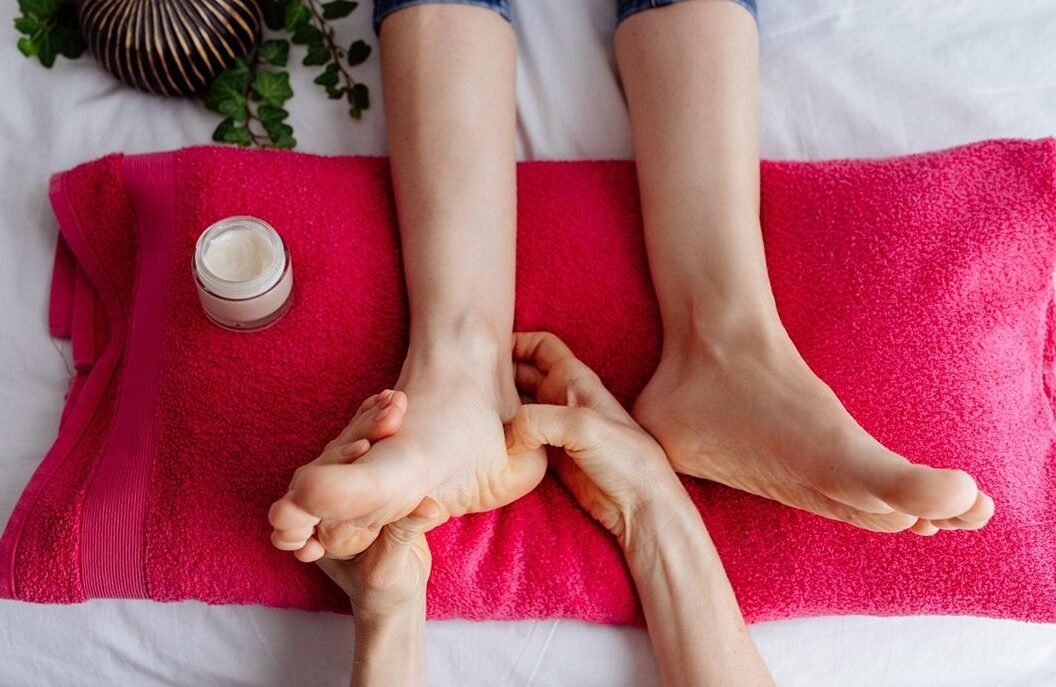
Swedish massage is a classic full-body massage that uses smooth, rhythmic movements. Therapists may combine gliding strokes, kneading, gentle friction, tapping, and light shaking. These techniques work mainly on the surface muscles and soft tissues.
The goal is to support relaxation and comfortable movement. Many people book Swedish massage to unwind after a stressful week or to ease mild muscle tension from sitting, travel, or exercise.
A Swedish massage session may begin with broad strokes to warm the body. The therapist then works through areas such as the back, shoulders, arms, legs, neck, and feet. You can ask for more or less pressure at any point.
Common benefits of Swedish massage
Swedish massage may offer several practical benefits:
• It can help the body and mind feel more relaxed.
• It may reduce the sense of everyday stress.
• It can increase short-term comfort in tense muscles.
• It may support easier movement when stiffness is mild.
• It can improve body awareness and help you notice where you hold tension.
• It may help some people sleep better after a calming session.
Massage is not a cure for disease, and results can vary. Still, clinical research suggests that massage may help with short-term relief for some types of pain and stress.
What does Swedish massage feel like?
Swedish massage usually feels soothing rather than painful. The pressure should be strong enough to feel useful but not so strong that you brace your muscles or hold your breath.
A helpful rule is simple: relaxed muscles respond better than guarded muscles. If your shoulders rise or your jaw tightens, tell the therapist. A small pressure change can make the session much more effective.
Source: vivadayspa.com
What Is Deep Tissue Massage?
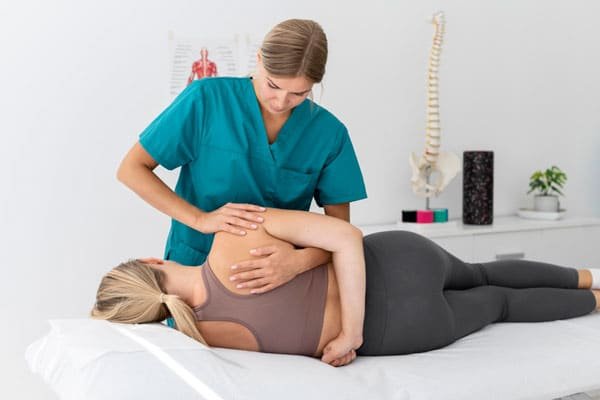
Deep tissue massage is a focused treatment that uses slower strokes and firm pressure. The therapist may work on deeper muscle layers, fascia, tendons, and areas of restricted movement. The work is often aimed at specific problems rather than full-body relaxation.
Deep tissue massage does not mean the therapist should press as hard as possible. Good treatment uses steady pressure, careful communication, and knowledge of anatomy. The therapist may pause, warm the area, and gradually increase pressure instead of pushing forcefully from the start.
People often choose deep tissue massage for:
• Long-lasting muscle tightness
• Repeated strain from work or sports
• Stiff shoulders, hips, or lower back
• Limited range of motion
• Muscle knots or trigger points
• Recovery support after demanding physical activity
The evidence for massage varies by condition. Some people report meaningful relief, while others notice only temporary improvement. Deep tissue massage should support a broader care plan when pain is ongoing.
What does deep tissue massage feel like?
Deep tissue massage can feel intense, but it should not feel sharp, burning, numb, or unbearable. A strong but manageable sensation may be normal. Pain that makes you tense up is a sign to reduce the pressure.
Mild tenderness may appear for a day or two after treatment. Drinking water, moving gently, and using a warm shower may help you feel more comfortable. Severe pain, weakness, swelling, or lasting numbness is not a normal goal and should receive medical attention.
Source: healthline.com
The Main Difference Between Swedish and Deep Tissue Massage
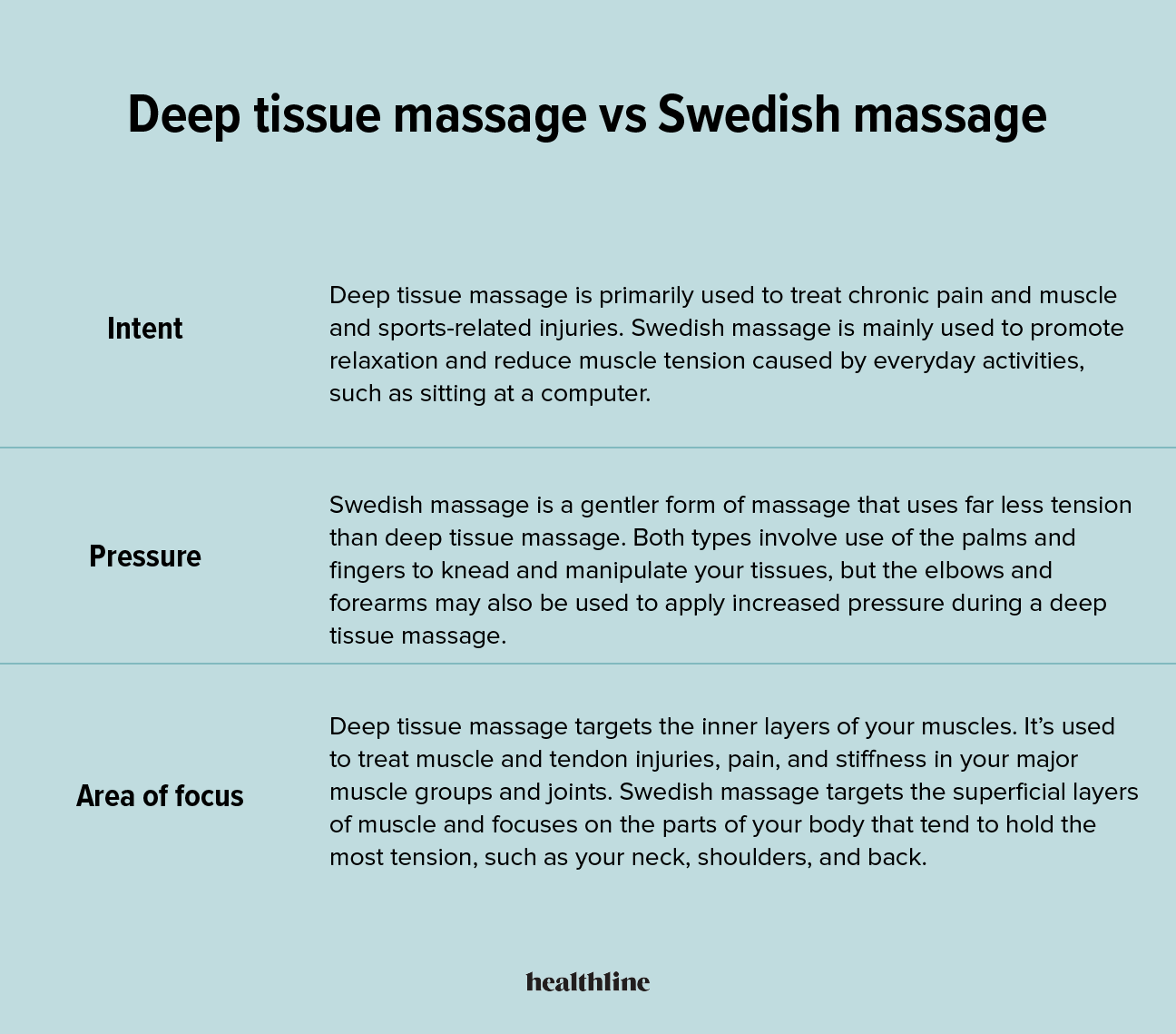
The difference between Swedish and deep tissue massage becomes clearer when you compare their pressure, pace, purpose, and treatment area.
Pressure and depth
Swedish massage usually works with light to moderate pressure. It targets the outer muscle layers and uses a broad touch.
Deep tissue massage uses more focused pressure. It may reach deeper muscle tissue, but the therapist should still adjust the pressure to your body’s response.
Speed and rhythm
Swedish massage often has a steady, flowing rhythm. This can help create a peaceful experience.
Deep tissue massage is usually slower. The therapist may spend several minutes on one tight area rather than moving across the whole body.
Treatment goal
Swedish massage is often chosen for relaxation, stress relief, and general muscle comfort. Deep tissue massage is more focused on areas that feel tight, restricted, or painful.
Neither method is automatically better. The right choice depends on whether your main goal is calm relaxation or focused muscle work.
Full-body care versus focused work
A Swedish session often includes the whole body. A deep tissue session may focus on the back, neck, shoulders, hips, legs, or another problem area.
This does not mean Swedish massage cannot help tight muscles. It can. Likewise, deep tissue massage can feel relaxing for some people. The difference between Swedish and deep tissue massage is a matter of emphasis, not a strict rule.
Source: ilaspanyc.com
Benefits and Limitations of Each Massage Type
Both massage styles have possible benefits and limits. Knowing them can help you set realistic expectations.
Swedish massage benefits and limits
Swedish massage may be a strong choice when you want:
• A gentle introduction to massage
• A calming full-body experience
• Help with mild tension
• A comfortable session during a stressful period
• Light support for mobility and body awareness
Its main limitation is that it may not provide enough focused pressure for deep, long-term tightness. If one area causes repeated pain, a massage alone may not address the underlying cause.
Deep tissue massage benefits and limits
Deep tissue massage may be helpful when you want:
• Focused work on stubborn muscle tension
• Support for movement after repetitive strain
• Attention to specific areas rather than the entire body
• A stronger sensation than Swedish massage provides
Its limits are also important. It may cause temporary soreness, and it may be unsuitable during an acute injury or certain health conditions. Deep pressure cannot replace diagnosis, physical therapy, exercise, or medical care when those services are needed.
Research reviews have found that massage may help some people with short-term pain relief. However, study results differ based on the condition, treatment length, therapist training, and individual response.
Source: swedishinstitute.edu
How to Choose Between Swedish and Deep Tissue Massage
Start with your main reason for booking the appointment. Ask yourself whether you want to relax or address a specific area of tension.
Choose Swedish massage if:
• You want stress relief and relaxation.
• You prefer light or moderate pressure.
• You are new to massage.
• You want a full-body treatment.
• You feel generally tense but do not have a specific injury.
Choose deep tissue massage if:
• You have persistent muscle tightness.
• One or two areas limit your movement.
• You regularly exercise or perform physical work.
• You prefer focused, slower pressure.
• You understand that mild soreness may follow.
You can also combine approaches. For example, a therapist might use Swedish strokes to warm your body and then apply focused deep work to the shoulders. This blended approach is common and may feel more comfortable than starting with firm pressure.
Questions to ask before your session
A qualified therapist should welcome questions. Consider asking:
- What massage style do you recommend for my goal?
- How will you adjust the pressure?
- Do you have experience with my concern?
- What should I tell you during the session?
- Are there reasons I should avoid deep pressure?
Clear communication is one of the best ways to improve the difference between Swedish and deep tissue massage in real life. The same technique can feel very different when the therapist adapts it well.
Source: otsnj.com
How to Prepare for a Massage
Good preparation can make your session more comfortable.
- Eat a light meal if you are hungry. Avoid arriving overly full.
- Drink water as you normally would. You do not need to force large amounts of water.
- Wear clothing that is easy to change.
- Tell the therapist about pain, injuries, medications, pregnancy, surgeries, and health conditions.
- Explain your pressure preference before the session begins.
- Keep breathing slowly during focused work.
- Speak up if the pressure feels too strong, sharp, or uncomfortable.
Many people make the mistake of staying silent because they think pain means the massage is working. It does not. Productive pressure should remain controlled and tolerable. Your feedback helps the therapist work safely.
From a practical standpoint, the best session is not the one that leaves you unable to move the next day. It is the one that supports your goal without causing unnecessary stress to your body.
Source: reachoptimalhealth.ca
Safety, Risks, and When to Avoid Massage
Massage is generally safe for many healthy adults when performed by a trained professional. Still, it is not right for every situation.
Talk with a health care professional before massage if you have:
• A recent fracture, surgery, or serious injury
• A blood clot or a history of blood clots
• A bleeding disorder or use blood-thinning medication
• An uncontrolled heart condition
• Severe osteoporosis
• An active skin infection or open wound
• Fever or a contagious illness
• Cancer treatment concerns
• Pregnancy with medical complications
Avoid massage over areas that are swollen, infected, bruised, or acutely injured. Deep tissue massage deserves extra caution because firm pressure may worsen some conditions.
Massage therapists do not diagnose medical problems. Seek medical care for unexplained pain, sudden weakness, loss of bladder or bowel control, chest pain, severe swelling, or numbness. A massage can support comfort, but it should not delay needed care.

Source: yukienatori-newyork.com
Swedish and Deep Tissue Massage for Common Goals
For stress and relaxation
Swedish massage is usually the better starting point. Its flowing pace can help you settle into a calmer state.
Deep tissue massage may also feel relaxing, especially after the focused work ends. However, it may not be the best first choice when your body already feels sensitive or overstimulated.
For back pain
The choice depends on the cause and type of pain. Mild muscle tension may respond well to Swedish massage, while long-term tightness may respond to focused work.
Persistent back pain should be assessed by a qualified health professional. Massage may provide short-term comfort, but it may not correct posture, nerve problems, disc issues, or other medical causes.
For athletes and active people
Deep tissue massage may help address areas that feel overworked. Swedish massage can offer a gentler option during recovery or rest days.
Neither treatment should be used to push through a fresh injury. Rest, medical assessment, gradual exercise, and rehabilitation may be more appropriate.
For first-time clients
Swedish massage is often the easiest introduction. It lets you learn how massage feels and how to communicate with a therapist.
If you want deep tissue massage, tell the therapist that you are new. A skilled professional can begin gently and increase pressure only when your body responds well.
Source: cortiva.edu
How Often Should You Get a Massage?
There is no universal schedule. Your ideal frequency depends on your goal, budget, health, activity level, and response to treatment.
For general relaxation, some people choose a Swedish massage every few weeks or once a month. For muscle tension, a therapist may suggest a short series of sessions followed by less frequent maintenance.
Do not schedule repeated deep tissue sessions simply because more pressure feels productive. Give your body time to recover, especially if you experience tenderness. If symptoms keep returning, consider whether you need changes in exercise, workstation setup, sleep, stress care, or medical evaluation.
A useful plan is to judge the result by function. Can you move more easily? Do you sleep better? Is your pain less disruptive? These answers matter more than how intense the session felt.
Frequently Asked Questions About the Difference Between Swedish and Deep Tissue Massage
Is Swedish massage better than deep tissue massage?
Neither massage is better for everyone. Swedish massage is often better for relaxation and mild tension, while deep tissue massage may suit focused, long-term muscle tightness.
Is deep tissue massage supposed to hurt?
Deep tissue massage may feel intense or tender, but it should not cause sharp pain, numbness, burning, or distress. Tell the therapist to reduce pressure if you tense up or cannot breathe comfortably.
Can Swedish massage help with knots?
Yes, Swedish massage may soften mild muscle tightness and improve comfort. Very stubborn or deep tension may need focused work, exercise, physical therapy, or medical assessment.
How long does soreness last after deep tissue massage?
Mild soreness often improves within one or two days. Contact a health professional if pain is severe, worsens, or comes with swelling, weakness, or numbness.
Can I switch from Swedish to deep tissue massage during one appointment?
Often, yes. A therapist may use Swedish techniques to warm the body and then apply focused pressure to selected areas, as long as the approach is safe and comfortable for you.
Which massage is best for a first-time client?
Swedish massage is usually a comfortable starting point because the pressure is lighter and the movements are broad. You can still request focused work if a specific area feels tight.
How do I know if I need medical care instead of massage?
Seek medical care for sudden or severe pain, major swelling, weakness, numbness, fever, or symptoms after a serious injury. Massage should support care, not replace an evaluation when symptoms may signal a medical problem.
Conclusion
The difference between Swedish and deep tissue massage comes down to pressure, pace, depth, and purpose. Swedish massage offers flowing, calming work for relaxation and general tension. Deep tissue massage uses slower, more focused pressure for stubborn tightness and restricted movement.
Choose the style that matches your goal, share your health history, and speak up about pressure throughout the session. If you are unsure, start with Swedish massage or ask a licensed therapist for a personalized recommendation. Explore trusted wellness resources, compare qualified local therapists, and share your massage experience or questions in the comments.