Does Diet Affect Acne: Best Foods And Facts
Yes, diet can affect acne, especially through blood sugar, dairy intake, inflammation, and individual food triggers.
Does diet affect acne? The answer is more nuanced than a simple yes or no. Research suggests that some eating patterns may worsen breakouts, while a balanced diet may support clearer skin. Still, food is only one piece of the puzzle. Hormones, genetics, stress, skin care, medication, and sleep also matter.
This guide explains what the evidence shows, which foods may help or hurt, and how to test diet changes without falling for extreme acne diets or unnecessary food restrictions.
Does diet affect acne? What research shows
Does diet affect acne? Current evidence suggests that it can, but the effect differs from person to person. Diet does not cause every case of acne, and changing food alone may not clear moderate or severe breakouts.
The strongest research links acne with high-glycemic foods and, in some studies, dairy products. High-glycemic foods raise blood sugar quickly. This may increase insulin and related growth signals that can encourage oil production and clogged pores.
Researchers have also studied inflammation, insulin-like growth factor 1, and the skin microbiome. These areas are promising, but they do not prove that one food directly causes a pimple the next day.
Acne develops through several connected steps:
• The skin makes too much oil.
• Dead skin cells build up inside pores.
• Pores become blocked.
• Skin bacteria and inflammation increase.
• A visible pimple, blackhead, or cyst forms.
Diet may influence some of these steps. It is better to think of food as a possible volume control, not an on-and-off switch.
How high-glycemic foods may trigger breakouts
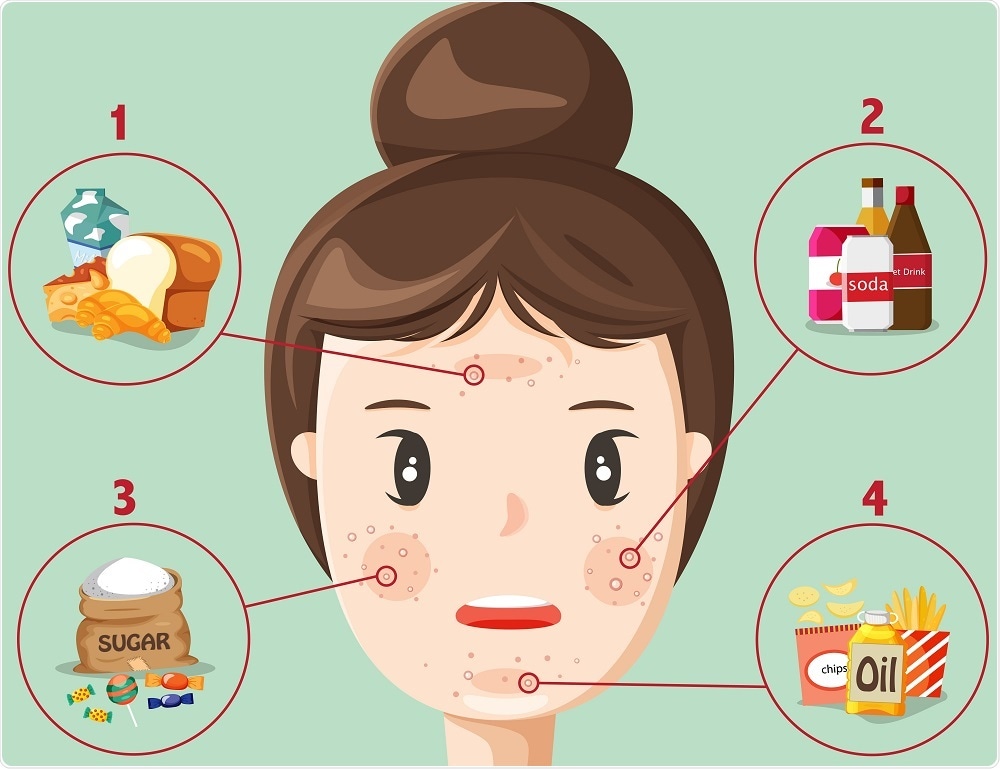
High-glycemic foods are digested quickly and can cause a fast rise in blood glucose. Common examples include sugary drinks, candy, white bread, sweet cereal, pastries, and many refined snack foods.
When blood sugar rises, the body releases insulin. Higher insulin levels may affect hormones and oil glands. They may also increase signals that encourage skin cells to grow and pores to become blocked.
Some clinical trials have found fewer acne lesions in people who follow a lower-glycemic diet. However, these studies are not perfect. Diet studies can be hard to control because people change many habits at once.
A lower-glycemic eating pattern does not mean removing all carbohydrates. It means choosing foods that release energy more slowly, such as:
• Beans and lentils
• Oats and other whole grains
• Vegetables
• Whole fruit
• Nuts and seeds
• Plain yogurt without added sugar
• Fish, eggs, tofu, and other protein foods
Try a simple swap. Replace a sugary breakfast pastry with oatmeal, berries, and nuts. Instead of a sweetened soda, choose water or unsweetened tea. Small changes are easier to maintain than strict rules.
Does diet affect acne through sugar alone? Probably not. The overall food pattern, portion size, fiber, sleep, and other lifestyle habits may all shape the result.

Does dairy cause acne?
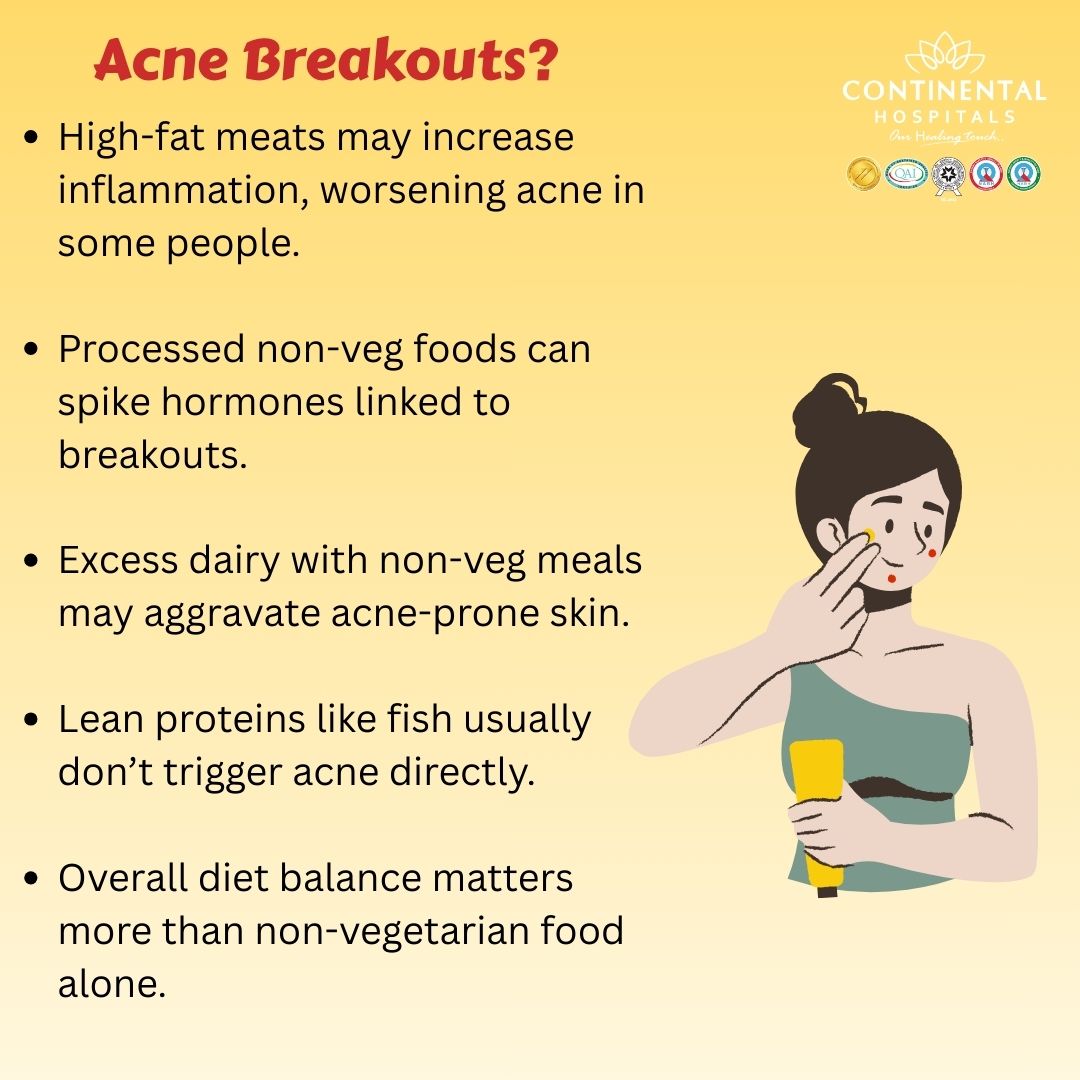
Does diet affect acne when dairy is part of the diet? Some research finds a link between dairy intake and acne, especially skim milk. The link appears weaker and less consistent for cheese and yogurt.
One possible reason is that milk contains natural hormones and may affect insulin-like growth factor 1. Processing may also change how milk influences blood sugar and hormone signals. These are theories, not final proof.
A large association does not mean dairy causes acne in every person. People who drink more milk may also have other habits that affect skin, such as eating more refined carbohydrates or using certain supplements.
If you suspect dairy, avoid removing every dairy food at once. Try a careful test:
-
Track your acne for one week without changing your normal diet.
-
Reduce one suspected food, such as skim milk, for six to eight weeks.
-
Keep skin care and other habits as steady as possible.
-
Record new breakouts, menstrual changes, stress, and sleep.
-
Add the food back if appropriate and watch for a repeat pattern.
Do not remove dairy without replacing key nutrients. Calcium and vitamin D can come from fortified plant milk, tofu made with calcium, canned salmon with bones, leafy greens, or a supplement recommended by a health professional.
Foods that may support clearer skin
Does diet affect acne in a helpful way? A nutrient-rich diet may support healthy skin, even though no single food can cure acne.
A Mediterranean-style pattern is a useful model. It emphasizes vegetables, fruit, beans, whole grains, fish, olive oil, nuts, and seeds. This pattern also limits highly processed foods and added sugar.
Foods that may support skin health include:
• Colorful vegetables for vitamin C and plant compounds
• Fatty fish for omega-3 fats
• Beans and lentils for fiber and steady energy
• Nuts and seeds for zinc and healthy fats
• Whole grains for slower digestion
• Water and unsweetened drinks for hydration
Zinc deserves careful attention. It helps immune function and wound healing, but high-dose zinc supplements can cause nausea and copper deficiency. Food sources are safer for most people. These include oysters, meat, beans, pumpkin seeds, and fortified foods.
Omega-3 fats may help regulate inflammation. Fatty fish, such as salmon and sardines, are practical sources. Plant sources include chia seeds, flaxseed, and walnuts, although the body converts their fats less efficiently.
Avoid promising foods that “detox” the skin. Your liver and kidneys already handle waste removal. A varied diet supports the body better than juice cleanses or very low-calorie plans.

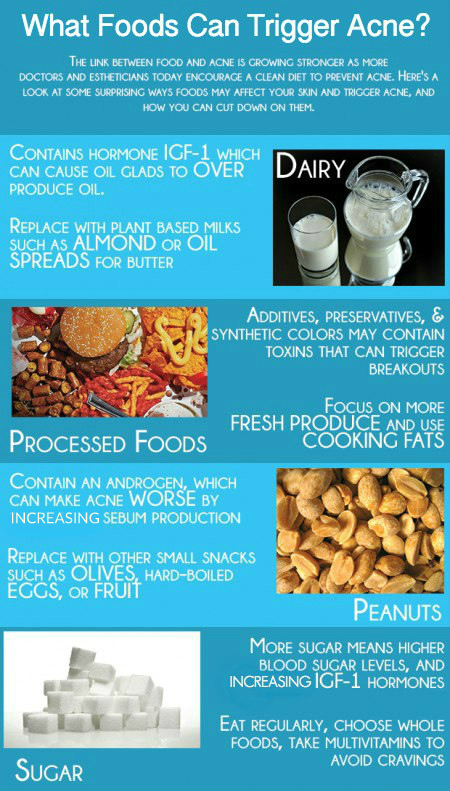
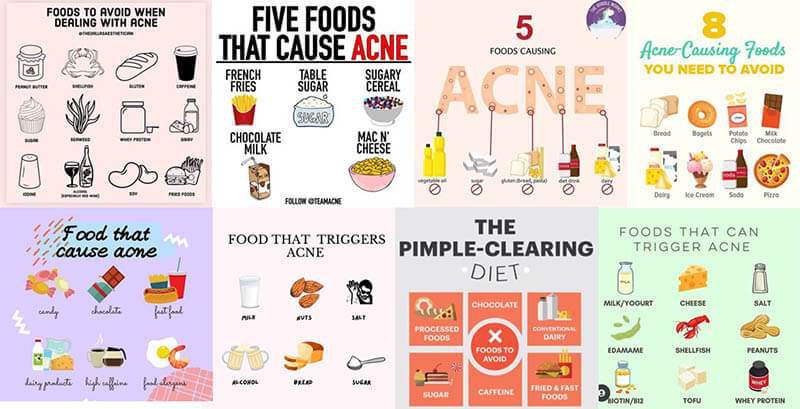
Foods that may worsen acne
Does diet affect acne through certain foods? It may, especially when a food repeatedly appears before a flare. Yet one meal rarely explains a breakout.
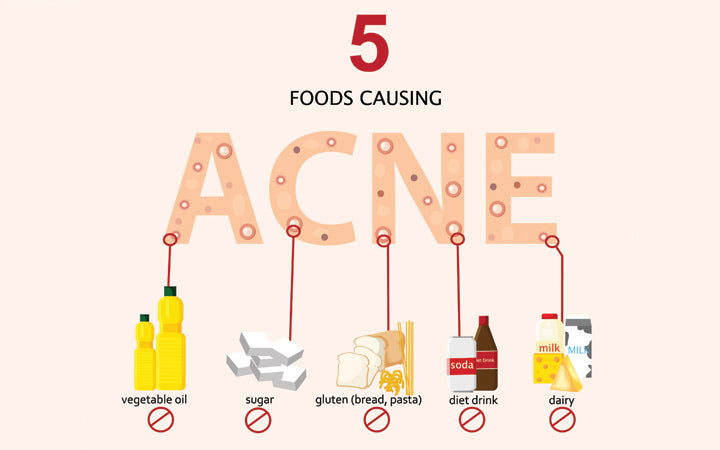
• Sugary drinks and energy drinks
• Candy and desserts
• Refined grains
• Large amounts of skim milk
• Whey protein supplements
• Highly processed snack foods
Whey protein is worth special attention for athletes. Some people report new or worse acne after using whey-based shakes. Research suggests a possible connection, but it does not affect everyone.
If you use whey protein and notice a clear pattern, discuss other protein options with a sports dietitian or clinician. Pea, soy, egg, or food-based protein may work for some people.
Chocolate is often blamed for acne. The evidence is mixed. The sugar and milk in many chocolate products may matter more than cocoa itself. Dark chocolate with less added sugar may not have the same effect, but personal responses still vary.
Do not label food as “bad” based on one breakout. Acne often develops over days, so the timing can be misleading.
How to test whether your diet affects acne
Does diet affect acne in your own case? A structured food and skin diary can give you better clues than guesswork.
Track these items for six to eight weeks:
• New pimples and their location
• Food and drink
• Menstrual cycle, if relevant
• Sleep quality
• Stress level
• New skin care products
• Medications and supplements
• Exercise and sweating
Look for repeated patterns, not isolated events. If acne worsens after the same food several times, that food may be worth testing. Still, other changes may be responsible.
Use one change at a time. If you remove dairy, start a new supplement, change cleanser, and stop medication on the same day, you will not know what caused the improvement or flare.
A practical trial might look like this:
-
Take clear photos once a week in the same light.
-
Keep your skin care routine simple and steady.
-
Choose one possible trigger.
-
Test the change for six to eight weeks.
-
Review the pattern with a dermatologist or registered dietitian.
This approach avoids the common mistake of cutting out many foods at once. Restrictive diets can lead to stress, poor nutrition, and disordered eating. Teens, pregnant people, athletes, and anyone with a history of an eating disorder should get professional guidance before making major changes.

Why diet is not the only acne trigger
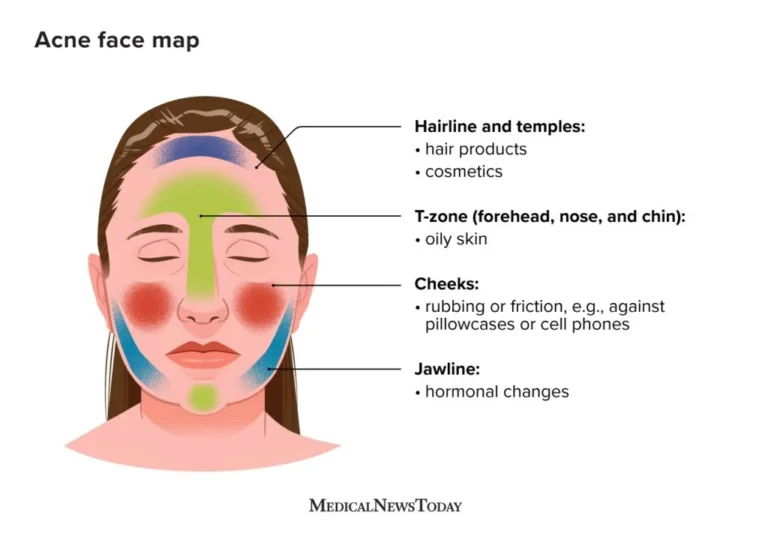
Does diet affect acne more than hormones or skin care? Usually, no single factor has that much control. Hormonal changes often play a major role, especially during puberty, menstrual cycles, pregnancy, and certain medical conditions.
Other common influences include:
• Genetics
• Stress
• Poor sleep
• Friction from helmets, masks, or tight clothing
• Heavy hair or skin products
• Some medicines
• Picking or squeezing pimples
• Excess oil and sweat
Stress does not mean acne is “all in your head.” Stress hormones may increase oil production and inflammation. Stress can also make sleep and skin care less consistent.
Skin care remains important. Wash gently twice a day, use noncomedogenic products, and avoid harsh scrubs. Scrubbing can irritate the skin barrier and make red acne look worse.
Diet changes should support proven treatment, not replace it. Dermatologists may recommend benzoyl peroxide, topical retinoids, azelaic acid, antibiotics, hormonal treatment, or isotretinoin, depending on the type and severity of acne.
Seek medical care for painful cysts, scarring, sudden severe acne, or breakouts that affect your confidence. Early treatment can reduce the risk of permanent scars.
Common mistakes when changing an acne diet
Does diet affect acne enough to justify extreme restrictions? In most cases, no. Several common mistakes can make the process stressful and less useful.
• Cutting out all dairy without checking calcium and vitamin D intake
• Blaming one meal for a breakout
• Starting several supplements at once
• Using high-dose vitamins without medical advice
• Replacing food with detox drinks
• Expecting clear skin in a few days
• Stopping prescribed acne treatment too soon
Supplements deserve caution. Biotin, high-dose B vitamins, iodine, and some muscle-building products have been linked to acne-like breakouts in certain people. Tell your clinician about every supplement you take.
Another mistake is judging success by one day of clear skin. Acne treatment often needs eight to twelve weeks before improvement becomes clear. Diet trials also need time because pimples begin forming below the skin before you see them.
In reviewing acne advice, the most useful lesson is simple: aim for a steady pattern, not perfection. A slice of birthday cake will not erase healthy habits. Fear and guilt are not skin treatments.
What experts say about diet and acne
The American Academy of Dermatology notes that a low-glycemic diet may help some people with acne, but more research is needed. Dermatology reviews also describe a possible connection between dairy, insulin signals, and acne, while stressing that the evidence is not strong enough for universal food bans.
Studies on diet and acne have several limits:
• Many are observational, so they show links rather than direct causes.
• People may misremember what they eat.
• Acne severity can change naturally.
• Diets vary across cultures and regions.
• Participants may change skin care at the same time.
• Research often includes small groups.
This means the best advice is personal but evidence-based. Choose a balanced diet, limit high-sugar foods, watch for repeat dairy or supplement triggers, and use medical treatment when needed.
The goal is not flawless eating. The goal is to find a realistic pattern that supports your skin and your whole health.
Frequently Asked Questions About Does Diet Affect Acne?
Does diet affect acne for everyone?
No. Some people notice fewer breakouts after reducing high-glycemic foods or certain dairy products, while others see little change. Acne has many causes, so diet is only one possible influence.
What foods should I avoid for acne?
There is no universal acne food list. Start by limiting sugary drinks, highly refined foods, and any item that repeatedly seems to trigger your breakouts.
Can drinking more water clear acne?
Water supports normal body function, but extra water alone does not clear acne. It is more useful to replace sugary drinks with water while following a suitable skin care and treatment plan.
Is chocolate bad for acne?
Research does not prove that all chocolate causes acne. Products high in sugar or milk may be more likely to contribute than plain cocoa, but individual responses differ.
Can dairy-free eating improve acne?
It may help some people, particularly those who notice a pattern with skim milk. Do a careful trial and replace lost nutrients instead of removing dairy without a plan.
Does sugar cause pimples?
High-sugar foods may worsen acne in some people by causing fast blood sugar and insulin changes. Sugar is not the only cause, and eating one sweet food does not guarantee a breakout.
Should I take supplements for acne?
Usually, do not start supplements without professional advice. Some supplements can cause side effects, interact with medicines, or even worsen acne.
Conclusion
Does diet affect acne? Yes, diet can influence acne for some people, especially through high-glycemic foods, certain dairy products, and whey protein. But acne also depends on hormones, genetics, stress, skin care, medication, and other factors.
Build meals around vegetables, fruit, beans, whole grains, fish, nuts, and other minimally processed foods. Test one possible trigger at a time, track changes for several weeks, and avoid extreme restrictions. If your acne is painful, persistent, or leaving scars, contact a dermatologist.
Your skin does not need a perfect diet. It needs consistent care, realistic choices, and the right treatment. Share your experience with diet and acne, or explore trusted dermatology resources to make your next step with confidence.
2 Comments