Can Massage Improve Flexibility And Mobility: Key Benefits
Yes, massage may improve flexibility and mobility by easing muscle tension, reducing pain, and supporting better movement.
Can massage improve flexibility and mobility? The answer is promising, but it is not magic. Massage may help tight muscles relax and make movement feel easier, especially when paired with stretching, strength work, and regular activity. This guide explains what massage can do, where it falls short, and how to use it safely.

How massage may improve flexibility and mobility
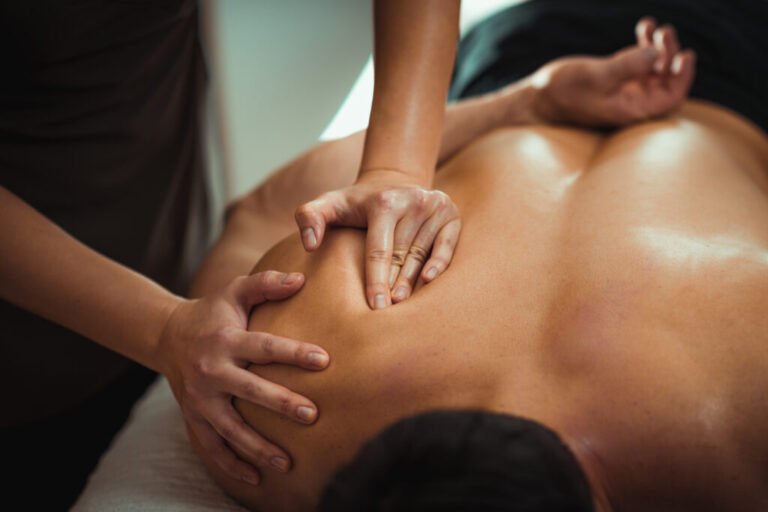
Massage works on soft tissue, which includes muscles, tendons, fascia, and other connective tissue. When these tissues feel tight, sore, or guarded, movement can become limited. Gentle pressure and rhythmic strokes may help the body relax so a joint can move with less discomfort.
Can massage improve flexibility and mobility in the same way as stretching? Not quite. Stretching lengthens tissues through a sustained position, while massage may reduce muscle tension and pain that stop you from reaching that position.
For example, a tight calf may make it hard to squat or bring your knee over your toes. Massage may calm the calf and reduce soreness. This can make the ankle feel freer for a short time.
Massage may support movement through several effects:
• It may reduce muscle tone and protective guarding.
• It may improve short-term blood flow to the treated area.
• It may reduce the feeling of stiffness after exercise.
• It may make stretching more comfortable.
• It may help you notice how and where you move.
Some studies report short-term gains in range of motion after massage. However, these gains do not always last for days or weeks. Long-term mobility usually depends on regular movement, muscle strength, joint health, and the cause of the restriction.
 difference?”
style=”max-width: 100%; height: auto; border: 2px solid black; border-radius: 10px; display: block; margin: 0 auto;”
loading=”lazy”
/>
Source: themodernback.com
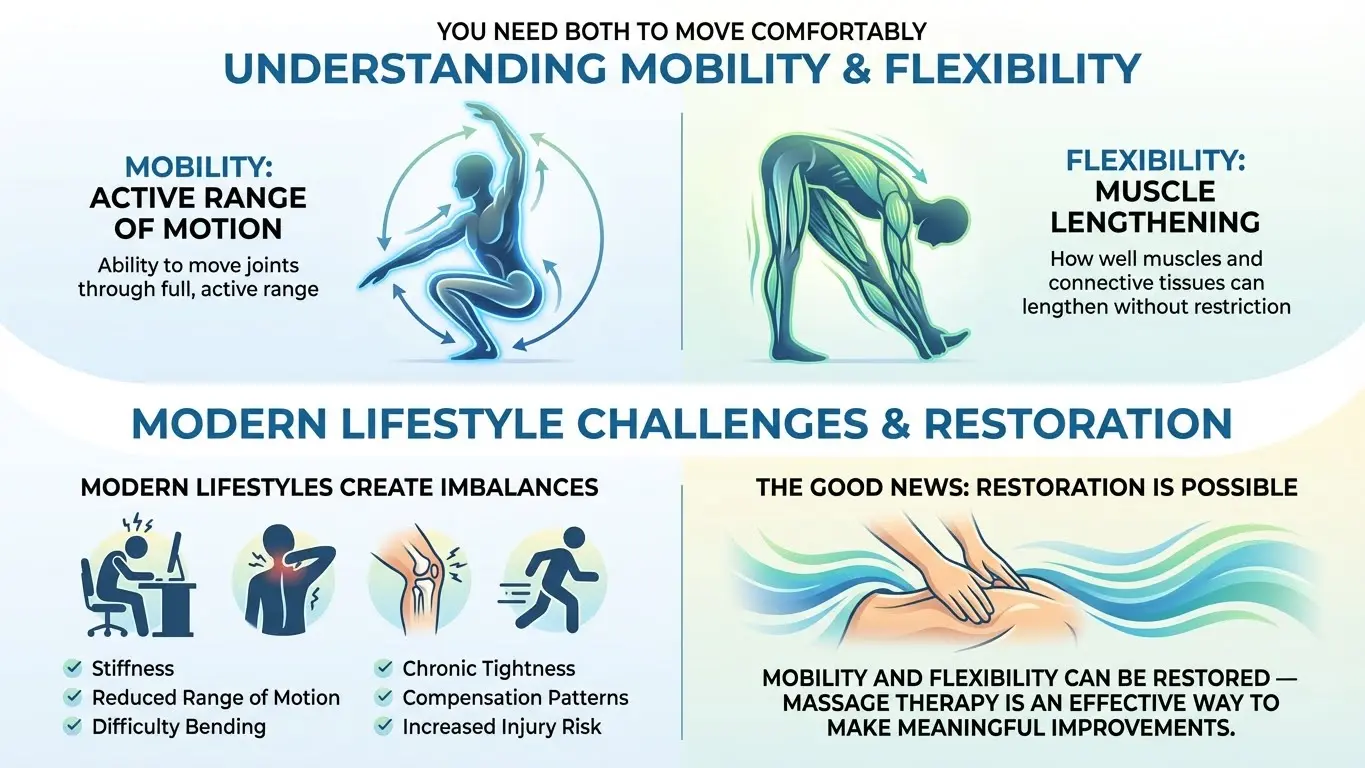
Flexibility versus mobility: What is the difference?
Flexibility means how far a muscle or group of muscles can lengthen. For example, hamstring flexibility affects how far you can bend forward with straight legs.
Mobility is broader. It means how well a joint moves through its available range with control. An overhead squat requires ankle, hip, spine, and shoulder mobility. It also requires balance, strength, and coordination.
Can massage improve flexibility and mobility? It may help both, but often in different ways. Massage may improve flexibility by reducing muscle tightness. It may improve mobility by making movement less painful and reducing the body’s urge to protect a sore area.
Think of flexibility as the size of a doorway. Mobility is your ability to walk through that doorway with control. A larger range does not always mean better movement.
You may have flexible hamstrings but poor hip control. You may also have stiff ankles because of joint changes rather than tight muscles. Massage can affect soft tissue, but it cannot correct every cause of limited movement.
A simple example
Imagine two people who cannot touch their toes.
• Person one has tight hamstrings but healthy hips and a strong back.
• Person two has hip arthritis and pain during forward bending.
Massage may help the first person feel looser. It may offer comfort to the second person, but it will not reverse arthritis or repair joint damage.
This difference matters. Can massage improve flexibility and mobility? Yes, in some cases. The result depends on what limits your movement in the first place.
Source: messinaacupuncture.org
What does the research say?
Research on massage and range of motion shows useful but limited results. Several reviews have found that massage can create small to moderate short-term improvements in flexibility and movement. These effects may last from minutes to a few hours, though results differ by person and technique.
Massage may also reduce delayed-onset muscle soreness after hard exercise. When soreness decreases, people often move more freely. This can make daily tasks and gentle exercise feel easier.
Still, massage is not a replacement for active training. Passive treatments may improve how you feel, but active movement teaches your body how to use the new range. This is why many sports medicine professionals combine massage with mobility drills and strength exercises.
Evidence also suggests that massage does not always improve athletic performance. Feeling looser before exercise can be useful, but too much deep pressure before a demanding workout may leave muscles sore or less ready to work.
Can massage improve flexibility and mobility over the long term? It may help when it supports a consistent plan. Long-term progress is more likely when massage is combined with:
• Strength training through a safe range.
• Active mobility exercises.
• Gentle stretching.
• Good sleep and recovery.
• Gradual increases in activity.
• Treatment of pain or injury when needed.
The evidence is strongest for short-term comfort and movement. Claims that massage permanently lengthens muscles or breaks up scar tissue should be treated with care. Soft tissue responses are complex, and strong pressure is not always better.
Source: topthaimassagehouston.com
Which types of massage may help?
Different massage styles may support flexibility and mobility in different ways. Your best choice depends on your symptoms, activity level, and comfort.
Swedish massage
Swedish massage uses light to moderate pressure and flowing strokes. It may help with general tension, stress, and mild stiffness. It is often a good starting point if you have not had massage before.
Sports massage
Sports massage focuses on areas used heavily during training. A therapist may use a mix of strokes, compression, and movement. The goal is not always relaxation. It may help you prepare for activity or recover after it.
Deep tissue massage
Deep tissue massage uses slower strokes and firmer pressure. It may help some people with chronic muscle tension. Yet deep pressure can cause bruising, soreness, or irritation. More force does not guarantee better flexibility.
Myofascial techniques
These techniques target areas that feel restricted or sensitive. The therapist may use steady pressure or slow movement. Some people report easier movement afterward, but research on long-term structural changes remains limited.
Assisted stretching
Assisted stretching combines massage with guided movement. The therapist may move a limb while you relax or ask you to gently resist. This approach may help connect passive flexibility with active control.
Can massage improve flexibility and mobility with any technique? It may, but the therapist should match the method to your needs. A careful assessment is more useful than choosing the most intense treatment.

Source: metatouch.com
When massage may be especially useful
Massage may be helpful when muscle tension, soreness, or fear of movement limits your range. It can be a useful part of care for people who sit for long periods, train often, or recover from minor soft tissue strain.
Common situations include:
• Tight hips after long hours at a desk.
• Calf stiffness after running.
• Shoulder tension from computer work.
• Mild muscle soreness after strength training.
• Reduced movement caused by stress or poor sleep.
• Short-term stiffness after travel.
Massage may also help you become more aware of your body. A therapist can point out that one side feels tighter than the other. That information can guide your warm-up and exercise plan.
A common real-world pattern is this: someone receives massage, feels looser, and then returns to the same habits that caused the tightness. The relief fades because the underlying load, posture, weakness, or movement pattern has not changed.
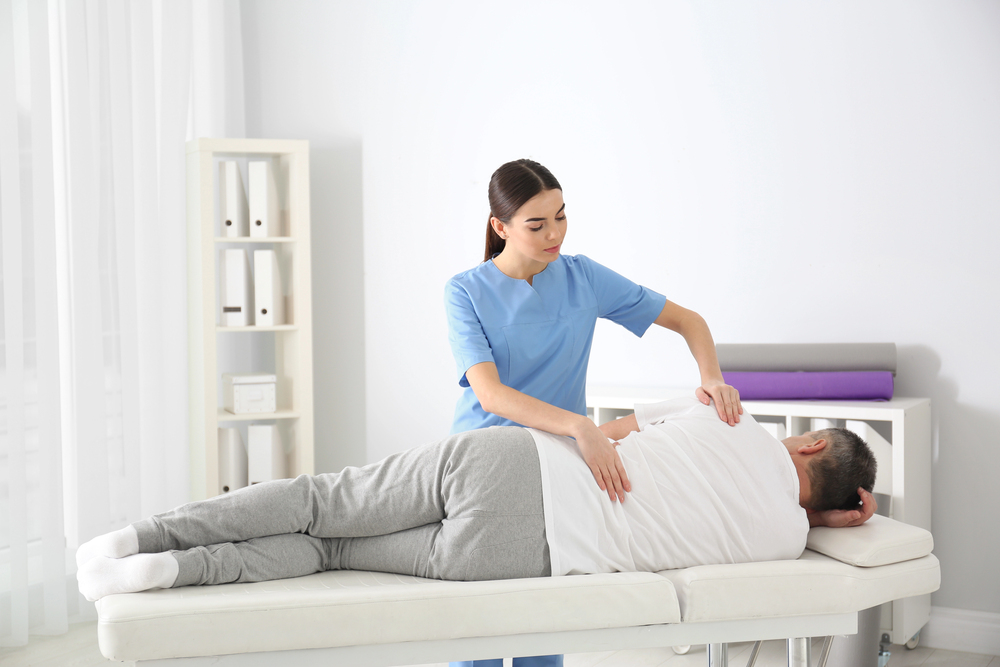
The practical lesson is simple. Use massage as a doorway, not the whole house. After treatment, perform gentle active movements while the area feels comfortable. This may help your nervous system use the available range.
Source: messinaacupuncture.org
How to use massage for better movement
A good massage plan should fit your current condition. Start with a clear goal, such as improving ankle movement for squats or reducing shoulder tension before exercise.
Try these steps:
- Identify the movement that feels limited. Notice whether the problem is pain, stiffness, weakness, balance, or fear.
- Choose a qualified massage therapist. Share your health history, medications, injuries, and activity goals.
- Ask for moderate pressure first. You should be able to breathe normally and relax during the session.
- Test movement before and after treatment. Use the same simple movement, such as a squat or shoulder raise.
- Follow massage with gentle active mobility work. Do not force a new range.
- Add strength training. Control helps maintain mobility better than passive stretching alone.
- Track the result for 24 to 48 hours. Note pain, soreness, movement, and daily function.
Can massage improve flexibility and mobility after one session? You may notice a short-term change, but one session cannot show whether the improvement will last. A pattern of safe movement over several weeks gives you better information.
Avoid judging a massage only by how painful it feels. Severe soreness is not proof that the treatment worked. A useful session should leave you feeling comfortable enough to move well afterward.
Source: messinaacupuncture.org
Massage before or after exercise?
Massage timing matters. A light massage before exercise may help you relax and move through a warm-up. However, a long or deep session before sprinting, lifting, or competition may reduce your sense of readiness.
Before exercise, consider:
• Light pressure.
• Brief treatment.
• Gentle active movement.
• A normal warm-up.
After exercise, massage may help reduce the feeling of soreness and stiffness. It should not replace food, fluids, sleep, or a gradual recovery plan.
For long-term flexibility and mobility, use massage between training sessions. Follow it with easy movement, not a sudden jump in workload. If your body feels sore after deep work, wait until the soreness settles before intense training.
Can massage improve flexibility and mobility before stretching? It may make stretching feel easier. Keep the stretch gentle, hold it without pain, and avoid bouncing.
Safety, limits, and when to seek care
Massage is generally safe for many healthy adults when performed by a trained professional. Mild tenderness can occur, especially after firm pressure. Sharp pain, numbness, weakness, dizziness, or lasting swelling is not a normal goal.
Talk with a health professional before massage if you have:
• A recent fracture, tear, or surgery.
• A suspected blood clot.
• Severe osteoporosis.
• Uncontrolled high blood pressure.
• A bleeding disorder or blood-thinning medication.
• An active skin infection or open wound.
• Fever or unexplained illness.
• Cancer treatment or a complex medical condition.
Do not use massage to delay care for serious symptoms. Seek medical help for sudden loss of movement, severe pain, major swelling, new weakness, loss of bladder or bowel control, or numbness that spreads.
Massage also has clear limits. It cannot repair a torn tendon, change bone shape, remove advanced arthritis, or permanently correct a joint problem by itself. If your flexibility suddenly changes or pain continues for more than a few weeks, a physical therapist or physician can assess the cause.
A qualified therapist should explain what they are doing and respect your feedback. You can ask them to reduce pressure or stop at any time.
Massage, stretching, and strength: The best combination
Massage may open a short window in which movement feels easier. Stretching can help you explore that range. Strength work can help you control it.
A simple weekly plan might include:
• Massage once in a while for tension or recovery.
• Daily light mobility work for stiff areas.
• Strength training two or more times each week, as appropriate.
• A warm-up before demanding exercise.
• Rest when pain or fatigue rises.
For tight ankles, you might use calf massage, knee-to-wall drills, and controlled calf raises. For stiff shoulders, you might use gentle soft tissue work, wall slides, and light pulling exercises.
The best plan is not the most complicated one. It is the plan you can repeat without increasing pain. Can massage improve flexibility and mobility? It is most useful when it helps you practice better movement consistently.
Frequently Asked Questions
Can massage improve flexibility and mobility permanently?
Massage may create short-term improvements in range of motion and comfort. Lasting change usually requires regular mobility practice, strength training, and treatment of the cause of stiffness.
How long does improved flexibility last after massage?
The effect may last minutes to several hours, but this varies. Active movement after massage may help you keep and use the improved range.
Is massage better than stretching for flexibility?
Neither is always better. Massage may reduce tension and pain, while stretching helps you practice a longer muscle position; using both can work well.
Can massage help stiff joints?
Massage may ease tension in the muscles around a stiff joint. It cannot restore damaged cartilage or correct a structural joint problem, so persistent stiffness should be assessed.
Should massage hurt to improve mobility?
No. Firm pressure may feel intense, but sharp pain is a warning sign. The treatment should allow you to relax and should not cause significant bruising or lasting pain.
Can I stretch after a massage?
Yes, gentle stretching or active mobility work may be suitable after massage. Avoid forcing the range, bouncing, or doing hard exercise if the area feels sore.
How often should I get massage for mobility?
There is no single schedule for everyone. Occasional massage may help with symptoms, while consistent exercise and mobility work usually have a greater effect on long-term results.
Conclusion
Can massage improve flexibility and mobility? Yes, it may reduce muscle tension, ease soreness, and create short-term improvements in movement. Its effects are usually strongest when tight soft tissue or pain is the main barrier.
Massage works best as part of a wider plan. Pair it with active mobility exercises, strength training, sensible recovery, and professional advice when symptoms persist. Start with moderate pressure, track how your body responds, and do not mistake pain for progress.
Choose one restricted movement today and work on it gently after your next massage or workout. For more practical wellness guides, explore related resources and share your experience in the comments.