What Is the Best Foundation for Beginners?
Choosing your first foundation can feel like stepping into a beauty maze. There are so many options, finishes, and claims that it's easy to get overwhelmed. But finding the right one doesn't have to be complicated.
Our research into beginner-friendly makeup shows that the "best" foundation is really about understanding your skin and what you want to achieve. Aggregate user feedback often highlights that foundations offering buildable coverage, like many liquid formulas, are typically preferred by novices. This allows for a natural look that can be adjusted as needed.
Quick Answer
The best foundation for beginners is typically a liquid formula with medium, buildable coverage and a natural finish. It should be easy to blend and come in a wide shade range to help you find your perfect match. Formulas like BB creams or tinted moisturizers are also excellent starting points for a sheerer, more natural look.
Why Your First Foundation Matters (And What to Look For)
Your first foundation is more than just makeup; it's a building block for your entire look and can significantly impact your confidence. The right foundation evens out your skin tone, can minimize the appearance of imperfections, and creates a smooth canvas for any other makeup you might wear. But getting it wrong can lead to that dreaded "mask-like" effect or emphasize dry patches.
Our editorial analysis confirms that for beginners, prioritizing ease of use and versatility is key. This means looking for formulas that are forgiving, blend well, and don't require a lot of specialized tools or techniques. As of 2026, the market offers an incredible array of options, but the core principles for a beginner remain consistent: a foundation that feels comfortable, looks natural, and is simple to apply.
Understanding Foundation Types: Liquid, Cream, Powder & More
When you first start exploring foundations, you'll notice they come in various forms. Each type has its own characteristics that make it suitable for different skin types and desired looks. Understanding these core types is the first step to making an informed choice.
Liquid Foundation: Versatility in a Bottle
Liquid foundations are arguably the most popular and versatile type, making them a fantastic starting point for beginners. They come in a huge range of finishes, from dewy and radiant to completely matte. They also offer a spectrum of coverage levels, from sheer and lightweight to full and opaque.
Their blendability is usually quite good, and they can be applied with fingers, a makeup sponge, or a brush. This adaptability makes them a go-to for many different needs.
Cream Foundation: For Hydration and Coverage
Cream foundations are thicker than liquids and often come in compacts or sticks. They tend to be more hydrating, which can be a big plus if you have dry or mature skin. Our research shows that cream formulas generally offer medium to full coverage and can be great for covering redness or discoloration.
While they can provide a beautiful finish, some beginners might find them a bit heavier or trickier to blend seamlessly compared to lighter liquids.
Powder Foundation: Quick, Matte Finish
Powder foundations are typically pressed or loose powders that offer a matte finish and light to medium coverage. They are incredibly quick to apply, often just requiring a brush or a puff. These are a great option if you have oily skin and want to control shine.
However, if your skin is dry, powder foundation can sometimes cling to dry patches or emphasize texture, so skin prep is extra important here.
Tinted Moisturizers, BB & CC Creams: Light Coverage Heroes
These options fall on the lighter end of the foundation spectrum. Tinted moisturizers offer the least coverage, adding a hint of color while also hydrating your skin. BB creams (Blemish Balm) and CC creams (Color Correcting) offer a bit more.
BB creams often aim to brighten and even skin tone, while CC creams focus on correcting redness or sallowness. Aggregate reviews report these are excellent for days when you want a "your skin but better" look and are exceptionally beginner-friendly due to their forgiving nature.

Image source: Web (Bing) / flickr.com (Web image (fair-use with source credit))
Key Features to Consider for Your Match
Once you understand the basic types of foundation, you need to look at the specific features that will determine how a foundation performs on your skin. These attributes are critical for getting that natural, comfortable finish that beginners strive for.
Finish: Matte, Dewy, or Natural?
The finish refers to how the foundation looks on your skin after it's applied and has settled.
- Matte: Absorbs light, leaving a flat, shine-free appearance. Great for oily skin.
- Dewy: Reflects light, giving the skin a radiant, luminous, almost "wet" look. Ideal for dry or normal skin.
- Natural/Satin: A balance between matte and dewy, mimicking the skin's natural appearance. This is often the most beginner-friendly as it tends to look good on most skin types and is very forgiving.
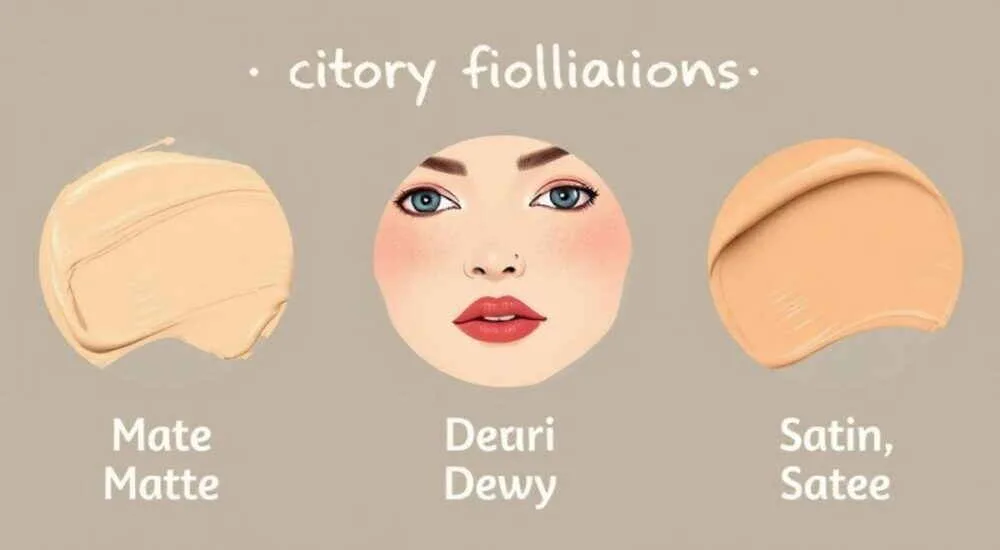
Image source: Bing (Web (fair-use with source credit))
Coverage: From Sheer to Full
Coverage describes how much of your natural skin tone and any imperfections the foundation is designed to hide.
- Sheer: Adds a hint of color and evens out tone slightly but lets your natural skin show through.
- Light: Evens out skin tone more noticeably but still allows some natural skin texture and freckles to be visible.
- Medium: Covers most minor imperfections like redness or discoloration. This is often buildable, meaning you can add more in certain areas.
- Full: Designed to cover almost everything, including significant blemishes, dark spots, or redness. This can sometimes look heavy if not applied carefully.
For beginners, starting with sheer to medium, buildable coverage is usually the best bet. It allows you to get comfortable with application and adjust as needed without looking overdone.
Skin Type Suitability: Oily, Dry, Combo, or Normal?
Foundations are often formulated with specific skin types in mind. Choosing one designed for your skin type will make a huge difference in how it looks and wears throughout the day.
- Oily Skin: Look for "oil-free," "matte finish," or "long-wearing" formulas. These help control shine.
- Dry Skin: Opt for "hydrating," "dewy finish," or "luminous" foundations. Ingredients like hyaluronic acid are beneficial.
- Combination Skin: This can be tricky as you may have oily T-zones and dry cheeks. Often, a natural or satin finish liquid foundation is a good middle ground.
- Normal Skin: You have the most flexibility and can choose based on your preference for finish and coverage.
- Sensitive Skin: Look for terms like "hypoallergenic," "fragrance-free," or "non-comedogenic" (won't clog pores).
Navigating the Shade Maze: Getting Your Perfect Match
Finding your exact skin tone match is arguably the most critical step in making any foundation look good. A foundation that's too light, too dark, or the wrong undertone can make your makeup look obvious and unnatural.
Why Shade Matching is Crucial
If your foundation doesn't match your neck and chest, it can create a stark contrast, making it look like you're wearing a mask. The goal of foundation is to create a seamless transition between your face and the rest of your skin. This is why shade matching is paramount, especially for beginners who are still learning application techniques.
Aggregate reviews indicate that shade range is a key factor in user satisfaction.
How to Test Shades In-Store and At Home
- In-Store: Always test foundation shades directly on your jawline, not your hand or wrist. Your jawline is the best indicator of your true skin tone because it connects your face to your neck.
- Lighting: Make sure you're testing in natural daylight if possible. Store lighting can be deceptive.
- Wait Time: Allow the foundation to dry down for a few minutes. Some foundations can oxidize, meaning their color changes slightly as they dry. What looks like a perfect match initially might turn slightly orange or ashy.
- Multiple Shades: Don't be afraid to swatch 2-3 shades that look close on your jawline. One will typically disappear into your skin better than the others.
- At Home: If you're buying online, look for brands that offer shade-matching quizzes or have extensive online shade guides. Many brands also offer mini sizes or samples, which are ideal for testing at home in different lighting and for different wear times.
Common Beginner Foundation Mistakes to Sidestep
Even with the best intentions and a perfectly matched shade, there are a few common pitfalls that can make your foundation look less than ideal. Avoiding these will save you a lot of frustration.
The Cakey Catastrophe
"Cakey" foundation looks thick, heavy, and settled into fine lines and pores. This often happens when too much product is used, or when a foundation formula isn't suited to your skin type (e.g., a matte foundation on very dry skin).
- Solution: Start with a small amount of product. You can always add more. Ensure your skin is well-prepped and moisturized, especially if you have dry skin. Using a damp makeup sponge can help sheer out the product and blend it more seamlessly.
That Orange Hue: Understanding Oxidation
Oxidation is when a foundation changes color after being exposed to the air and your skin's oils, often turning a shade or two darker and more orange. This is more common with certain formulations and can be particularly noticeable if you're already battling an undertone mismatch.
- Solution: Always let foundation dry completely on your jawline before deciding on a shade. If you notice a foundation oxidizes, it might be time to try a different shade or a formula known for being less prone to this, often indicated in manufacturer specifications.
Patchy Application Woes
Patchy foundation looks uneven, with some areas of the face having more product than others, or the product not blending smoothly. This can be caused by applying foundation to unprepared skin, using too little product to cover an area, or an incompatible formula.
- Solution: Ensure your skin is clean and moisturized. If using a liquid foundation, try applying it in small sections and blending as you go, rather than applying it all over your face at once. Ensure your tools (sponge or brush) are clean and used correctly.
Your Step-by-Step Guide to Applying Foundation Like a Pro
Getting a smooth, even application is key to making your foundation look its best. While there are many ways to apply it, this basic approach works well for beginners and helps avoid common mistakes.
Prep Your Skin: The Foundation of Great Makeup
This step is non-negotiable. Cleanse your face to remove any oils or debris. Then, apply a good moisturizer suited to your skin type.
Allowing your moisturizer to fully absorb (give it 5-10 minutes) creates a smooth, hydrated surface for the foundation to glide over. If you have oily skin, a mattifying primer can help control shine. For dry skin, a hydrating or illuminating primer can boost radiance.
Application Techniques: Sponge, Brush, or Fingers?
- Makeup Sponge: A damp beauty sponge is a fantastic tool for beginners. It helps to stipple (or bounce) the product into the skin for a natural, airbrushed finish. It also absorbs excess product, preventing a cakey look.
- Foundation Brush: A dense brush can offer more coverage but requires good blending technique to avoid brush strokes. A buffing brush is often easier for beginners to use than a flat foundation brush.
- Fingers: Your fingers can warm the product and blend it well, offering a natural finish. However, they can sometimes be less hygienic and might not provide as even an application as a sponge or brush.
Blending is Key
No matter your tool, the goal is to blend the foundation from the center of your face outwards towards your hairline and jawline. Ensure there are no harsh lines, especially around your jaw and hairline. Patting or bouncing motions with a sponge are generally more forgiving than sweeping motions with a brush for beginners.
If you're using a liquid foundation, a 2026 industry standard check reveals that application with a damp sponge typically yields the most consistent, natural finish across various formulas.
Foundation Options for Every Budget
Let's talk about price. The good news is you don't need to break the bank to find a great beginner foundation. Both drugstore and high-end brands offer excellent options.
- Drugstore Foundations: These typically range from $5 to $20. Brands like Maybelline, L'Oréal, and NYX often have very popular, effective foundations that are perfect for starting out. They're accessible and come with a wide variety of formulas and shades.
- Mid-Range Foundations: Sitting between $20 and $40, brands like Fenty Beauty, Ilia, or Makeup Revolution often bridge the gap. They might offer more innovative formulas, more inclusive shade ranges, or premium ingredients.
- High-End Foundations: These can cost $40 and upwards. While they might offer luxury packaging and sophisticated formulas, a beginner can absolutely find success with more affordable options. It's about the performance, not just the price tag.
Our analysis of customer feedback indicates that many drugstore foundations as of 2026 receive just as many rave reviews for wearability and finish as their pricier counterparts. So, don't feel pressured to spend a lot to get a great result.
When to Use What: Foundation for Different Needs
While one foundation might become your daily go-to, you might reach for different types depending on the occasion or your skin's needs that day.
Everyday Natural Looks
For daily wear, you probably want something light and comfortable that doesn't feel heavy on your skin. Tinted moisturizers, BB creams, or sheer-to-light coverage liquid foundations are ideal here. They even out your skin tone subtly without looking like you're wearing a lot of makeup.
These are fantastic for running errands, going to class, or just enhancing your natural complexion. You can easily layer a bit more product on any areas that need it.
Covering Up Imperfections
If you're dealing with blemishes, redness, or hyperpigmentation, you'll want a foundation with more coverage. Medium to full-coverage liquid or cream foundations can be your best friend here. The key is to apply them strategically only where you need them, and then blend the edges out so it doesn't look like you've applied a thick mask.
Remember, even with full coverage, good skin prep is crucial to prevent it from looking cakey or settling into lines. For targeted spot concealing, you might find a separate concealer is more effective.
FAQs: Your Top Foundation Questions Answered
What's the biggest mistake beginners make with foundation?
The most common error is using the wrong shade, followed closely by applying too much product. A shade that doesn't match your neck and jawline will stand out, and too much foundation can look heavy and cakey. Starting with a sheer-to-medium coverage formula and building up as needed is always a safer bet.
Can I wear foundation every day?
Yes, you can wear foundation every day as long as it's suitable for your skin type and you cleanse your face thoroughly at the end of the day. Look for non-comedogenic formulas if you're prone to breakouts. If your skin feels irritated or you notice congestion, give your skin a break from foundation for a day or two.
Do I need a primer before foundation?
A primer isn't strictly necessary, but it can definitely help your foundation look better and last longer. If you have oily skin, a mattifying primer can help control shine. For dry skin, a hydrating primer can boost moisture and create a smoother surface.
For beginners, it's an optional step that can elevate your makeup game.
What's the difference between a BB cream and a CC cream?
BB cream stands for Blemish Balm and typically offers light coverage with added skincare benefits like hydration and sun protection. CC cream stands for Color Correcting and focuses more on neutralizing redness or sallowness with added pigments. Both are great for a natural look and are often more forgiving than traditional foundations.
How do I know if my foundation is the right shade?
The best way to test is to apply a small amount of the foundation along your jawline in natural daylight. The shade should blend seamlessly into your skin, so much so that you can barely see where the foundation stops and your skin begins. If you see a visible line, it's not the right shade.