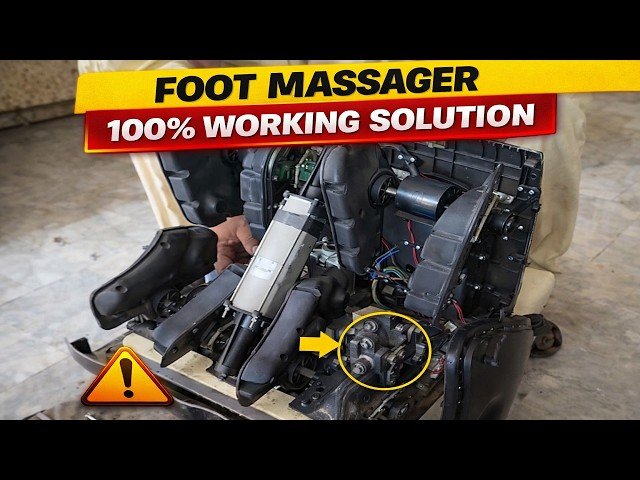
How To Repair A Foot Massager: Easy Fixes
Most foot massagers can be repaired by checking power, cleaning parts, and replacing worn components.
A foot massager looks simple on the outside, but inside it usually has a small motor, wiring, rollers, heat parts, and control buttons that all need to work together. When one piece fails, the whole unit can seem dead. The good news is that many common problems are fixable at home if you know what to check first and when to stop and call a pro.
Why foot massagers stop working
Foot massagers fail for a few common reasons. In my experience, the biggest culprits are power issues, dust buildup, loose connections, and motor wear. I have also seen units stop working simply because a cord got bent too many times or a button membrane wore out.
Some problems are minor and easy to fix. Others involve electrical parts that should be handled with care. If your foot massager smells hot, sparks, or trips a breaker, stop using it right away and inspect it safely.
Common causes include:
- Faulty power cord or plug
- Loose internal wire connections
- Blown fuse
- Dirty rollers or jammed gears
- Overheated motor
- Broken control switch
- Worn-out adapter or power supply
- Heat element failure
Tools and supplies you may need
Before you repair a foot massager, gather the basics. Having the right tools makes the job safer and faster. It also helps you avoid damaging plastic clips or delicate wires.
Useful tools and supplies include:
- Screwdrivers, usually Phillips and flathead
- Multimeter
- Flashlight
- Soft brush or compressed air
- Isopropyl alcohol
- Cotton swabs
- Electrical tape
- Replacement fuse
- Spare screws
- Wire connectors
- Small pliers
If your model has a removable adapter, try testing with a known-good compatible one first. I have saved myself time many times by checking the adapter before opening the case. That simple step can rule out the easiest fix.
Safety first before you repair a foot massager
Unplug the unit before doing anything else. That sounds basic, but it is the most important step. A foot massager can store heat and, in some models, small amounts of electrical charge.
Keep these safety rules in mind:
- Unplug the device and let it cool down
- Do not use water inside the machine
- Work on a dry table with good light
- Take photos before removing wires
- Avoid touching exposed metal parts
- Stop if you see burned wires or melted plastic
If the unit is under warranty, opening it may void coverage. In that case, contact the maker first. A repair shop or the manufacturer may offer a better fix than doing it yourself.
How to repair a foot massager step by step
Start with the simplest checks first. Most people jump straight to opening the shell, but I have found that power and blockage issues are often the real problem. A calm, step-by-step method saves time and prevents mistakes.
1. Check the power source
Test the wall outlet with another device. Then inspect the plug, adapter, and cord for bends, cuts, or scorch marks. If the massager has an external power brick, swap it with the correct matching adapter if you have one.
If the unit powers on only when the cord is moved, the cord may be damaged inside. That is a strong sign you may need to replace it.
2. Inspect the control buttons and settings
Sometimes the foot massager works, but the control panel does not respond. Press each button firmly and check for sticky or cracked surfaces. A worn switch membrane or loose ribbon cable can make the device seem broken.
If the display is blank but power is present, the issue may be in the control board. On some models, cleaning the contacts is enough. On others, the board may need replacement.
3. Listen for motor noise
Turn the unit on for a short test. If you hear humming but no movement, the motor may be jammed, weak, or blocked. If you hear clicking, grinding, or scraping, something inside may be stuck.
A jammed roller or gear train is common. Open the housing only if you feel confident and the model is safe to service. I once fixed a unit that had a small sock thread wrapped around a roller shaft. It looked like a motor failure at first, but it was just a hidden blockage.
4. Clean the rollers and internal tracks
Dust, lint, and hair can clog the moving parts. Use a soft brush or compressed air to clean around rollers, gears, and vents. If you can access the inside safely, wipe surfaces with a lightly dampened cloth and a little isopropyl alcohol.
Do not soak anything. Moisture can damage the motor and control board. Cleaning alone can restore smooth movement in many cases.
5. Check for a blown fuse
Some foot massagers include a small internal fuse or fuse in the power plug. If the device is completely dead, this is worth checking. Use a multimeter to test continuity if you know how, or replace the fuse with the exact same rating.
Never use a higher-rated fuse just to “make it work.” That can create a fire risk. The right fuse protects the machine and you.
6. Look for loose wires or connectors
A loose wire can stop the motor, heat, or controls from working. Inspect connectors for unplugged clips, burned ends, or broken solder points. If you find a loose connector, reseat it gently and make sure it clicks into place.
If a wire is frayed, damaged, or burned, it should be replaced. Do not twist bare wires together unless you know how to insulate them properly and safely.
7. Test the motor
If the power supply is good but the unit still does not move, the motor may be failing. Use a multimeter to check whether the motor receives power. If it gets voltage but does not spin, the motor may be worn out or seized.
Replacing a motor can be a practical repair if the model is worth saving. But on cheaper units, the cost of parts and labor may be close to buying a new one.
8. Repair or replace the heating element
If your foot massager has heat but it no longer warms up, the heating element, thermostat, or thermal fuse may be the issue. First check whether the heat setting is actually turned on. If it is, inspect the thermal fuse and heating leads.
Heating repairs need extra care. A damaged heater can be a burn or fire risk, so stop if you see discoloration, melted insulation, or strange smells.

Common foot massager problems and what they usually mean
It helps to match the symptom to the likely cause. That way, you do not waste time opening parts that are probably fine. Think of it like a simple diagnosis map.
Here are the most common signs:
- No power at all: outlet issue, damaged cord, blown fuse, bad adapter
- Motor hums but does not move: jammed roller, weak motor, gear problem
- One side works, the other does not: loose internal connector or partial motor failure
- Heat does not work: heater, thermostat, thermal fuse, or switch problem
- Loud grinding noise: debris, worn gears, misaligned rollers
- Power cuts in and out: frayed cord, loose plug, failing switch
If you can match the symptom early, repair becomes much easier. That is one reason I always tell people to write down exactly what the machine does before opening it.
When you can repair a foot massager at home
DIY repair makes sense when the issue is simple. If the problem is external, mechanical, or clearly a loose part, you may be able to fix it yourself. This is often true for cleaning, cord checks, fuse replacement, and minor connector repairs.
Good DIY situations include:
- Dirty rollers or vents
- A bad external adapter
- A visible loose wire
- A blown accessible fuse
- A stuck roller from debris
- A worn switch that can be replaced easily
If you are patient and careful, you can often bring a foot massager back to life without spending much. Just keep the repair within your skill level.
When to stop and call a technician
Some repairs are not worth the risk. If the board is burned, the motor is sealed, or the wiring is complex, a technician may be the safer choice. That is especially true if the unit is expensive or has advanced features like heat, air compression, and multiple modes.
Call a professional if you notice:
- Burn marks or melted plastic
- Repeated tripping of a breaker
- Strong burning smell
- Exposed live wires
- Water damage
- A control board failure you cannot trace
- A model with hard-to-find parts
A good repair shop can test parts faster and more safely than guesswork. In some cases, a technician will confirm that replacement is cheaper than repair.
How to prevent future problems
A repaired foot massager should not fail again right away. Good care makes a big difference. I have seen the same type of unit run for years when the owner kept it clean and dry.
Helpful habits include:
- Unplug after use
- Keep it away from moisture
- Do not overload the machine with long sessions
- Clean vents and rollers often
- Store the cord loosely, not tightly bent
- Use only the correct adapter
- Stop using it at the first sign of heat or odor
Think of maintenance like brushing teeth. Small regular care prevents bigger trouble later.
Cost of repairing a foot massager
Repair cost depends on the problem. A fuse or cord fix may cost very little. A motor or control board replacement may cost more than a budget unit is worth. Before spending money, compare the repair estimate with the price of a new model.
Typical cost factors include:
- Parts availability
- Labor charges
- Brand and model
- Age of the unit
- Warranty coverage
As a general rule, repair makes the most sense when the foot massager is high quality, lightly used, or still under warranty. If the device is old and the parts are rare, replacement may be the smarter move.
Frequently Asked Questions of How to repair a foot massager
Why does my foot massager turn on but not move?
The most common reason is a jammed roller, worn gear, or weak motor. Start by unplugging the unit and checking for debris or anything stuck inside.
Can I fix a foot massager without opening it?
Yes, sometimes. If the issue is a bad outlet, damaged adapter, or blocked roller from the outside, you may not need to open the case.
Is it safe to repair a foot massager at home?
It can be safe if you unplug it, work slowly, and avoid internal electrical parts you do not understand. If you see burned wiring, melted plastic, or water damage, stop and get professional help.
Why does my foot massager smell burnt?
A burnt smell often means the motor is overheating, a wire is damaged, or a part is rubbing where it should not. Turn it off right away and inspect it before using it again.
How do I know if the fuse is bad?
If the device is completely dead, a blown fuse is one possible cause. You can test it with a multimeter or replace it with the exact same type and rating.
Conclusion
Repairing a foot massager is often a matter of patient checking, not guesswork. Start with power, then move to cleaning, fuses, wires, motors, and heat parts in that order. Small fixes can bring a machine back to life, while major electrical damage is usually a sign to call a technician or replace the unit.
The best results come from working safely and not forcing a repair that feels beyond your skill level. If your foot massager is acting up, take a few minutes to inspect it carefully, and you may save both money and frustration. If you found this guide useful, share your experience or leave a comment with the problem you are trying to fix.