How Long Should I Wait After Applying Sunscreen?
Image source: Bing (Web (fair-use with source credit))
When you're getting ready to head outside, especially on a sunny day, you want to be sure your sunscreen is actually working. It’s a common question: How long should I wait after applying sunscreen before I can rely on it for protection? The answer isn't a simple one-size-fits-all because different types of sunscreen need different amounts of time to become fully effective.
Our research indicates that understanding the active ingredients is key. For instance, some formulas require about 15 to 20 minutes to properly absorb and create a barrier, aligning with specifications from organizations like the U.S. Food and Drug Administration (FDA) regarding sunscreen efficacy testing.
Getting this timing right is crucial for preventing sunburn and long-term skin damage.
Quick Answer
For chemical sunscreens, wait 15-20 minutes. Mineral sunscreens are effective immediately. Water-resistant formulas still need time.
Reapply often, especially after water exposure.
Chemical vs. Mineral: What's the Difference for Wait Times?
The main reason for a waiting period with sunscreen comes down to how the active ingredients actually work to protect your skin from the sun's harmful ultraviolet (UV) rays. There are two primary types of sunscreen: chemical and mineral. Each type uses a different mechanism, and this difference dictates how quickly they become effective.
Chemical sunscreens work by absorbing UV radiation. Think of them like a sponge that soaks up the sun's rays and then converts them into heat, which is then released from the skin. Because these ingredients need to be absorbed into the skin to do their job, they require some time to penetrate the outermost layers and start their protective function.
Mineral sunscreens, on the other hand, use active ingredients like zinc oxide and titanium dioxide. These form a physical barrier on the surface of your skin. This barrier acts like a shield, deflecting UV rays away from your skin before they can be absorbed.
Since they sit on top of your skin and create a physical shield, they provide protection as soon as they are applied.
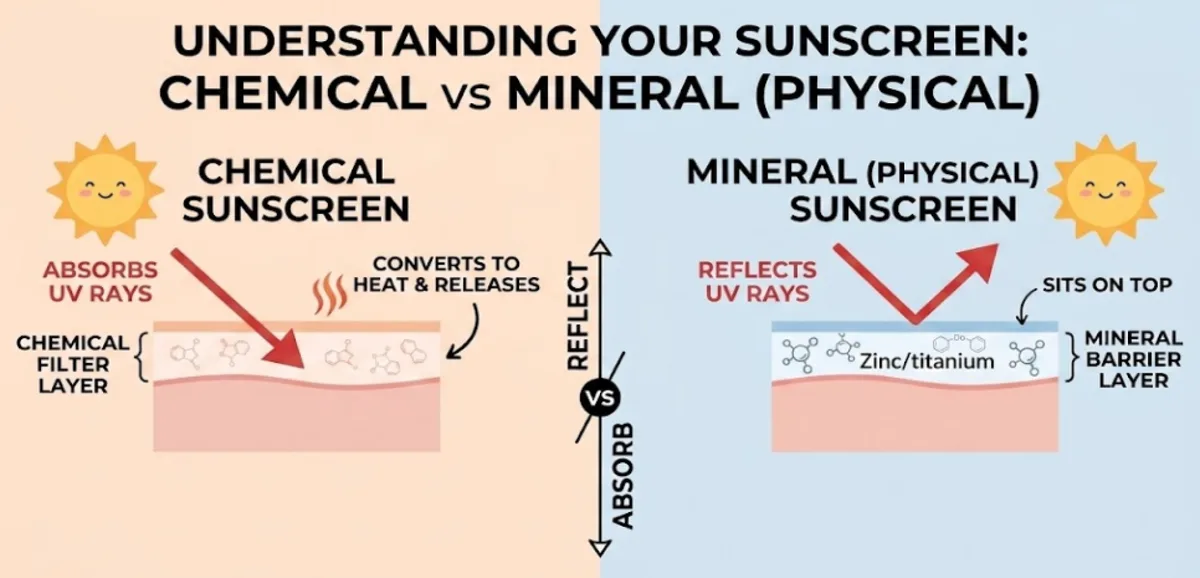
Image source: Bing (Web (fair-use with source credit))
So, if you're using a chemical sunscreen, you’ll need to factor in a waiting period. If you're opting for a mineral formula, you're generally good to go much sooner. Understanding which type you're using can save you from unnecessary sunburn.
The 15-20 Minute Rule for Chemical Sunscreens
If you're reaching for a sunscreen labeled with chemical filters, like oxybenzone, avobenzone, octinoxate, or octisalate, it's wise to give it about 15 to 20 minutes to become fully effective. These ingredients need this time to be absorbed into your skin's top layers. Once absorbed, they can effectively neutralize UV rays before they damage your skin cells.
This waiting period is a crucial step for optimal photoprotection. Manufacturer specifications often indicate this timeframe, and it’s a widely accepted guideline based on how these ingredients function. The FDA's guidelines for testing sunscreen efficacy also implicitly account for this absorption time.
Applying a chemical sunscreen and immediately heading into direct, intense sunlight might mean you're not as protected as you think for those initial minutes.
This is especially important for high-SPF chemical sunscreens, as their protective power relies on this absorption process. While they offer strong protection once active, skipping the waiting period can leave you vulnerable.

Image source: Bing (Web (fair-use with source credit))
If you're planning an activity that involves prolonged sun exposure, like a beach day or a hike, applying your chemical sunscreen before you leave home or at least 15-20 minutes before stepping outside is a smart move. It ensures that by the time you're fully exposed, your skin is already shielded. This proactive approach helps prevent those sneaky early-day sunburns.
When Mineral Sunscreens Let You Go Immediately
When you choose a sunscreen with mineral active ingredients, namely zinc oxide and titanium dioxide, you get the benefit of almost instant protection. These ingredients work by creating a physical barrier on the surface of your skin, like a shield that physically blocks and reflects UV rays away.
Because they don't need to be absorbed into the skin to work, mineral sunscreens offer immediate defense against the sun. As soon as you've applied a smooth, even layer, that protective shield is in place. This makes them a great choice if you're in a hurry or need to get outside quickly.
You don't have to wait for the product to soak in; it's ready to go the moment it's on.
This immediate efficacy is a key advantage, especially for children or individuals with sensitive skin who might benefit from minimizing application time and potential irritation. Many pediatricians recommend mineral sunscreens for this reason. So, if your sunscreen lists zinc oxide or titanium dioxide as its main active ingredients, you can generally apply it and head straight for the sunshine.
Water Resistance: What to Know About Timing
Many sunscreens are formulated to be "water-resistant," which means they can withstand water or sweat for a specified period, typically 40 or 80 minutes. This is a critical feature for anyone planning to swim, sweat heavily during exercise, or even just towel dry. However, water resistance doesn't change the initial absorption time needed for the sunscreen to become effective, especially if it's a chemical formula.
If you're using a water-resistant chemical sunscreen, you still need to apply it and wait the recommended 15 to 20 minutes before you get into the water. This allows the active ingredients to bind to your skin. Jumping into the water immediately after applying a chemical sunscreen can wash off a significant portion of the active ingredients before they've had a chance to absorb and form a protective layer.
For water-resistant mineral sunscreens, as we've discussed, they offer immediate protection. So, applying them right before you hit the water is usually fine. However, it's crucial to remember that no sunscreen is truly "waterproof."
Here's a quick rundown:
- Chemical & Water-Resistant: Apply 15-20 mins before water. Reapply after 40/80 mins in water or after towel drying.
- Mineral & Water-Resistant: Effective immediately. Reapply after 40/80 mins in water or after towel drying.
This means that even with water-resistant formulas, reapplication is non-negotiable to maintain adequate sun protection. The water resistance simply means the sunscreen stays on your skin better while wet, not that it lasts forever.
Mistakes That Undermine Your Sunscreen Protection
Even with the right sunscreen, improper application or timing can leave you vulnerable to sunburn and UV damage. One of the most common errors, as we've touched on, is not allowing enough time for chemical sunscreens to absorb. Applying them just before you head out, or worse, while you’re already in direct sun, means you’re essentially unprotected for those crucial first minutes.
Another big mistake is relying too much on the "water-resistant" label without understanding its limits. Many people think water-resistant means they can stay in the water indefinitely. However, these products are tested for specific durations (40 or 80 minutes), and their efficacy decreases over time and with friction, like towel drying.
Not reapplying after swimming, sweating, or drying off is a fast track to a sunburn.
Skimping on the amount of sunscreen you use is also a significant issue. A lot of people apply too thinly, thinking more SPF means you can use less product. However, many of us don't apply enough to achieve the SPF rating on the bottle.
You need about one ounce, or a shot glass full, to cover your entire body. Finally, forgetting to apply sunscreen to often-missed spots like your ears, the back of your neck, or the tops of your feet can lead to painful, uneven burns. Being thorough with application and timing is just as important as choosing a good SPF.
How to Maximize Your Sunscreen's Effectiveness
Getting the timing right after applying sunscreen is just one piece of the puzzle for effective sun protection. To truly maximize your defense against UV damage, you need to consider a few other application habits. Applying a sufficient amount is paramount; many people use far too little, which can drastically reduce the stated SPF.
As a general rule, aim for about one ounce, or a shot glass full, to cover your entire body.
Don't forget those often-missed spots. Areas like the tops of your ears, the back of your neck, the soles of your feet, and even your eyelids can easily get burned if overlooked. A thorough application ensures an even protective barrier across all exposed skin.
Consistent reapplication, especially after water exposure or heavy sweating, is also vital.
How to Check Your Sunscreen's Protection Level
Verifying that your sunscreen is offering the protection you expect goes beyond just looking at the SPF number on the bottle. While SPF (Sun Protection Factor) measures how well a sunscreen protects against UVB rays, it's also important to ensure it offers broad-spectrum protection, meaning it guards against both UVB and UVA rays. UVA rays contribute to premature aging and skin cancer.
Look for labels that explicitly state "Broad Spectrum" or "UVA/UVB Protection." According to the FDA, if a sunscreen doesn't have this broad-spectrum claim, its SPF rating is only based on its UVB protection. Additionally, checking the expiration date is critical; sunscreens lose their potency over time. An expired sunscreen may not offer the level of protection indicated.
Sunscreen efficacy can also be influenced by its formulation and how it interacts with your skin. For instance, some research suggests that certain ingredients might perform better when applied to dry skin, further emphasizing the importance of waiting that initial absorption period for chemical formulas. Understanding these nuances helps ensure you're getting the best possible defense against sun damage.
Frequently Asked Questions
How long does it take for sunscreen to work?
For chemical sunscreens, wait about 15 to 20 minutes after application for them to become fully effective. Mineral sunscreens offer protection immediately upon application.
Can I go in the sun right after applying sunscreen?
If you used a mineral sunscreen, yes, you can go out immediately. If you used a chemical sunscreen, it's best to wait 15 to 20 minutes to ensure it has absorbed properly.
What happens if I don't wait long enough for sunscreen to absorb?
You risk getting sunburned because the active ingredients in chemical sunscreens haven't had time to fully bind to your skin and start their UV-blocking process.
Does water-resistant sunscreen mean I don't need to wait?
Water resistance refers to how long the sunscreen stays on your skin when wet, not how quickly it becomes effective. Chemical water-resistant sunscreens still require the standard 15-20 minute waiting period before water exposure.
When should I reapply sunscreen?
Reapply at least every two hours, or more frequently if swimming, sweating heavily, or towel drying, regardless of the sunscreen type. This ensures continuous protection.